

Bogota: Of Graffiti, Ghosts and a Layered City
Bogota with its Graffiti, Ghosts and Myths is a City That Refuses to Be Just One Thing.
There are cities that are easy. Bogota isn’t one of them. It sits high, 2,600 meters above sea level, thin air, thinner patience for clichés. You don’t “do” Bogota. You negotiate with it.
Because this is not one story. This is a collage.
Bogota – A City Built on Layers (and Not All of Them Comfortable)
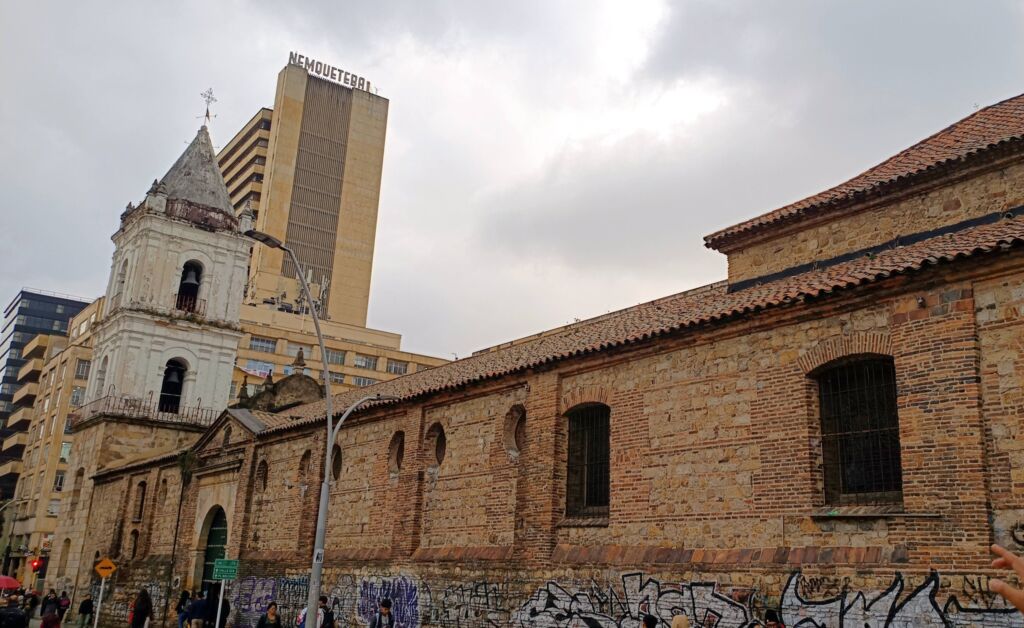
Bogota began as Bacata, the heart of the Muisca Confederation… not an empire, but a network of chiefdoms bound by trade, ritual, and hierarchy. Then came 1538… Enter Gonzalo Jimenez de Quesada, sword in one hand, cross in the other, and the usual European habit of renaming things that already existed.
The Spanish built over Bacata. Churches rose. Plazas formed. And the city became the capital of the Viceroyalty of New Granada, a colonial stronghold, neatly ordered on the surface, deeply unequal underneath.
That tension never left. It just changed clothes.
La Candelaria: Where Time Slows Down (But Never Stops)
Walk into La Candelaria, and suddenly Bogota feels… older. Cobblestone streets. Balconies leaning like they’re tired of history. Churches that look like they’ve been holding secrets for centuries.
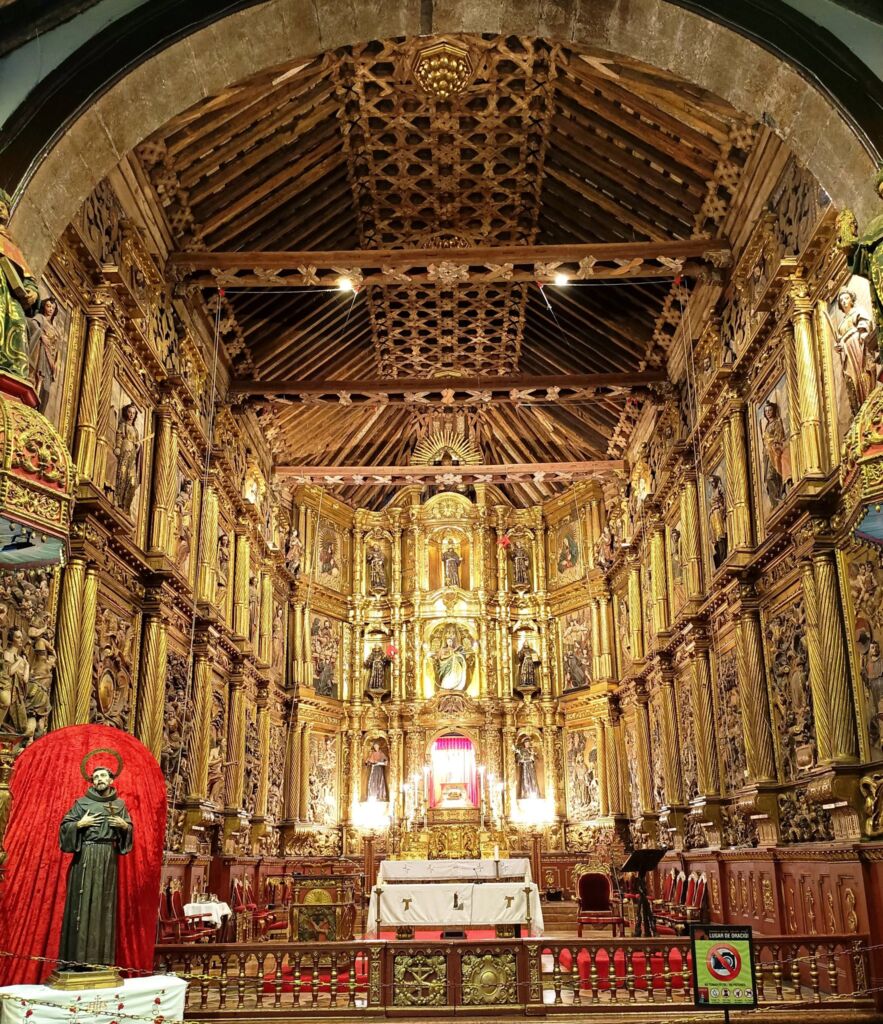
This is where Bogota remembers itself… Gold-leaf altars, baroque excess, religious symbolism… the Spanish didn’t just conquer land; they re-scripted belief.
And yet, if you look closely, the past isn’t erased. It’s layered. Under the gold, under the crosses… the echoes of something older still linger.
Monserrate: The Mountain That Watches
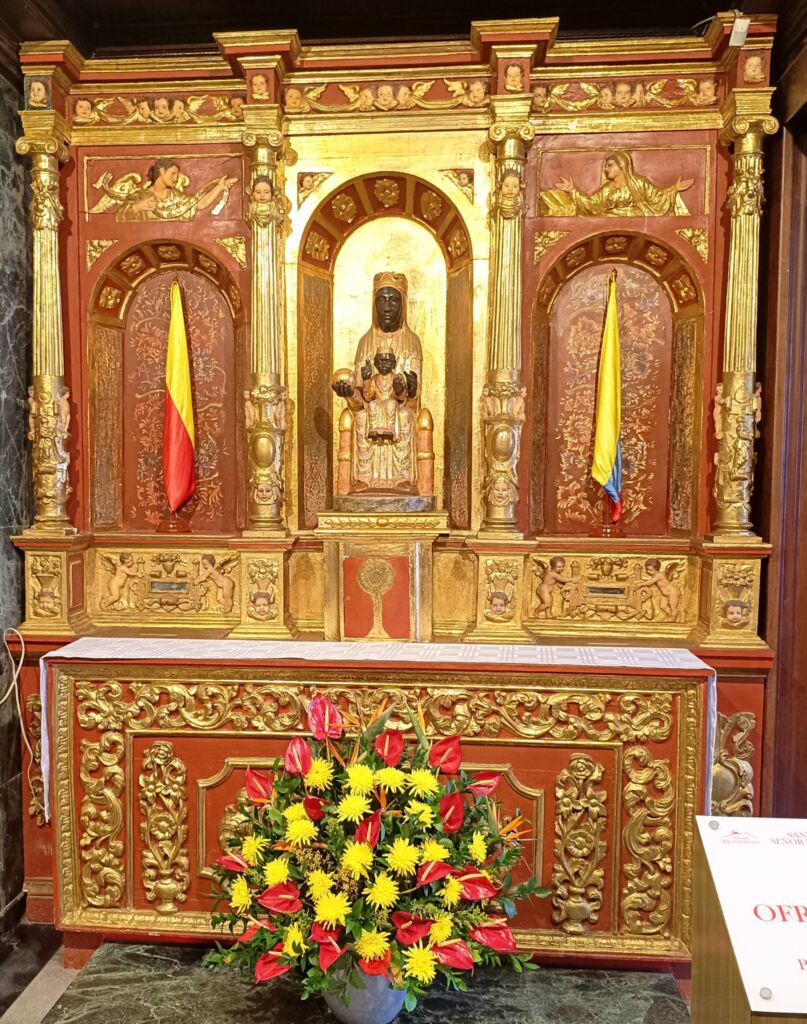
Bogota has a guardian. Or depending on how you look at it… a witness.
Monserrate rises above the city, impossible to ignore. You can hike up. Cable car up. Or just stare at it from below and pretend you’ll go tomorrow. At the top stands a church, and within it, the statue of El Senor Caido (The Fallen Lord).
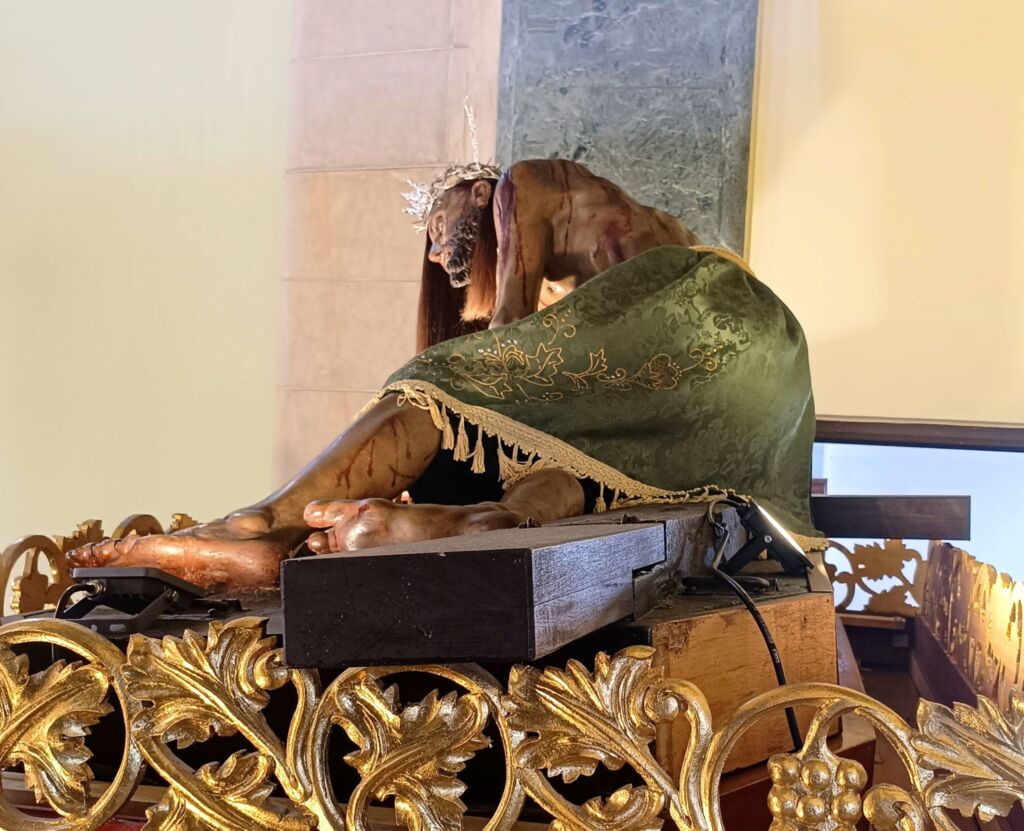
Legend says this Christ figure holds miraculous power. People come here with prayers, burdens, negotiations. But the mountain itself has older roots. Long before the church, the Muisca considered these hills sacred, connected to their cosmology, their understanding of sky and earth.
So what you have today is not just a Christian pilgrimage. It’s a layered sacred space. Different faiths. Same instinct. To climb. To ask. And to hope something is listening.
Graffiti: The City Speaks Back
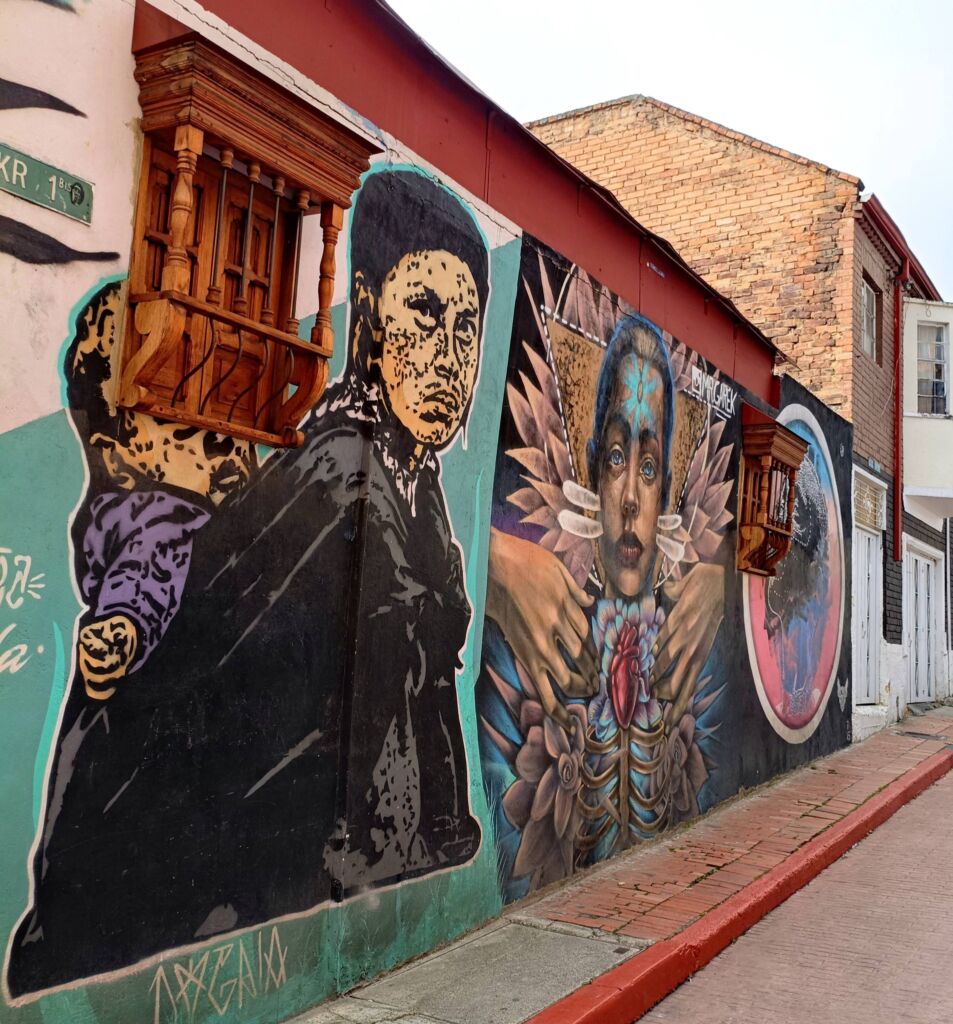
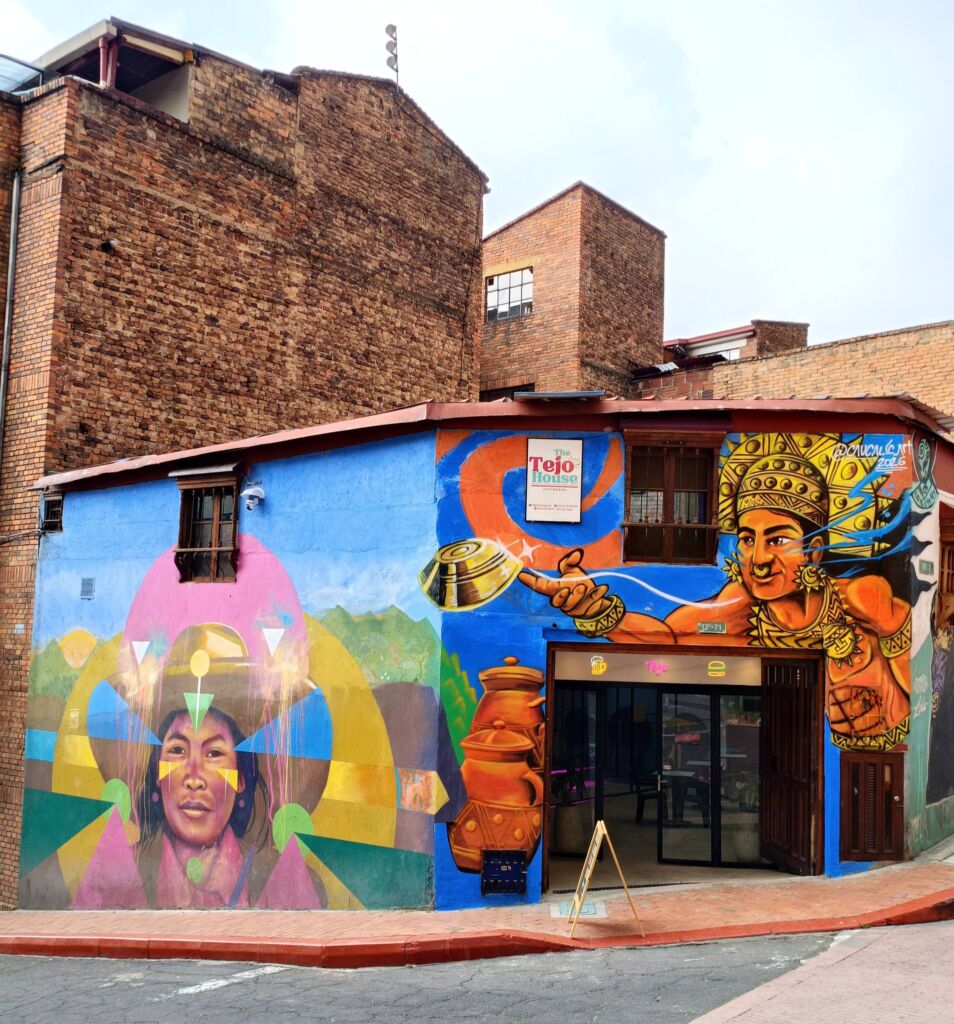
Now here’s where Bogota flips the script. Most cities hide their scars. Bogota paints them. Graffiti here isn’t vandalism. It’s policy-protected expression. After a controversial police incident in 2011, the city changed its stance… and what followed was an explosion of street art.
Murals that are Political, Personal, Angry, Hopeful and Sometimes all of these in one wall… There could be Faces of indigenous leaders, Critiques of government, Memories of conflict, Dreams of something better… It’s not pretty-pretty Instagram art… It’s raw… And it tells you more about Bogota than any museum ever will.
Modern Bogota: A City That Keeps Moving
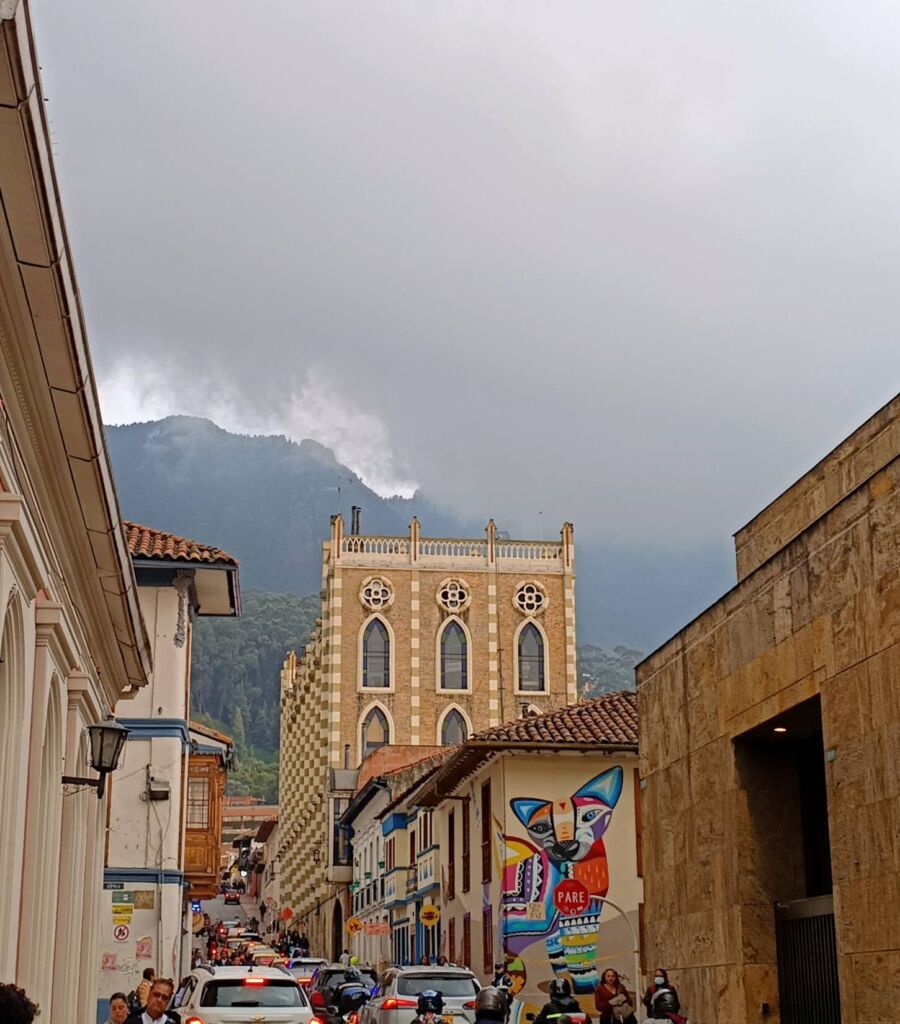
For every colonial façade, there’s a glass tower nearby. For every quiet church, there’s traffic that could test your spiritual limits. Bogota today is A political capital, A cultural powerhouse and A city still negotiating its past… All at the same time.
There are cafés serving world-class coffee grown just hours away. There are universities buzzing with ideas. There’s music, food, literature, and a constant hum of reinvention.
But there’s also inequality… Congestion… And a city that doesn’t pretend it has it all figured out.
The Push and Pull of Identity
Bogota doesn’t resolve its contradictions. It lives with them…
- Indigenous roots vs colonial imposition
- Religion vs rebellion
- Order vs expression
- Past vs future
And maybe that’s the point. This is not a city trying to be one thing. It’s a city comfortable being many.
Walking Bogota Feels Like…
Walking here is not about ticking landmarks. It’s about shifts…
One street is about colonial calm.
Next street has graffiti screaming in color.
Turn a corner and there you get a church.
Turn another and find yourself in a protest mural.
It’s disorienting… And oddly… grounding. Because it reminds you that cities, like people, don’t need to be consistent to be real.
So What Is Bogota, Really?
It’s not love at first sight. It’s something slower. Something that asks you to pay attention. To look past the obvious…
To accept that beauty doesn’t always arrive polished.
And the Soundtrack for Bogota for me?
Layered, brooding, and quietly explosive… ‘Kashmir’ by Led Zeppelin… Because Bogota feels like that…
a slow build, a hypnotic rhythm, and a sense that something much bigger is unfolding… whether you understand it yet or not… As the song goes, “My Shangri-La beneath the summer moon, I will return again…”
This was Part of the Mini Blogs on my travels in Colombia… Read the full travelogue here…
And just in case you want to visit Colombia, contact Beyonder Travel. Oh, and feel free to check out the other experiences across the world that are put up there…




Leave a Reply