
Salt Cathedral of Zipaquira – Colombia
iSalt Cathedral of Zipaquira in Colombia is all about Faith, Stone, and the Weight of the Earth.
Think of it… There are churches that rise to the heavens… And then there is one that goes the other way. Down!
Deep into the earth. Into darkness. Into something older than belief itself.
Welcome to the Salt Cathedral of Zipaquira, a place where geology meets devotion, and both seem slightly in awe of each other.
Before Faith, There Was Salt
Long before the Spanish came chasing gold, this land was already rich. Not in gold… In salt.
The Muisca people called it “white gold”, and unlike the Europeans, they actually used it as currency. Salt cakes were traded across regions, forming the backbone of their economy. But it wasn’t just commerce. Salt, like gold, held spiritual significance. It preserved life. It came from the earth. And it was elemental. So they mined it. Carefully. Respectfully.
The Spanish, of course, industrialized it. And that’s when the story takes a darker turn.
A Mine, a Prayer, a Beginning
By the 19th and early 20th centuries, Zipaquira had become a major salt mining hub. Thousands of miners worked deep underground. Dangerous work. Claustrophobic. Unforgiving. And so, like miners everywhere, they did what humans always do in the face of uncertainty… They prayed.
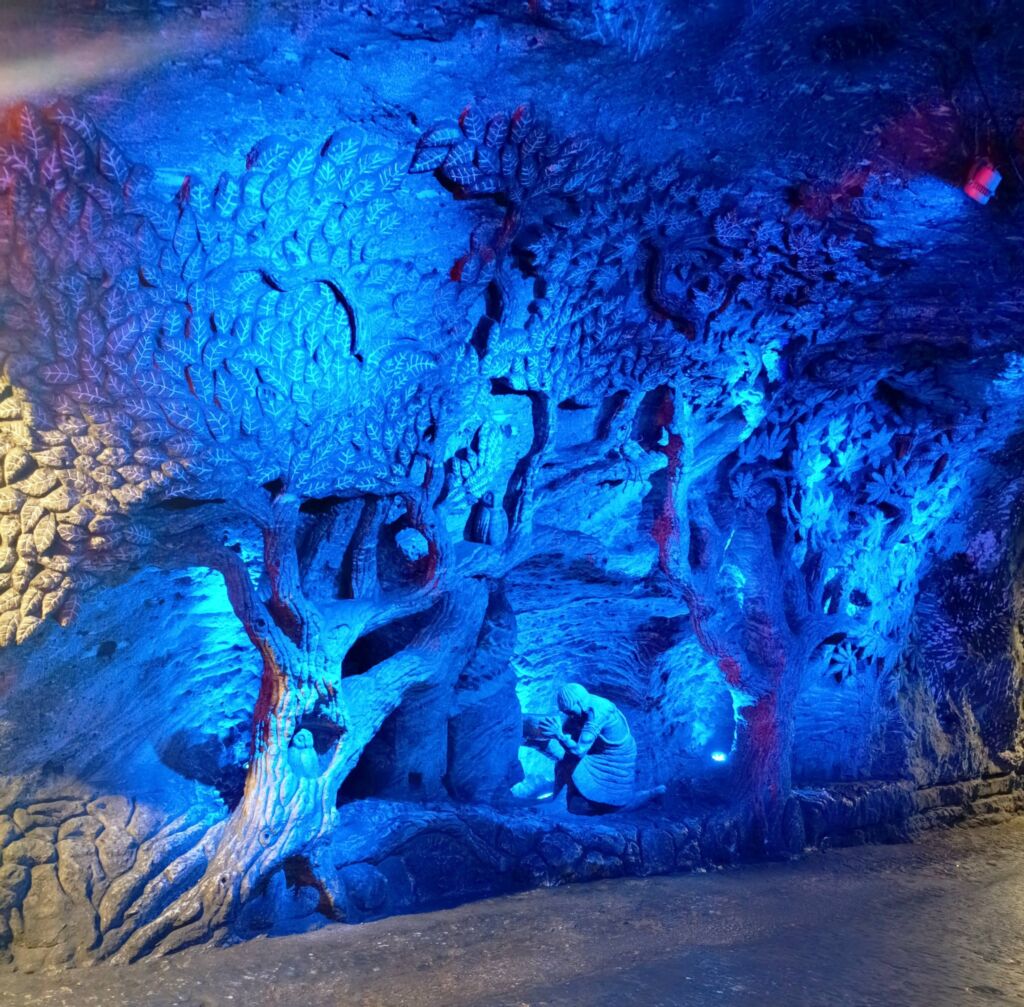
Deep inside the tunnels, miners carved small shrines and crosses into the salt walls… crude, personal, intimate. A whispered conversation with something larger than themselves. No architects. No grand plans. Just faith… chipped into rock.
The First Cathedral: Built by Hope, Lost to Reality
In 1954, those small shrines evolved into something far more ambitious. The first underground cathedral was built within the salt mine itself. It was breathtaking. And dangerously unstable. After decades of use, structural concerns forced its closure in 1992. For most places, that would have been the end. Here, it was just an intermission.
The Salt Cathedral You See Today
The current Salt Cathedral, inaugurated in 1995, is not a renovation. It is an entirely new creation carved 180 to 200 meters below ground, deeper and more structurally sound. And this time, it was designed not just as a place of worship… But as a statement.
Engineering the Impossible
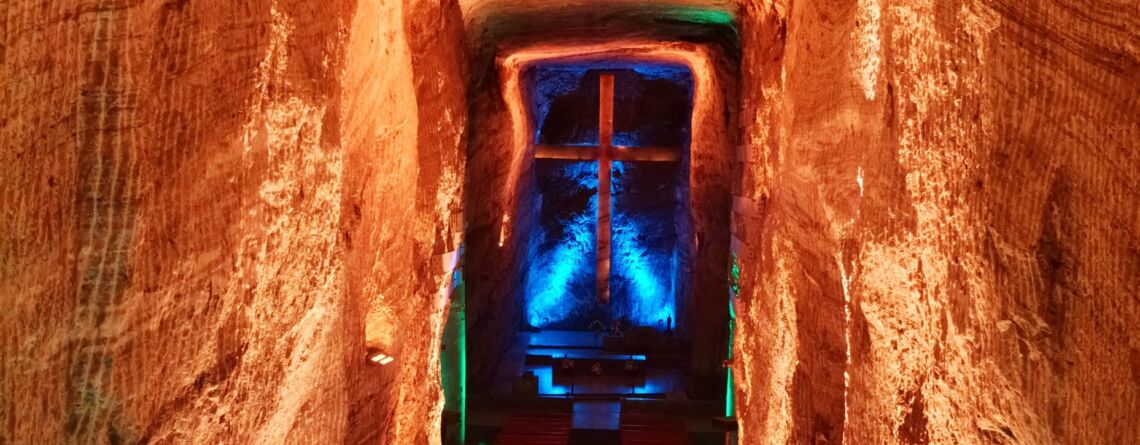
Let’s get one thing straight. This isn’t a structure built underground. This is a structure carved out of solid salt rock. Every pillar, every wall, every arch is sculpted from within… No bricks. No concrete (beyond reinforcement zones). Just salt!
The scale is staggering:
- Over 8,500 square meters of carved space
- Massive chambers supported by precisely calculated pillars
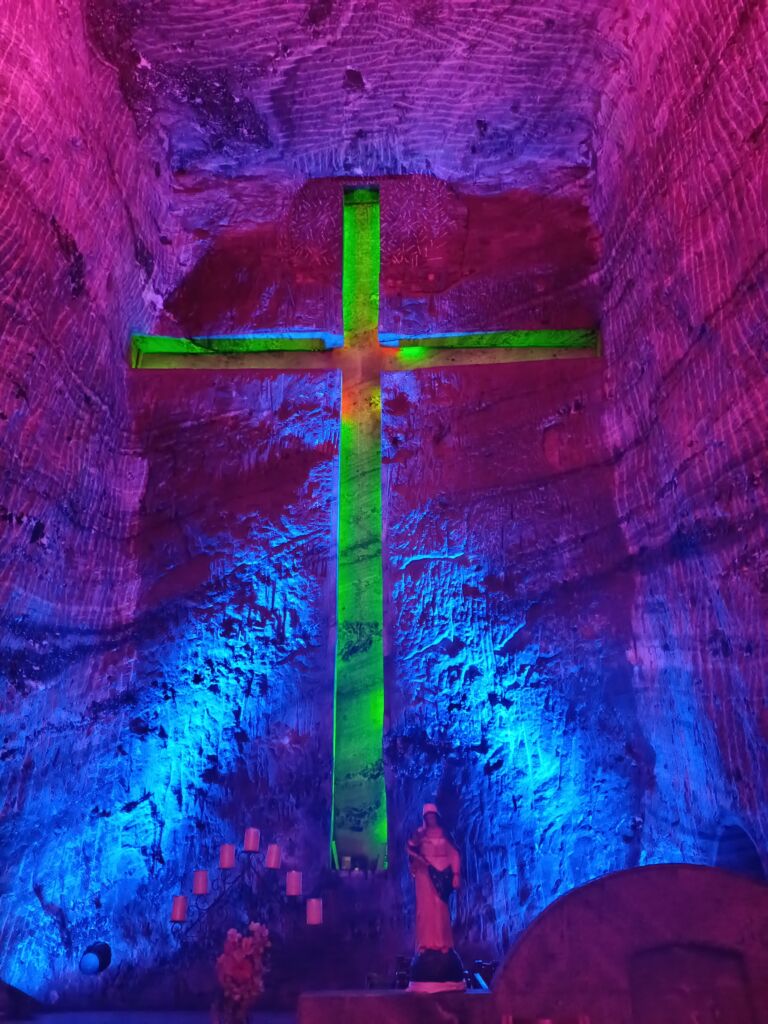
- A central nave crowned by a towering illuminated cross, one of the largest underground crosses in the world
The engineering challenge wasn’t just building. It was not collapsing an active geological formation while doing it. Humidity, salt erosion, structural integrity, all constantly monitored. It’s architecture that negotiates with the earth.
The Journey In: A Pilgrimage in Stone
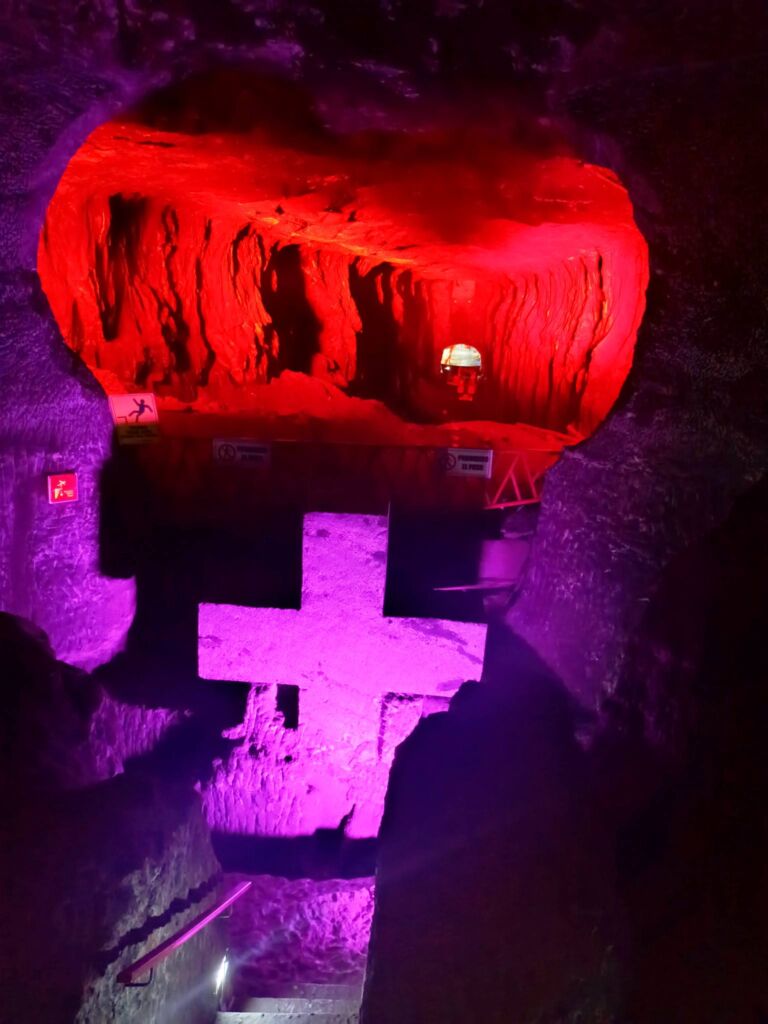
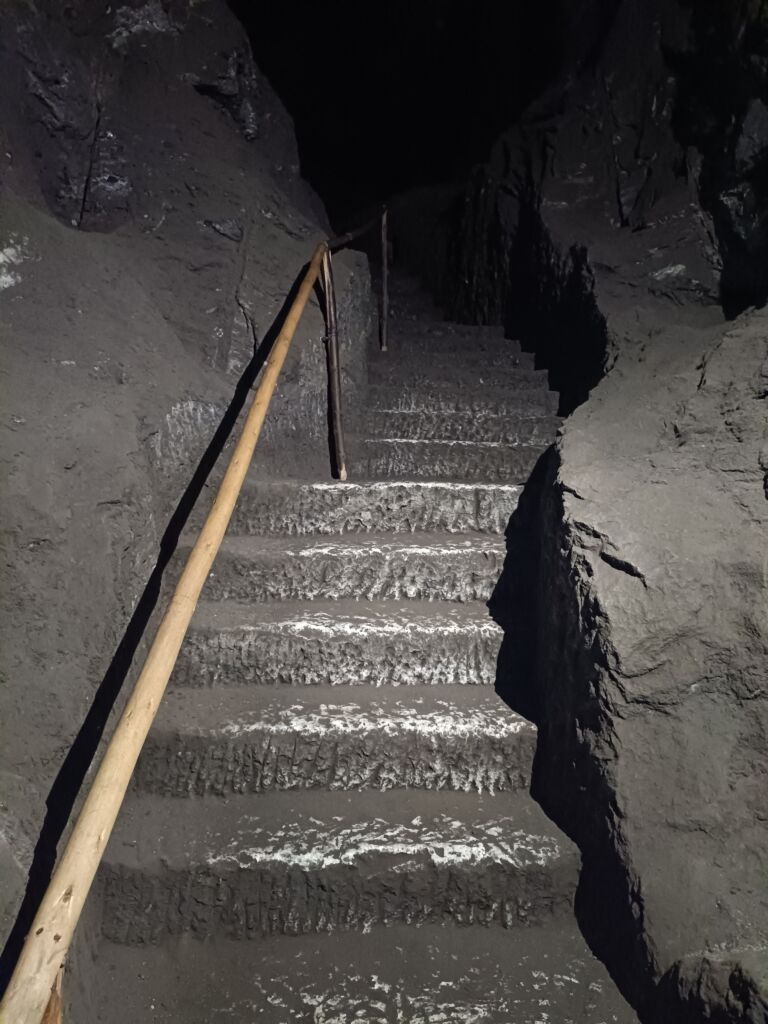
You don’t just arrive at the cathedral. You descend into it. The path mirrors the Stations of the Cross… 14 small chapels carved into the tunnels, each representing a moment from Christ’s final journey. But unlike traditional churches, these are not ornate paintings or statues.
They are minimalist carvings in salt and light. Crosses emerging from walls. Shadows doing half the storytelling. It’s less about spectacle. More about introspection. And the deeper you go, the quieter you become.
Light in the Darkness
The cathedral doesn’t rely on natural light. It creates its own. Blues. Purples. Reds. Golds. Not random. Symbolic.
- Blue: spirituality, eternity
- Red: sacrifice
- Purple: penance and reflection
The interplay between light and salt creates textures that feel almost liquid. The walls don’t just reflect. They breathe.
The Nave: Where Scale Meets Silence
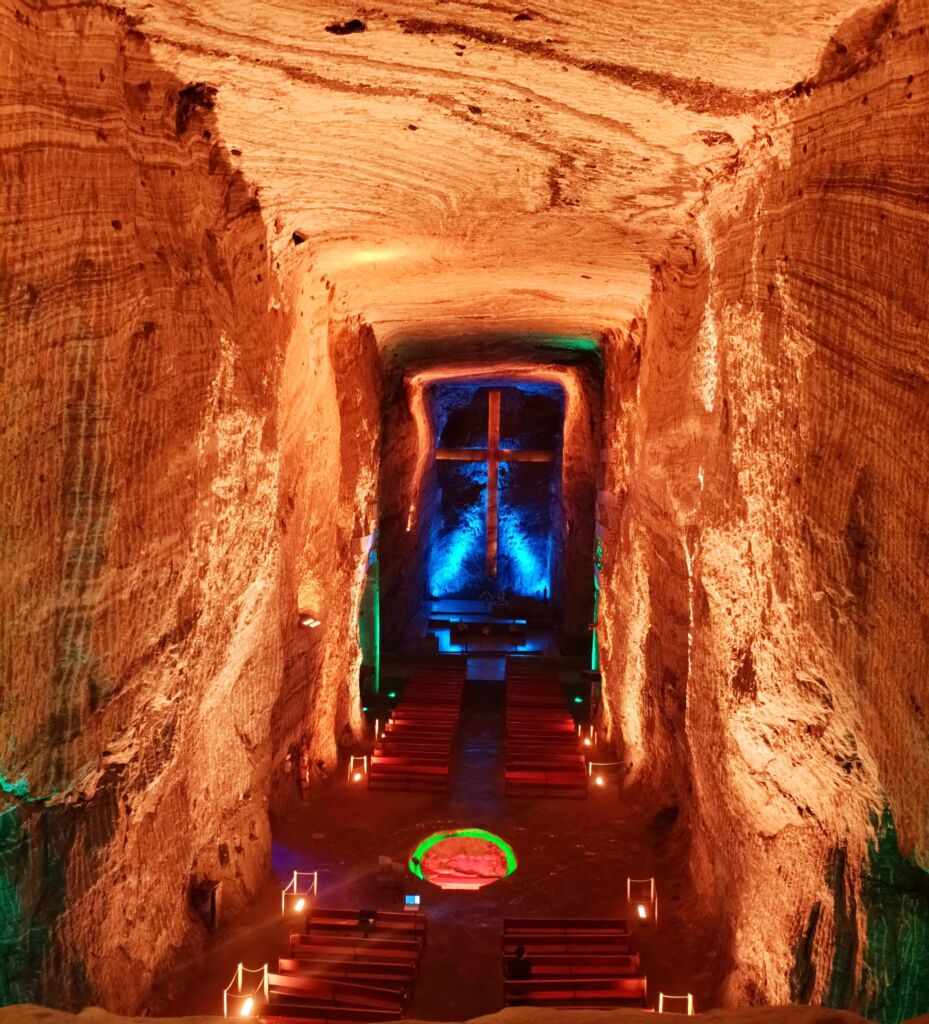
And then you enter the main chamber. The nave. And everything shifts. The ceiling rises. The space expands. And at the far end stands the cross… not placed, but carved, illuminated from behind so that it appears suspended in light.
It doesn’t overwhelm you. It steadies you. There’s seating here. An altar. Occasional services. But even without a ceremony, the place feels… active. As if something is still being said.
Symbolism Beneath the Surface
This cathedral is not just religious. It is layered.
- Built in a mine, by inheritors of miners
- Dedicated to faith, but rooted in labor
- A space where extraction (salt) meets offering (prayer)
It mirrors Colombia itself. Beauty and hardship. Creation and exploitation. Faith and survival. All compressed into one space.
What the Muisca Might Have Thought
Here’s a thought that lingers. The Muisca worshipped elements… sun, water, earth. They saw sacredness in natural formations. And centuries later, here we are. Carving a cathedral into the earth itself. Different belief systems. Same instinct. To find meaning in what lies beneath us.
The Exit from the Salt cathedral: Back to Light, Slightly Changed
You eventually leave. Walk back through tunnels. Past light, shadow, silence. And then suddenly… Daylight. Noise. The world again…
But something shifts. Because you’ve just stood inside the earth… and watched humans try to make sense of it.
So What Is the Salt Cathedral, Really?
It’s not just a church. And it’s not just an engineering marvel. It’s a conversation…
Between man and earth.
And between fear and faith.
Between what we take… and what we give back.
This was Part of the Mini Blogs on my travels in Colombia… Read the full travelogue here…
And just in case you want to visit Colombia, contact Beyonder Travel. Oh, and feel free to check out the other experiences across the world that are put up there…



Leave a Reply