
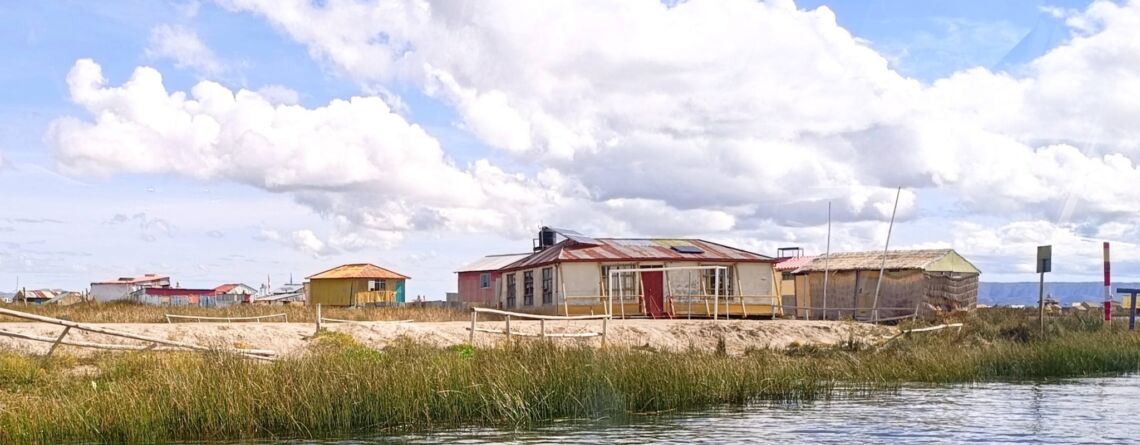
Lake Titicaca – Where Water Becomes Memory – Beyonder
Lake Titicaca in Southern Peru is a place, a revered place, where Water Becomes Memory. I accessed it from the small town of Puno.
Arrival in Puno on Lake Titicaca
Altitude does funny things to intention. Especially when coffee gets involved.
Puno sits quietly on the edge of Lake Titicaca at nearly 4000 meters above sea level. It is not the prettiest town in Peru. It is a bit scrappy. A bit chaotic. Dusty streets. Modest buildings. The kind of place that doesn’t bother putting on makeup for visitors.
But that’s not why anyone comes here. People come for the lake.
Lake Titicaca is the highest navigable lake in the world and one of the most sacred bodies of water in the Andes. Long before the Spanish arrived, long before the Inca empire expanded across South America, this lake already held stories.
According to Inca mythology, this is where civilization itself began. The sun god Inti is believed to have sent Manco Cápac and Mama Ocllo from these waters to found the Inca civilization. The lake was not just geography. It was origin.
The ancient Andean cultures called it Mama Cocha, the Mother Sea. And once you see it, that name makes perfect sense.
An Unexpected Festival
My plan for the first day in Puno was extremely sensible. Acclimatize, Drink water, Walk slowly (if at all), Avoid alcohol… And all the responsible things you are supposed to do at high altitude… So naturally, that plan lasted about twenty minutes.
A short stroll into Puno’s main square dropped me straight into the middle of the Virgen de la Candelaria celebrations. This festival is the beating heart of Puno. Thousands of dancers fill the streets wearing elaborate masks, embroidered costumes and sequined outfits that sparkle under the mountain sun. Brass bands blast music that seems determined to shake the Andes themselves. Drums echo across the square. It is Catholic devotion layered over ancient Andean beliefs. A tribute to the Virgin Mary, yes. But also to Pachamama, Mother Earth.
Faith here does not replace older beliefs. It simply merges with them. The energy in the square was infectious. Strangers smiling at strangers. Children dancing. Elderly women watching proudly from shaded corners. You could stand there for hours just absorbing the joy.
Coffee, Pisco and Poor Decisions
Later that afternoon something unexpected happened. I smelt coffee. Not the polite café kind. Proper roasted coffee. Following the aroma led me to a tiny roadside stall. Ten feet by ten feet at most. A roaster. A grinder. Jars of beans. Cocoa powder. A man behind the counter who looked like he had been doing this his entire life. His name might have been Juan. Or maybe it wasn’t. Names get fuzzy when altitude and curiosity combine.
He offered tasting cups. Refused payment. Talked passionately about beans and roasting. Then he prepared a drink he clearly thought we needed. It had Coffee, Caramel, Leche, Baileys, More coffee… And then he paused… Looked at me… And added a generous shot of Pisco.
Altitude plus coffee plus Pisco is a dangerous combination. It tasted magnificent. And thus ended my “no alcohol” resolution before sunset. Puno has a way of doing that to people.
Sunrise Over Mama Cocha, Lake Titicaca
Morning at Lake Titicaca arrives quietly. No drama. And no spectacle. Just light slowly spreading across water that looks more like an ocean than a lake.
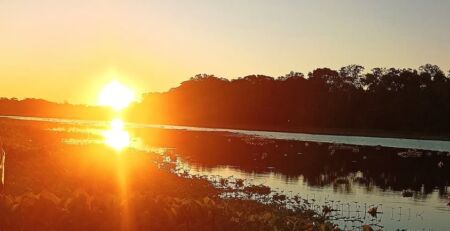
 At first the lake is steel blue. Then the sunlight touches the surface and it turns liquid gold. Standing on the shore, the scale of the lake becomes clear. It stretches endlessly. The horizon dissolves into mist. Islands appear faintly in the distance like fragments of a dream.
The lake sits at about 3812 meters above sea level, yet it behaves like a sea. Waves roll gently across its vast surface. The wind moves across it like it would across an ocean. You begin to understand why ancient cultures treated this place with reverence.
The Floating World of the Uros on Lake Titicaca
Our boat left Puno early in the morning. The first destination was something almost surreal. Floating islands. Yes, actual islands that float.
Uros Floating Islands
The Uros people have lived on Lake Titicaca for centuries, possibly even before the Incas arrived. Their solution to survival on the lake is astonishingly ingenious. They built islands. Out of reeds.
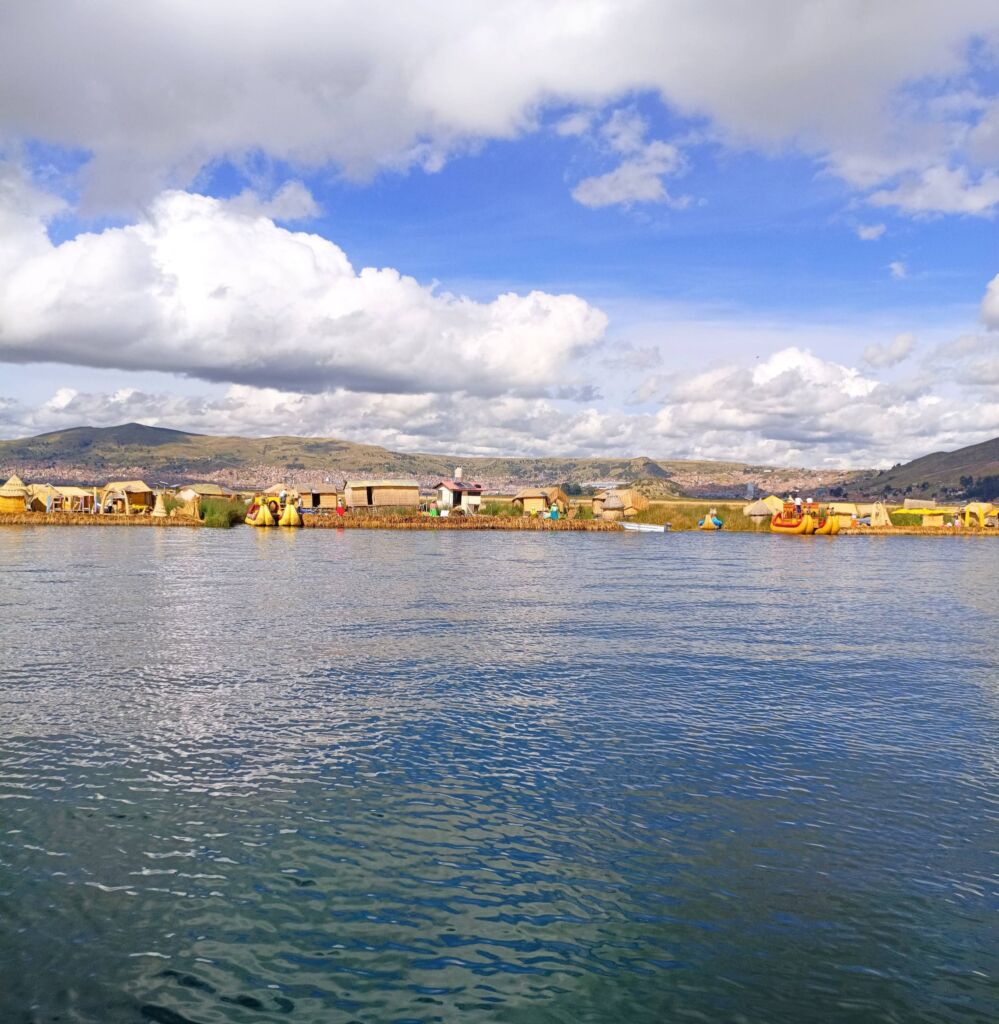 These islands are constructed using totora reeds, which grow abundantly in the shallow parts of the lake. Thick blocks of reed roots are tied together to create buoyant foundations. Layers upon layers of freshly cut reeds are then placed on top. The result is a floating platform strong enough to support houses, watchtowers and entire communities. Walking on these islands feels strange.
The ground is springy and slightly damp. Each step produces a faint rustling sound as the reeds shift under your weight. The islands slowly drift with the wind, though they are anchored to prevent them from wandering too far.
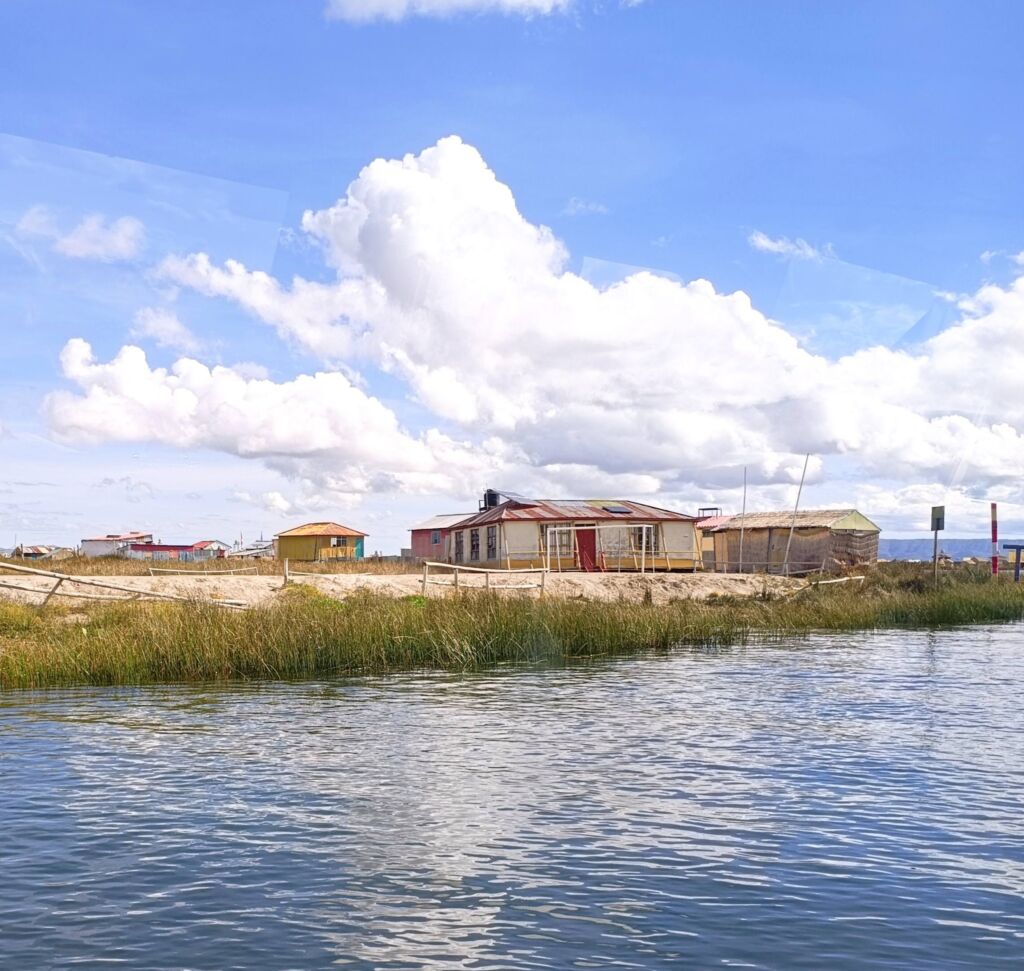
The houses of Uros
The houses here are simple structures made entirely from reeds. Boats are made from reeds. Even the watchtowers are built from reeds. Totora is not just building material. It is life itself. The reeds are edible as well. Locals peel away the outer layers to reveal a soft white interior that tastes mildly sweet (yes, I tried it).
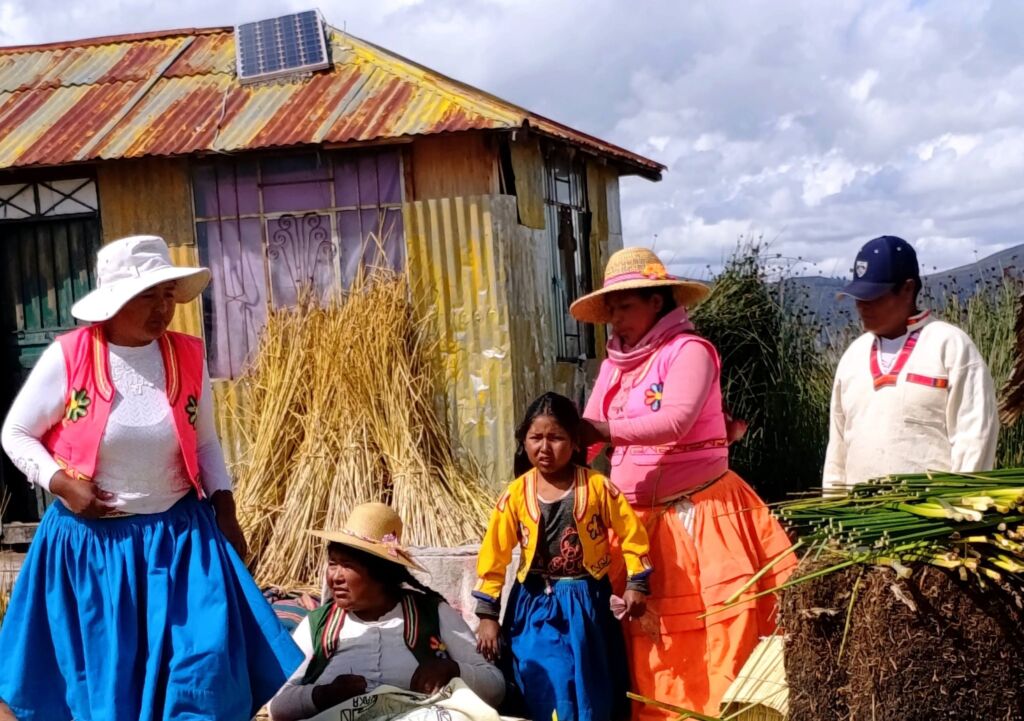
The people of Uros
We sat down with one of the families living on the island. Conversation moved slowly but warmly. Aymara words mixed with Spanish and gestures. One thing was immediately noticeable. Most of the adults were older. And many of the children were very young. The young adults are largely absent.
Many leave the islands for the mainland to study, work and build a different life. Which means this floating civilization may gradually fade away over the coming decades. Cultures rarely disappear suddenly. Sometimes they simply thin out… And that’s a shame…
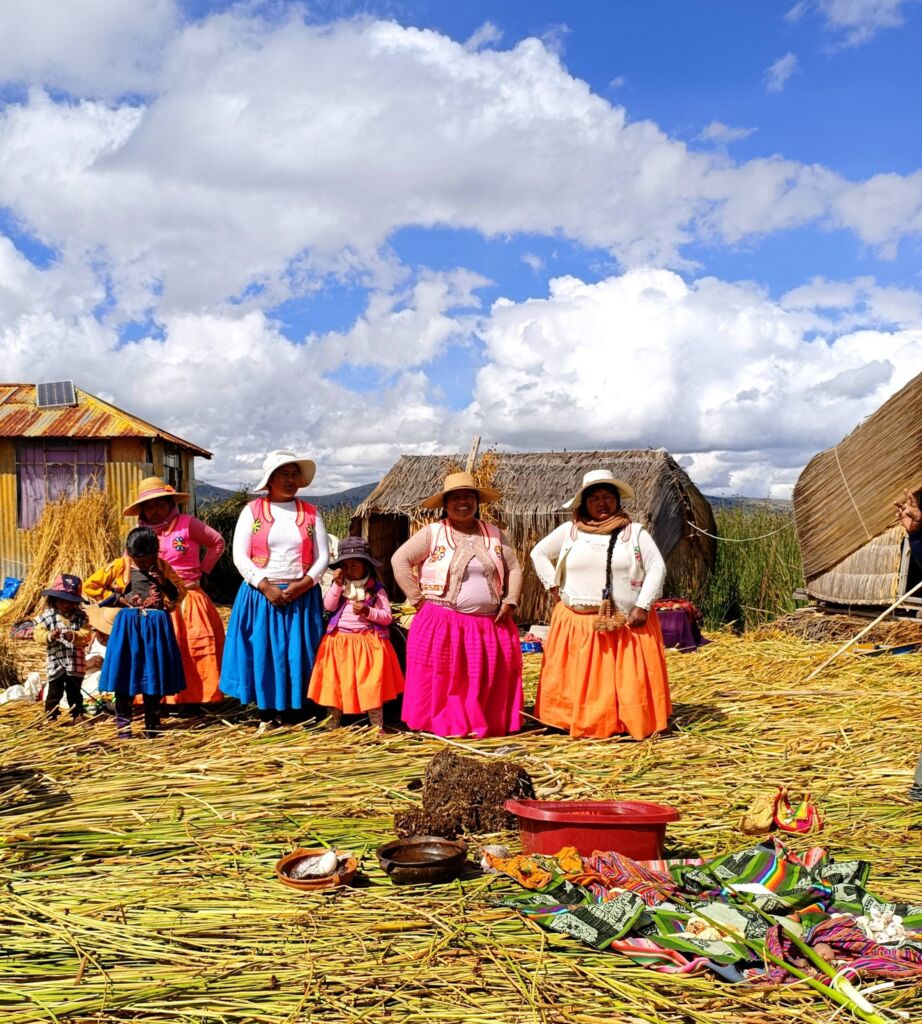 Before leaving, we boarded a traditional totora reed boat. The patriarch of the family proudly referred to it as his Mercedes. It moved slowly across the lake, gliding quietly through the water. No engines. No rush. Just reeds, wind and patience.
Taquile Island on Lake Titicaca
Where Cloth Speaks
The boat then continued deeper into Lake Titicaca toward Taquile Island. From a distance the island looks peaceful and pastoral. Terraced hillsides descend toward the lake. Stone paths wind across the slopes.
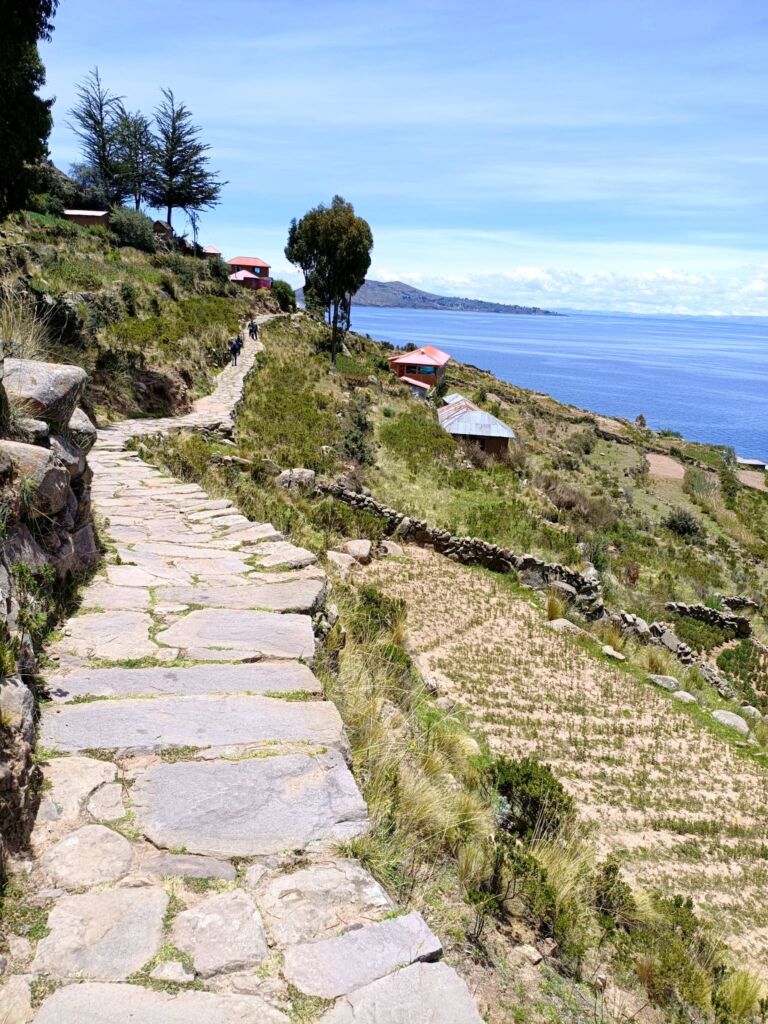 Reaching the main village requires an uphill walk that becomes surprisingly philosophical at high altitude. Breathing slows. Steps shorten. Conversations become sparse. But the lake remains beside you the entire time. When beauty accompanies effort, effort somehow feels lighter.
A Village That Wears Its Story
Taquile is known worldwide for its weaving traditions. But calling it a weaving village does not fully capture its uniqueness. Here, men weave. Women spin the wool, but the weaving itself is done by the men. The craftsmanship is extraordinary. Every garment tells a story. Belts represent family history. Patterns represent community identity. Colors indicate social roles. The most fascinating detail lies in the hats worn by the men. A red and white knitted cap indicates an unmarried man. A fully red cap means the man is married. Clothing here is not fashion. It is language.
UNESCO recognized Taquile’s textile tradition as Intangible Cultural Heritage, but the islanders never needed international validation. Their traditions already had meaning.
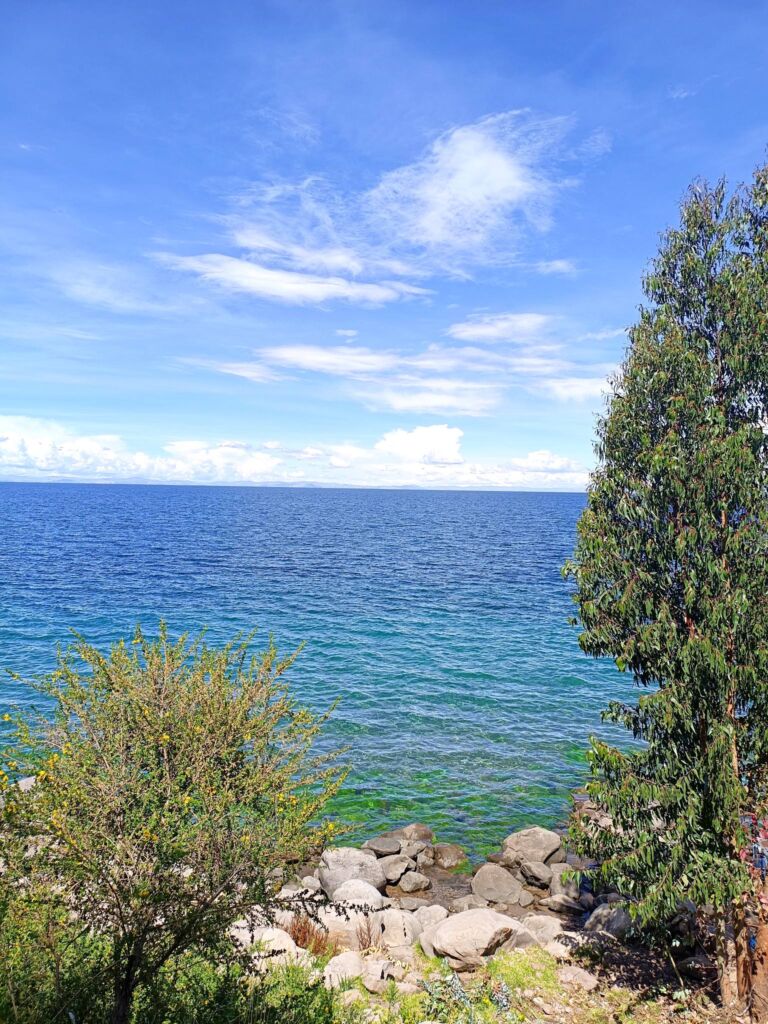 The village itself feels peaceful and timeless. Stone houses. Terraced fields. Paths built centuries ago. Life moves slowly here, dictated by seasons rather than schedules.
Lake Titicaca – the Lake That Feels Like an Ocean
As the boat began its return journey to Puno, Lake Titicaca stretched endlessly in every direction. It does not behave like a lake. It behaves like a living presence. The water shifts colors throughout the day. Deep blue in the morning. Turquoise by noon. Burnished gold by evening. And always the vast sky above.
Somewhere in my head Pink Floyd drifted in… “All you touch and all you see…”. Maybe that is travel at its best. Not collecting places. But letting places rearrange something inside you.
Sunset Over the Lake
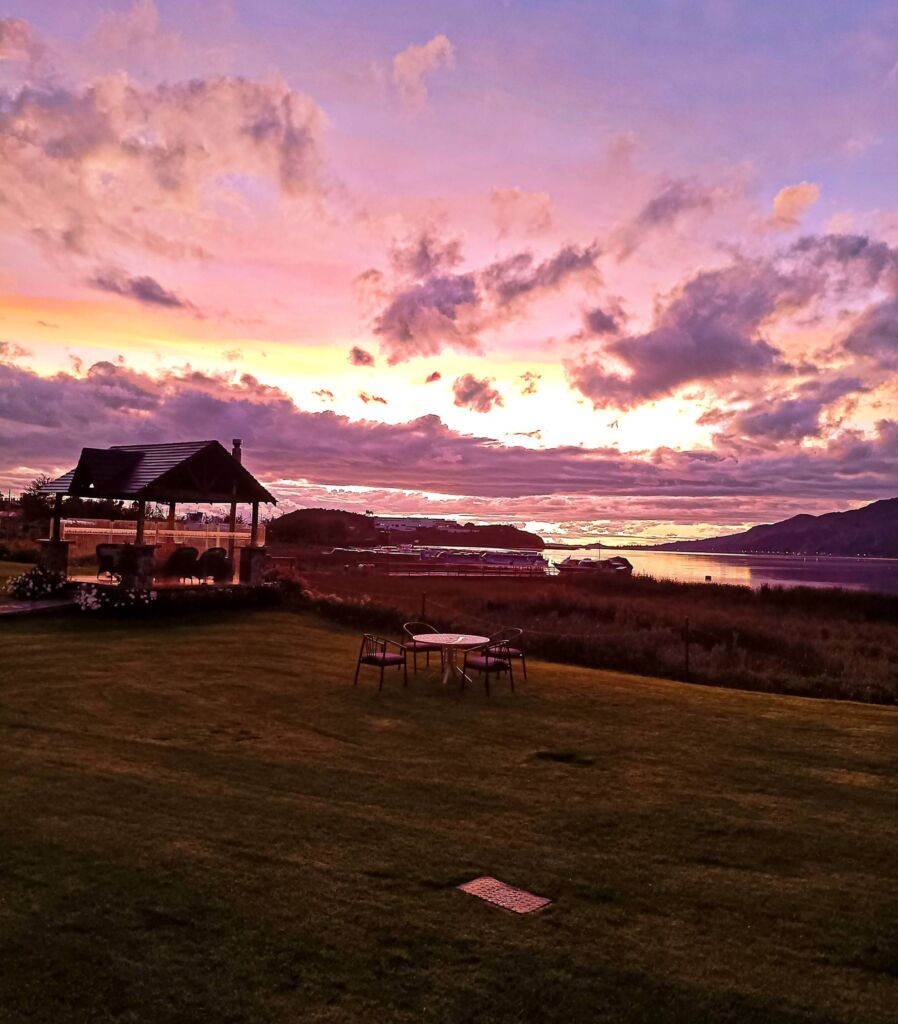
Evening returned slowly to Puno. The sky turned pink and purple while the lake mirrored the colors like polished glass.
The quiet at that hour feels almost sacred. No crowds. And no noise. Just wind across water. Mama Cocha settling down for the night.
Lake Titicaca, The Mother Sea
Ancient cultures believed this lake was a womb. A place where civilizations began. Standing beside it, that belief does not feel exaggerated. It feels logical. The lake does not demand attention. It simply exists… Endless, Patient, Ancient…
And like all good mothers, it teaches quietly.
This was Part of the Mini Blogs on my travels in Peru… Read the full travelogue here…
And just in case you want to visit Peru, contact Beyonder Travel. Oh, and feel free to check out the other experiences across the world that are put up there…



Leave a Reply