
Incas of Peru – Beyonder
The Incas – their World, their Philosophy, their Gods and their Genius are truly a fascinating subjects for anyone visiting or keen on visiting Peru. This is the civilization that shaped Peru
History usually remembers empires for their wars. The Incas, however, are remembered for their wisdom, their engineering, their cosmic awareness, and their astonishing ability to make mountains behave.
These were people who built cities that aligned with stars, terraces that defied landslides, roads that ran for thousands of kilometers, and temples where light and shadow danced together like old lovers.
They worked with granite the way some people work with silk. And understood earthquakes the way others understand poetry. They saw the world not as a resource, but as a living being that must be honored.
Before the Spaniards arrived, the Inca Empire was the largest in the Americas — and one of the most sophisticated in the world.
Let’s explore who they were, what they believed, how they lived, and why their influence still pulses through Peru today.
The World Before the Incas – Who Came First?
Peru wasn’t a blank slate waiting for the Incas.
It was a tapestry woven by dozens of ancient cultures who came before — each leaving behind threads of art, architecture, cosmology, and political structure.
Caral (3000 BCE) – The oldest known civilization in the Americas. While Egypt was building pyramids, Caral was creating monumental temples in Peru. Peaceful, sophisticated, musical, ritualistic — Caral is where it all began.
Chavín (900 BCE) – The philosophers and shamans of ancient Peru. Masters of religious symbolism, feline motifs, labyrinthine temples, and psychotropic rituals.
Moche (100–800 CE) – The artists and metalworkers. They made pottery so detailed it’s practically photographic.
Nazca (100–800 CE) – The geoglyph geniuses. Spider, hummingbird, monkey, condor — all drawn on a scale meant for gods or astronauts.
Wari (600–1100 CE) – The administrators. Urban planners who established political hubs long before the Incas refined the model.
Chimu (900–1470 CE) – Builders of Chan Chan, the largest adobe city in the world. So by the time the Incas arrived, Peru was already a crowded neighborhood of brilliant civilizations. The Incas learned from all of them — then combined those learnings into the greatest empire South America had ever seen.
Who were the Incas? A Quick history
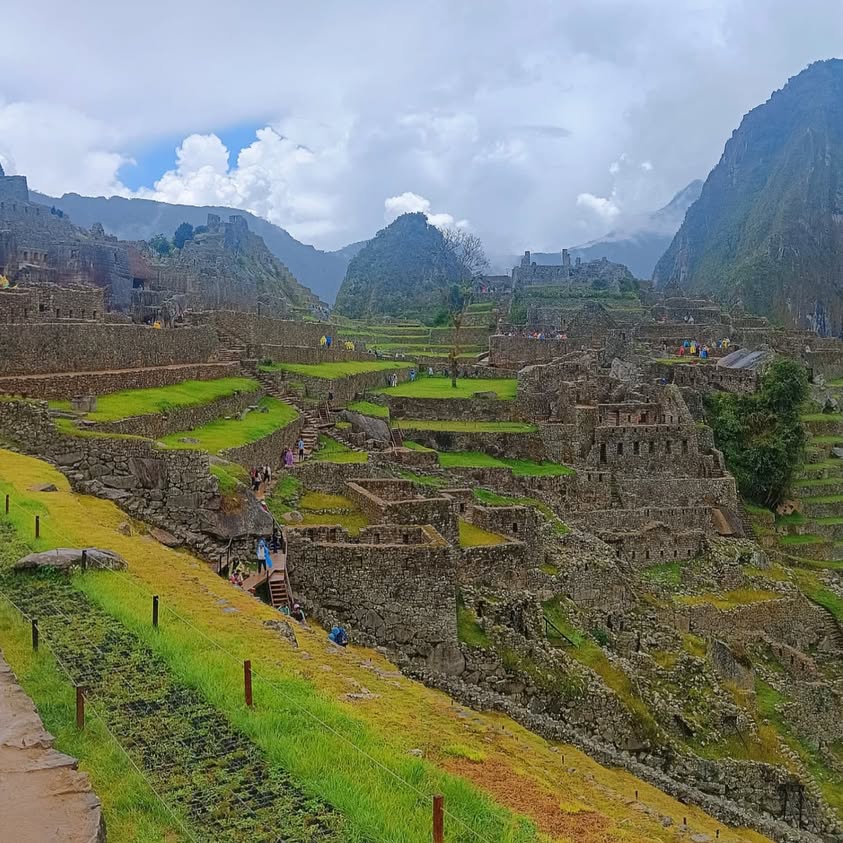 The Incas began as a small kingdom in the Cusco region around the early 1200s. Then along came a visionary leader – Pachacuti Inca Yupanqui. He was the man who:
- expanded the empire
- redesigned Cusco
- set administrative systems
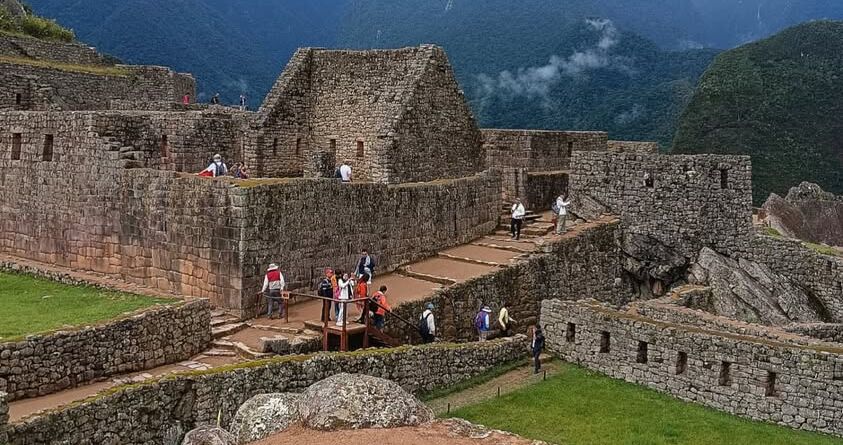
- built masterpieces like Machu Picchu
- introduced a philosophy of governance that revolved around mutual respect and moral duty
Under him and his successors, the empire stretched from Ecuador to Chile — 4,000+ km long.
This was the Tahuantinsuyo – “the land of the four quarters.”
The Inca Philosophy – How they saw the Universe
For the Incas, life wasn’t divided into religion, science, architecture, farming, or astronomy. It was all one coherent worldview. The world, according to the Incas, had three realms:
Hanan Pacha – The Upper World (The Heavens): Symbol: Condor
Home of the gods, ancestors, stars.
Kay Pacha – The Middle World (Earthly Life): Symbol: Puma
Where humans live their daily battles and duties.
Ukhu Pacha – The Inner World (Underworld): Symbol: Serpent
The realm of ancestors, seeds, roots, and renewal.
These weren’t just metaphorical realms. They designed cities, temples, and rituals around this cosmology.
Their Foundational Principles – Not rules, But a Way of Being
The Incas lived by three moral codes:
- Ama Sua – Do not steal
- Ama Llulla – Do not lie
- Ama Qella – Do not be lazy
Simple? Yes. Effective? Extremely.
Imagine an empire run on three WhatsApp-worthy lines.
Their governance was based on:
Ayni – Reciprocity – You help your neighbor today; they help you tomorrow.
Minka – Collective Communal Work – Villages worked together on public works and agriculture.
Mit’a – Rotational Labor – Citizens contributed labor to the state in return for food, security, and land.
Imagine a system where taxes are paid with work, not money — and used for communal good instead of corruption.
Their Gods – A Pantheon rooted in Nature
Inti – The Sun God – The supreme deity. Temples aligned to solstices. Gold symbolized the sun’s tears.
Pachamama – Mother Earth – The nurturing goddess who provided crops, fertility, life.
Illapa – God of Thunder – Weather? Storms? Lightning? Illapa handled the mood swings of the skies.
Viracocha – The Creator – Carved humanity from stone. Walked across the land teaching people how to live.
Their spirituality wasn’t about fear. It was about gratitude, balance, and alignment with nature.
The Inca Way of Life – The Social Engineering Genius
No written script, yet a vast empire
They used Quipus – knotted strings – to record:
- population
- tax
- harvest
- military logistics
Think of it as the world’s first cloud-based data storage.
Architecture you still can’t replicate easily
Earthquake-proof. Mortar-less stonework. Astronomical alignments. Terraces that prevent floods.
Water channels that run with mathematical precision.
Roads better organized than modern highways
The Qhapaq Ñan – a road network spanning 40,000 km. Bridges. Tunnels. Messenger runners.
And they maintained it meticulously.
Agriculture that defied altitude
Terraces at multiple elevation levels. Freeze-dried potatoes (chuño) for long-term storage. Corn, quinoa, tubers, coca.
A redistribution economy
Resources flowed from the state to the people — not the other way around. It wasn’t socialism. Nor was it capitalism. It was Inca-ism — a model built for the mountains.
The Downfall – How an Empire fell in just 2 years
When the Spaniards arrived in the 1530s, the Incas were already weakened by:
- a civil war between two royal brothers
- smallpox, which reached Peru before Europeans did
- political fragmentation
Francisco Pizarro exploited this perfectly. In two tragic years, the empire fell.
But here’s the twist: The Inca spirit didn’t.
It survived in:
- language (Quechua)
- weaving
- festivals
- agriculture
- architecture
- food
- music
- cosmology
- oral history
- mountains, rivers, and valleys
The empire was conquered. But the culture never was.
The Incas Today- Living in the Modern World
In the Sacred Valley, in Cusco, in the highlands, in Andean villages — the Incas way of life continues.
You see it in:
- women weaving textiles with patterns older than Sanskrit
- farmers planting by moon cycles
- coca leaves placed in shrines
- solstice festivals like Inti Raymi
- the reverence for Apus (mountain spirits)
The Incas’ philosophy isn’t a relic. It’s a living practice.
Why the Incas’ Philosophy matters to us Today
Because the Incas remind us of truths modernity forgets:
- Nature is not a resource — it is a relationship.
- Architecture is more than concrete — it is alignment.
- Community is not optional — it is identity.
- Sustainability is not a trend — it is survival.
- Knowledge is not only written — it is lived.
- Progress is meaningless without balance.
If there is one civilization modern humans desperately need to learn from, it is the Incas.
The Summary (For Those Who Like to Scroll like they are late for a Flight)
The Incas were:
- Master engineers
- Brilliant astronomers
- Skilled farmers
- Deep philosophers
- Community-centric
- Nature-reverent
- Spiritual without being superstitious
- Organized without being oppressive
- Visionary without being arrogant
They built harmoniously with the planet. And lived lightly. They thought deeply. And their legacy is woven into every valley, mountain, ruin, festival, and river in Peru.
If Machu Picchu is the crown, the Inca worldview is the kingdom.
This was Part of the Mini Blogs on my travels in Peru… Read the full travelogue here…
And just in case you want to visit Peru, contact Beyonder Travel. Oh, and feel free to check out the other experiences across the world that are put up there…


Leave a Reply