
History of Peru – A Beyonder Take
The History of Peru is one that moves from Ancient Civilizations to Conquistadors toa Modern Cultural Powerhouse.
Peru is not a country. It is a timeline disguised as a landscape.
A museum built on mountains and rivers. Its a civilization that has reinvented itself across thousands of years — absorbing, adapting, resisting, transforming.
It is the Andes whispering, the Amazon breathing, the desert remembering, the Pacific watching.
And through this history, the culture, food and spirit of Peru evolved — not in separate lanes, but braided together like a Quechua textile.
Let’s read the History of Peru — from the oldest cities of the Americas to the Spanish conquest to the vibrant, culinary, musical, modern nation it is today.
Chapter 1: Before Time had a Name – The First Civilizations in the History of Peru
Peru is one of the cradles of civilization, as ancient as Mesopotamia, Egypt, and the Indus Valley.
CARAL–SUPÉ (3000 BCE)
The oldest known city in the Americas. Pyramids. Plazas. Temples. And curiously — no signs of war.
A peaceful, trade-based civilization with musical instruments, ritual fires, and cotton agriculture. While Egypt built pyramids for pharaohs, Caral built them for community and ceremony.
Peru’s cultural DNA begins here:
- community over kings
- ritual over conquest
- trade over warfare
- harmony with the environment
Chapter 2: The Age of Symbol & Ceremony in the History of Peru – Chavin, Paracas, Nazca
THE CHAVÍN (900–200 BCE)
Highland shamans and philosophers. They built temples like mazes, used feline symbolism, and introduced pan-Andean religious motifs.
Cultural contribution: Ritual art, early metallurgy, psychotropic ceremonies, unified iconography.
THE PARACAS (800–100 BCE)
Masters of textiles, trepanned skulls to relieve pressure, and built the mysterious Candelabra of Paracas.
Cultural contribution: Burial traditions, elaborate woven textiles, early geoglyphs.
THE NAZCA (100–800 CE)
The hyper-creatives of the desert. They drew geoglyphs (Nazca Lines) visible only from the sky — monkeys, spiders, hummingbirds, straight lines dozens of kilometers long.
Cultural contribution: Astronomical knowledge, desert irrigation systems, iconic art.
Chapter 3: The Artisans & Empires in the History of Peru – Mochica, Wari, Chimu
THE MOCHE (100–800 CE)
The metalworkers and storytellers. They created pottery so detailed it depicts everything from birth to death to myth to sexuality.
Cultural contribution: Realistic pottery, goldsmithing, irrigation canals.
THE WARI (600–1100 CE)
The planners and administrators. They created the first major road systems and urban centers.
Cultural contribution: Bureaucracy, organized city grids, early administrative empire-building.
THE CHIMÚ (900–1470 CE)
Builders of Chan Chan, the largest adobe city in the world.
Cultural contribution: Advanced metallurgy, monumental architecture, coastal trade networks.
These cultures shaped Peru’s textiles, metallurgy, ceramics, political models, agriculture — everything the Incas later inherited and refined.
Chapter 4: The Rise of the Incas – 1200 TO 1532 CE
The Incas didn’t appear out of nowhere — they rose from this deep well of cultures. Starting as a small kingdom in Cusco, they expanded rapidly under their visionary ruler Pachacuti. Their empire, Tahuantinsuyo, stretched from Ecuador to Chile — over 4,000 km.
 What made the Incas extraordinary?
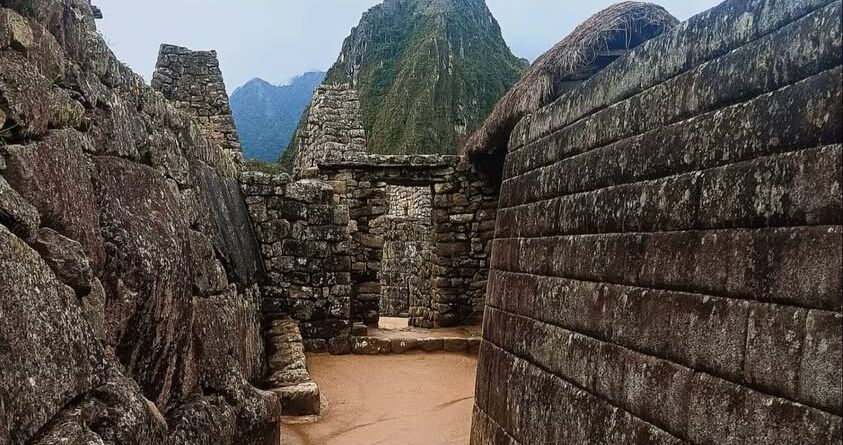
Architecture – Perfect stonework, earthquake-proof walls, terraces carved into mountains.
Agriculture – 3,000+ potato varieties, quinoa, freeze-drying, terrace farming.
Roads – The Qhapaq Ñan — 40,000 km of roads, bridges, messenger stations.
Government – Redistribution economy, community labour (mit’a), food surplus management.
Spirituality – Sun god (Inti), Pachamama (Earth), Apus (mountain spirits). Architecture aligned with solstices.
Philosophy – The three moral laws:
- Do not steal
- Do not lie
- Do not be lazy
Cities – Cusco, Ollantaytambo, Pisac, Machu Picchu — masterpieces that still defy comprehension.
The Inca worldview shaped everything: their culture, engineering, food, rituals, textiles, astronomy.
Chapter 5: What they Ate – Food before the Spanish
Inca cuisine was natural, local, and brilliantly adaptive.
- Potatoes (hundreds of varieties)
- Corn
- Quinoa
- Amaranth
- Llama meat
- Guinea pig (cuy)
- Ají peppers
- Fish & seafood
- Freeze-dried foods (chuño)
- Herbal infusions
Food wasn’t just sustenance — it was agricultural science perfected over centuries.
Chapter 6: The Spanish Arrive – 1532 CE
Francisco Pizarro arrives. The Inca Empire is weakened by civil war and smallpox.
Atahualpa is captured, ransomed, executed. Cusco falls. Lima is founded.
Colonial Peru begins.
What changes? Everything. And yet… nothing.
Spanish introductions:
- Wheat
- Grapes (hello Pisco!)
- Cattle, pigs, goats, sheep
- Olive oil
- Onions, citrus
- Catholicism
- Baroque architecture
- Viceroyalty administration
Indigenous resilience:
- Quechua language survives
- Textiles survive
- Agricultural terraces survive
- Beliefs blend (Sun festivals reinterpreted as Christian)
- Food traditions adapt but do not disappear
Peru becomes a cultural fusion — a mestizo civilisation — part Indigenous, part Spanish, entirely its own.
Chapter 7: The Birth of Peruvian Food as we know it
Peru’s modern cuisine is fusion at its finest. Indigenous ingredients + Spanish meats + African techniques + Chinese stir-fry + Japanese precision = Magic
Examples:
- Ceviche – Fish + lime (introduced by Spanish) + chili (native). Marinated with a Japanese-influenced knife style.
- Lomo Saltado – Chinese wok cooking + Peruvian beef + soy sauce + Andean vegetables.
- Anticuchos – African slaves created genius with cow heart + spice + charcoal.
- Causa – Potato + lime + chili (indigenous) + European fillings.
- Chifa Cuisine – Peruvian-Chinese restaurants — now a national institution.
- Nikkei Cuisine – Peruvian-Japanese fusion — some of the world’s best restaurants today.
Peru becomes the culinary capital of Latin America — and possibly the world.
Chapter 8: The Birth of Pisco – Peru’s Iconic Spirit
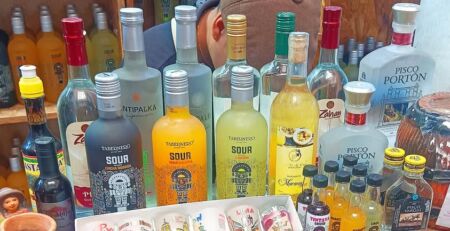
The Spanish bring grapes. Locals distill brandy-like liquor called Aguardiente. It is delicious but unpronounceable after two glasses. So the port it shipped from — Pisco — lends its name. Peru’s new national spirit is born.
Pisco becomes:
- celebration drink
- heartbreak drink
- cultural drink
- diplomatic drink
- source of Peru-Chile rivalry
- base of the iconic Pisco Sour
No history of Peru is complete without mentioning this fiery, beautifully aromatic spirit.
Chapter 9: Republic, Revolution, Resilience in the History of Peru
1821 – Peru gains independence.
1800s–1900s – struggles with political instability, economic cycles, regional wars.
Late 20th century – internal conflict and rebuilding.
But Peruvian identity remains strong — rooted in Indigenous pride, mestizo culture, Andean heritage, Amazonian wisdom, and coastal dynamism.
Chapter 10: Modern Peru – A Mosaic Nation
Today’s Peru is:
- multilingual (Spanish, Quechua, Aymara, Amazonian languages)
- multicultural (Andean, Afro-Peruvian, Mestizo, Chinese, Japanese, European)
- gastronomically unmatched
- environmentally rich (Amazon, Andes, desert, Pacific)
- historically layered
- youthful and creative
- spiritually rooted
Peru balances:
- ancient traditions
- Indigenous resurgence
- global tourism
- cutting-edge gastronomy
- conservation efforts
- modern urban life
It is a country that has transformed every wave of the history of Peru into a layer of culture — not by erasing, but by absorbing.
Chapter 11: Where Food & History Meet – the Peruvian Table
Every Peruvian dish is a lesson in the History of Peru:
Corn & Potatoes – the Inca gift
Ceviche – Spanish limes + Indigenous fish + Japanese slicing
Anticuchos – African resourcefulness
Ají peppers – Indigenous spice
Chifa – Chinese migration
Nikkei – Japanese precision
Pisco – Spanish grapes + Peruvian innovation
Chicha – Andean ceremonial tradition
Causa & Tiradito – Coastal creativity
Amazonian dishes – forest wisdom
Peruvian food is the edible timeline of the nation.
Chapter 12: The Soul of Peru – What History Created
Peru today is the result of:
- Ancient civilizations
- Andean spirituality
- Spanish conquest
- African resilience
- Asian migration
- Coastal trade
- Amazonian depth
- Modern global openness
A nation where you can:
- stand on a 600-year-old Inca terrace
- drink Pisco in a world-renowned bar
- eat ceviche infused with Japanese technique
- listen to Afro-Peruvian cajón beats
- visit the Amazon and meet communities unchanged for centuries
- walk through Baroque cathedrals
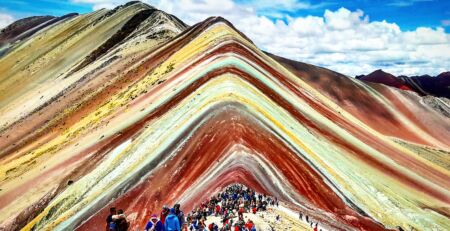
- hike rainbow-coloured mountains
- eat potatoes the Incas invented
- and end your day watching a Lima sunset over the Pacific
Peru is not a destination. It is a civilization still in motion.
Conclusion – Why the History of Peru matters to a traveler
Because Peru isn’t just a place you see — It’s a place that shapes you.
The History of Peru is alive in:
- its cities
- its food
- its drinks
- its rituals
- its mountains
- its oceans
- its people
Understanding the History of Peru makes every modern experience — whether it’s sipping Pisco Sour or staring at Machu Picchu — infinitely richer.
This is why Peru is one of the greatest travel experiences on Earth.
Don’t trip on the usual — explore the timeline.
This was Part of the Mini Blogs on my travels in Peru… Read the full travelogue here…
And just in case you want to visit Peru, contact Beyonder Travel. Oh, and feel free to check out the other experiences across the world that are put up there…

Leave a Reply