
Cusco and The Sacred Valley of Peru – Beyonder
Cusco and the Sacred Valley of Peru is where Mountains Guard Memories and the Urubamba River Whispers the Truth.
If Machu Picchu is the superstar that hogs the spotlight, then Cusco and the Sacred Valley are the stage, the orchestra, and the backstory that make the entire show possible.
This region isn’t the supporting cast — it’s the heartbeat of Inca civilization.
And unlike Machu Picchu’s dramatic reveal, the Sacred Valley doesn’t shout – it hums.
It welcomes you slowly, with fields that glow gold under the Andean light, mountains that loom like ancient bodyguards, and a river — the mighty Urubamba — that flows like a monk deep in meditation.
Let’s begin at the gateway.
CUSCO – THE NAVEL OF THE WORLD AND THE CITY OF STONE MEMORY
Cusco — or Qosqo, as the Incas called it — literally means “the navel of the world.”
And honestly? The name fits.
You land here at 3,400 meters and immediately learn humility. The air is thin. The lungs negotiate. The body remembers it’s mortal. But once you acclimatize, the city opens up like a story that was waiting for an attentive reader.
The City Built Like a Puma
Yes, it’s true — Cusco’s ancient layout was designed in the shape of a puma, the sacred animal of the earthly realm.
- The head: Sacsayhuamán
- The body: The central city
- The tail: The confluence of two rivers
Engineers today can barely align roads without someone shouting on WhatsApp groups.
The Incas? They were out there building city-animals visible only from the sky.
WHAT TO SEE IN CUSCO (AND WHAT TO FEEL)
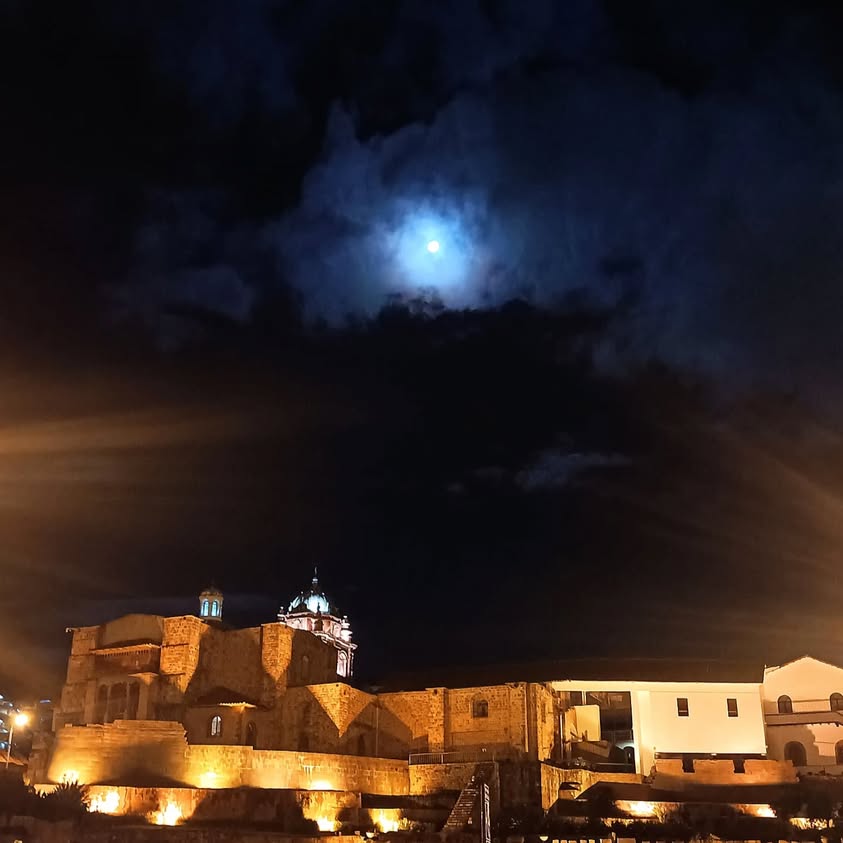
- Qorikancha – The Golden Temple
Once covered in sheets of gold that reflected the sun, Qorikancha was the most sacred temple of the Incas. Today, a Spanish convent sits on top of it — a historical metaphor so sharp it doesn’t need commentary.
- The Cusco Cathedral
A colonial masterpiece built with stones pilfered from Inca temples — a structure that is both breathtaking and heartbreaking.
- Sacsayhuamán
Pronounced “Sexy Woman” by every tourist who wants to show off their humor. But honestly, this fortress is no joke — its zigzag walls are made of megalithic stones, some weighing over 100 tons.
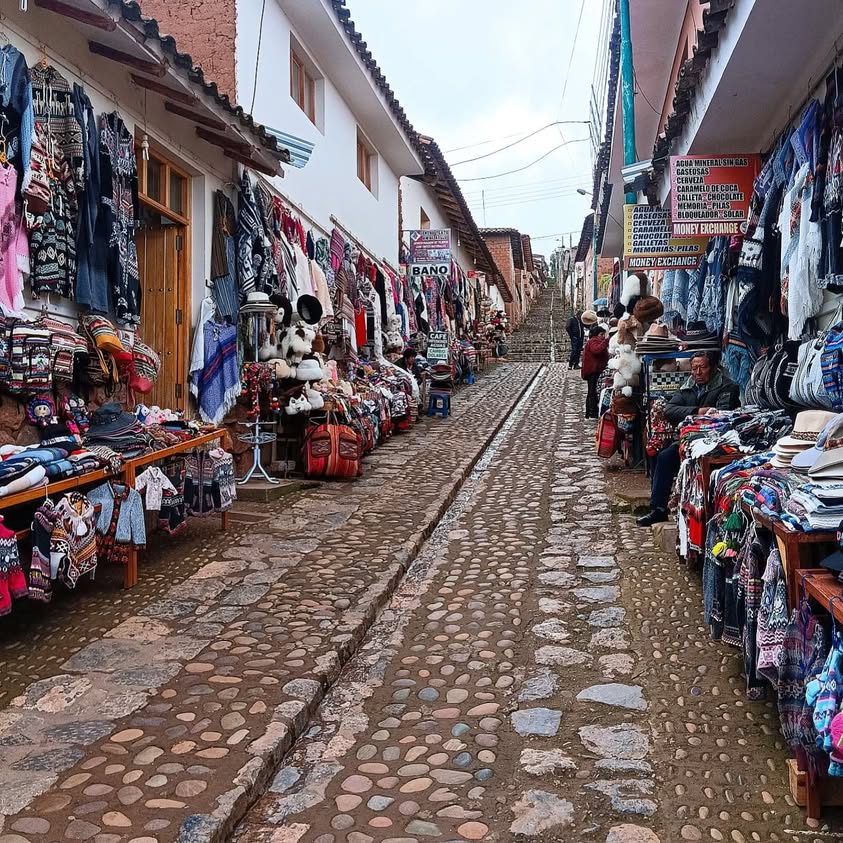
- The Streets of San Blas
A maze of cobbled alleyways, art galleries, coffee shops hiding behind wooden doors, and views that sneak up when you least expect them.
-
 The Energy
Yes, Cusco has “energy.” Call it spirituality, call it altitude-hallucination, call it Andean charm — but you feel it.
THE SACRED VALLEY NEAR CUSCO – THE INCA CIVILISATION’S BREADBASKET AND SPIRITUAL SPINE
If Cusco is the head, the Sacred Valley is the pulse.
It stretches from Pisac to Ollantaytambo, with villages, terraces, ruins, farms, weaving communities, markets, and mountains that stare into your soul.
The Incas didn’t randomly choose this place. They recognized its perfect microclimate, its protective mountains, and the rich, generous Urubamba River that nourished everything.
The Valley was:
- A farming center
- A spiritual corridor
- A military buffer
- A royal retreat
- A research lab
- A cultural highway
Let’s explore it piece by piece.
PISAC – Markets, Terraces, and Andean Geometry
Pisac is where you realize the Incas were not just builders — they were visionaries.
The Pisac Ruins
Perched high on the mountainside, these ruins boast some of the most complex agricultural terraces in the Andes. Curving, sweeping, hugging the contours of the earth — they look like green amphitheatres waiting for gods to descend and perform.
The Pisac Market
Color explodes here. You bargain, you laugh, you eat empanadas fresh from wood-fired ovens, you buy a poncho you don’t need, and you love every second of it.
MORAY – THE INCA AGRICULTURAL LAB THAT LOOKS LIKE A MARTIAN COLISEUM
This is one of the most stunning sites in the Sacred Valley — not because of its scale, but because of its intelligence.
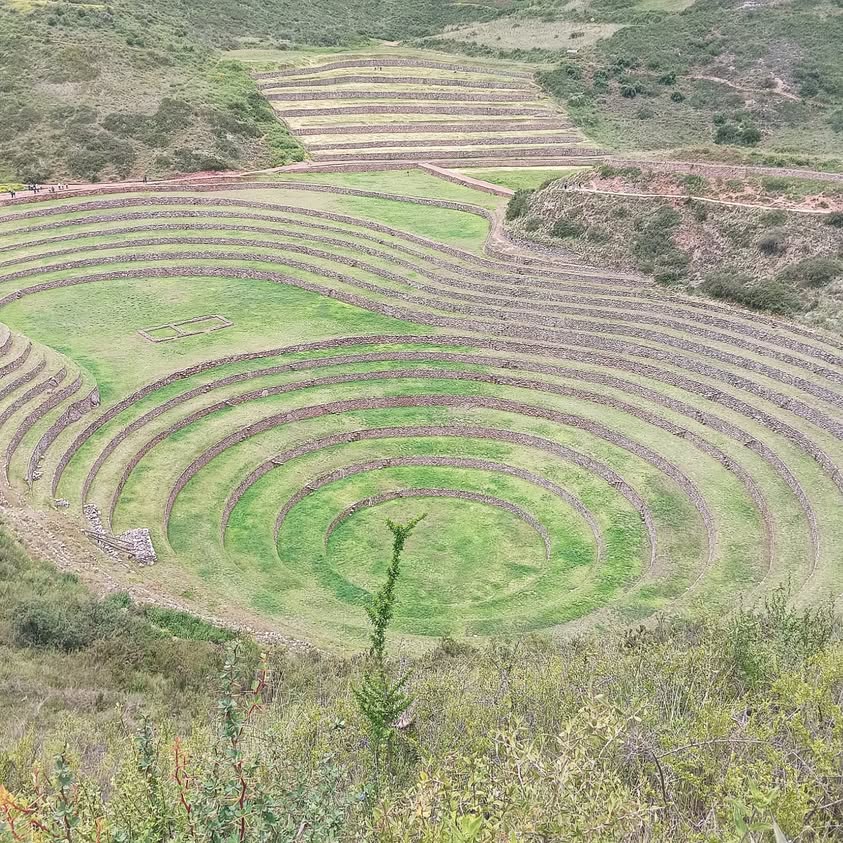 Moray wasn’t a stadium. Neither was it an amphitheater.
It was a temperature experiment — each terrace level offering a different microclimate.
The Incas used it to test crops, altitudes, growing conditions, and create resilient food systems.
This was science. Not superstition. Nor was it guesswork. It was real agricultural research — 600 years ago.
MARAS SALT MINES – Terraces of White in a Valley of Green
High in the mountains lie thousands of tiny white pools, shimmering like a mosaic.
These pre-Inca salt mines are still active today, producing Andean salt that chefs worship like a religion.
Each family owns a pond. And each pond yields salt.
Together they form one of the most hypnotic landscapes in Peru.
OLLANTAYTAMBO – THE LIVING INCA TOWN
If the Sacred Valley is a time machine, Ollantaytambo is the bit where you step into the past and the past steps right back.
Why is it special?
Because people still live in original Inca houses, walk along Inca streets, use Inca water channels, and travel through Incan gateways.
The Fortress
A massive granite stronghold… Terraces shaped like mountain stairways… Temples aligned with the solstice… A vantage point so strategic that even Spanish conquistadors respected it.
Ollantaytambo is where the Incas actually defeated the Spanish — one of their rare victories.
This alone deserves applause.
Train to Machu Picchu
This town is also the scenic starting point for the train ride to Aguas Calientes.
THE URUBAMBA RIVER – THE VEIN THAT FED A CIVILISATION
The Urubamba is more than water – it is movement… It is memory. And it is mythology.
The Incas believed rivers had spirits. They believed mountains watched over them.
They believed the land was alive.
Standing by the Urubamba, watching it curl its way past villages and ruins, you understand why they felt this way.
This isn’t just a river. It is a whispering storyteller.
THE FEELING OF THE SACRED VALLEY AND CUSCO
Not all travel sensations can be described. Some must be inhaled.
The Sacred Valley has a very particular emotion — a mix of:
- humility
- quiet awe
- nostalgia (for something you can’t remember)
- exhilaration
- grounding
- gratitude
It’s a place where you don’t talk much. You just let your breath catch up with your thoughts.
FOOD, CULTURE, PEOPLE
In the Valley, you meet:
- weavers with fingers that move like hummingbirds
- farmers who smile at the sky more than at cameras
- alpacas with excellent hair
- musicians playing pan flutes that echo through stone walls
- grandmothers selling chicha and stories in equal measure
This is the Peru behind the postcards — intimate, earthy, warm.
TRAVEL TIPS FOR CUSCO AND THE SACRED VALLEY (FROM SOMEONE WHO LEARNED THE HARD WAY)
- Take it slow – You are at altitude. Your lungs are working overtime.
- Hydrate – Coca tea is your ally. (Just don’t try taking coca leaves through international airports.)
- Layer up – The temperature changes more frequently than your WhatsApp groups’ opinions.
- Spend at least two days – The Valley isn’t a checklist. It’s a vibe.
- Choose a hotel with a view of the mountains – You will thank yourself every morning.
WHY CUSCO AND THE SACRED VALLEY MATTERS
Because this is where you understand the Incas. Their cities impress you and their temples awe you.
But their valley explains them.
Here is where they farmed and prayed. This is where is where they built terraces that still outsmart landslides. Here is where they connected earth to sky through architecture and astronomy.
The Sacred Valley is a civilization’s diary — open, honest, beautiful. You read it not with your eyes, but with your breath.
IN SUMMARY
Cusco is the memory.
The Sacred Valley is the heartbeat.
Machu Picchu is the crown.
Together, they form a trilogy — one that defines Inca culture and Peru itself.
And if you truly want to “Don’t trip on the usual,” you must experience all three — slowly, intimately, curiously.
This was Part of the Mini Blogs on my travels in Peru… Read the full travelogue here…
And just in case you want to visit Peru, contact Beyonder Travel. Oh, and feel free to check out the other experiences across the world that are put up there…



Leave a Reply