
Tranquebar – The Forgotten Colonial Outpost – Beyonder
nranquebar (Tharangambadi) is the place where Denmark Once Checked In, and History Forgot to Check Out… I didn’t arrive in Tranquebar so much as I washed up there.
A long, dusty drive down the Tamil Nadu coast. Salt in the air. Fishing nets drying like tired punctuation marks by the road. And then suddenly—there it was. A small town with a very big secret.
Tranquebar. Or Tharangambadi, if we’re being respectful and precise. The place where the Danish once planted a flag, built a fort, printed the Bible, traded souls and spices, and then… quietly left. No drama. No Partition-scale trauma. Just a colonial mic drop.
I stayed at an old Danish residence restored with restraint and taste. High ceilings. Louvered windows. The kind of place where the walls don’t shout their history; they murmur it. And if you listen closely, you hear sea wind, Latin hymns, creaking floorboards, and the soft rustle of paperwork from a long-forgotten colonial office.
This was going to be interesting.
 Tranquebar – A Danish Detour in South India
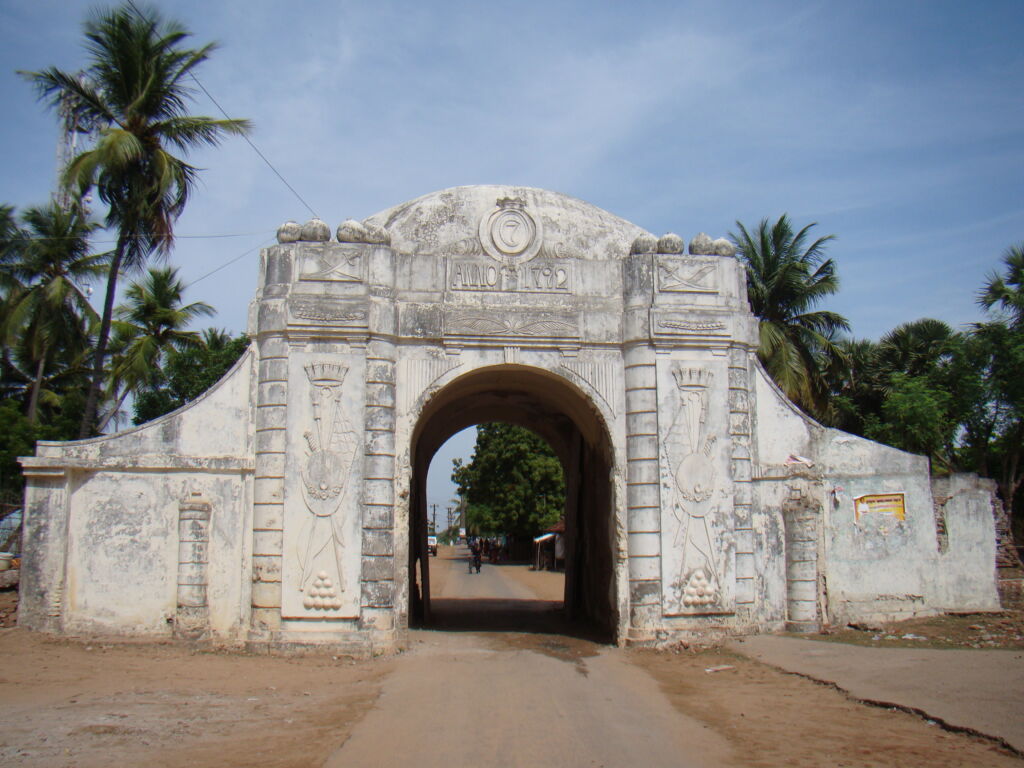
Let’s get this straight first. Tranquebar is not Portuguese. Not British. Not French. This was Danish India.
In 1620, the Danes showed up on this strip of the Coromandel Coast, negotiated with the Thanjavur Nayak, and built Fort Dansborg—a solid, functional, sea-facing fortress meant to protect trade, not intimidate locals. No gothic excess. No imperial swagger. Just a practical Nordic outpost sweating it out in tropical heat.
For over 200 years, this town was a European anomaly—Lutheran churches, Danish street names, printing presses, and missionaries translating the Bible into Tamil. In fact, the first Tamil printing press in India started right here. Let that sink in.
Tranquebar wasn’t just trading pepper and textiles. It was trading ideas.
And then in 1845, Denmark sold it all to the British. Cashed out. Moved on. Like a startup exit, colonial edition.
Fort Dansborg: Grandeur, Ghosts… and Pink Paint?!
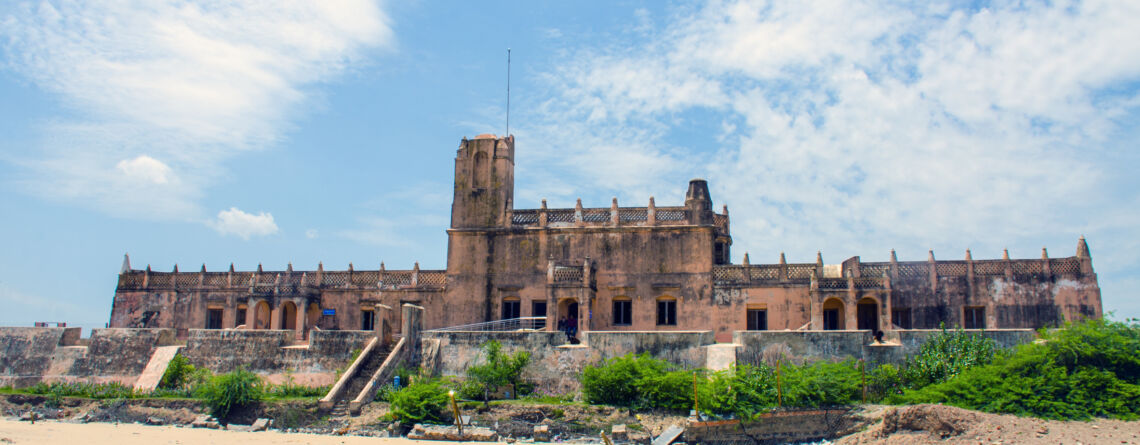
The fort dominates the town. Squat. Broad. Sea-facing. It should feel stern, weather-beaten, dignified. Instead, when I walked up to it, I stopped short.
Pink. Walls.
Not “soft terracotta”. And not “heritage limewash”. Not even “faded colonial blush”. Pink. As in, wedding-mandap-meets-municipal-office pink.
I stood there aghast.
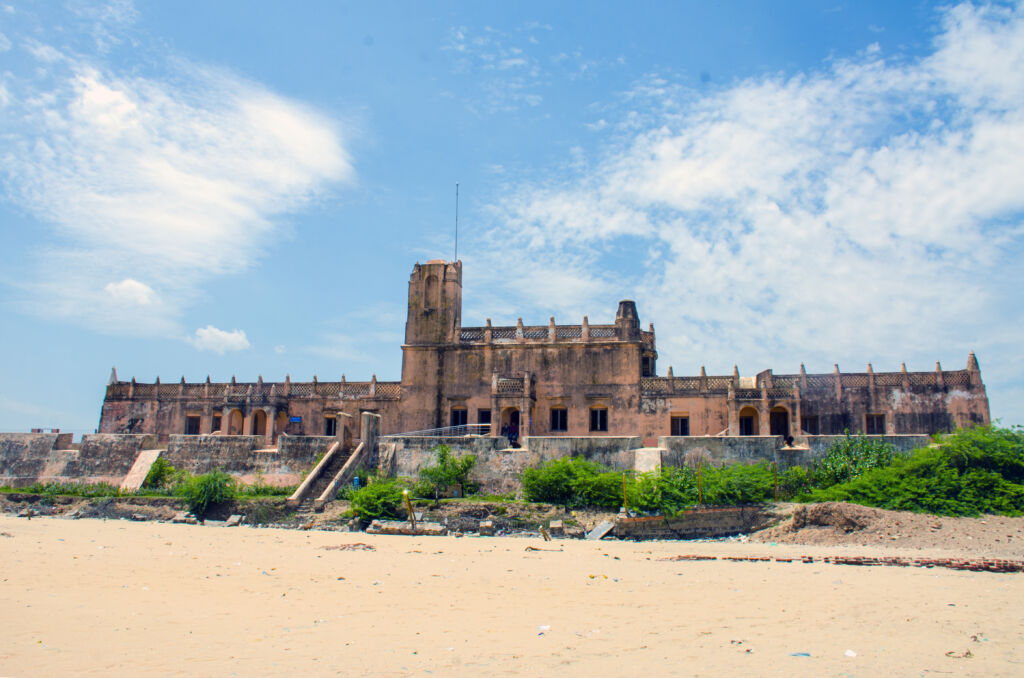 This was Fort Dansborg—the second-largest Danish fort in the world after Kronborg in Denmark. A place that had seen traders, soldiers, missionaries, storms, and centuries of neglect. And someone, somewhere, had looked at it and thought: You know what this needs? A coat of Barbie-adjacent enthusiasm.
Restoration in India often means enthusiasm without nuance. Effort without understanding. A desperate desire to make old things look new rather than letting them look true. Or maybe the Danes themselves painted it pink – nobody there was able to educate me on this…
Inside, the fort redeems itself somewhat. Thick walls. Arched corridors. Sea views that remind you why this place mattered. You can almost see ships on the horizon, sails full, accounts ready, faith and commerce marching hand in hand.
Still. The pink stays with you. Like lipstick on a war veteran.
Churches, Cemeteries & Quiet European Echoes of Tranquebar
Tranquebar’s churches are its soul.
Zion Church – India’s oldest Protestant church (this town is where the Lutheran brothers from Germany began to spread the Protestant faith) – stands calmly, without spectacle. Whitewashed, solid, dignified. Inside, the air feels cooler, quieter. The kind of silence that has been practiced for centuries.
Nearby is New Jerusalem Church, equally understated, equally sincere.
And then there’s the cemetery. Colonial cemeteries are strange places. They’re deeply melancholic but oddly peaceful. Names carved in stone: missionaries who arrived full of purpose and died of tropical diseases. Children who didn’t last a year. Wives who followed husbands across oceans and never returned.
No triumph here. Just human cost.
Food: Simple, Coastal, and Comforting
Tranquebar isn’t a destination for culinary fireworks. And that’s a compliment.
At Neemrana, meals are slow and coastal. Fresh fish. Simple curries. Vegetables cooked without pretension. Rice that tastes like it belongs there.
Outside, the town offers honest Tamil food—idlis that mean business, seafood that doesn’t need garnish, coffee that wakes you up without asking permission.
No fusion nonsense. No colonial cosplay menus. Just food that feeds. Eat, walk, repeat.
The Rhythm of Tranquebar
Tranquebar doesn’t hustle.
Fishermen mend nets. Children cycle through sandy lanes. The sea keeps time. There’s no checklist energy here. No selfie urgency. This is not a “do it all in four hours” place.
It’s a place to walk without purpose. To sit and stare. To notice doors, windows, faded signboards, and cats that look like they’ve inherited property.
The town has an air of having seen too much to get excited anymore. I liked that.
Nearby Detours Worth Taking
Shani Temple, Thirunallar
A short drive away is Thirunallar, home to one of the most important Shani (Saturn) temples in India.
Whether you’re a believer or not, the atmosphere is intense. Devotees come here seeking relief from Saturn’s wrath—career blocks, health issues, life’s inexplicable slowdowns.
There’s something grounding about watching faith in its raw, unfiltered form. No philosophy. Just hope, oil lamps, and the weight of planets.
Mangrove Forest Experience – Pichaivaram
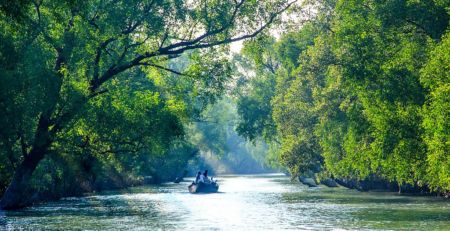
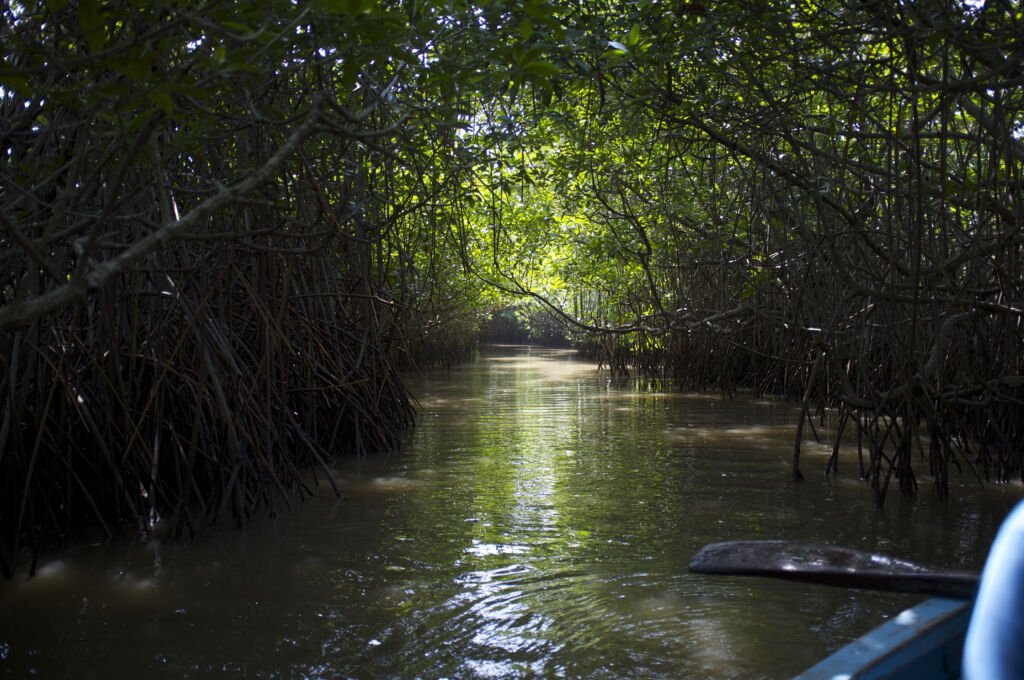 Another beautiful surprise is the mangrove forest boat ride nearby.
Silent waters. Twisting roots. Birds doing their thing without caring about your itinerary. Mangroves are nature’s quiet engineers—protecting coasts, nurturing life, holding land together without applause.
It’s meditative. A reminder that not all ecosystems shout their importance.
How to Get There (Without Losing Your Mind)
Tranquebar is blissfully inconvenient.
- Nearest airport: Trichy (about 3.5 hours by road)
- Nearest major town: Nagapattinam or Mayiladuthurai
- Best way: Preferably daylight. Preferably unhurried.
This is not a place you stumble into. You choose it. And that filters the crowd beautifully.
Why Tranquebar Lingers
I left Tranquebar with mixed emotions.
I loved the history. The restraint. The quiet dignity of a town that once mattered enormously and now doesn’t need to prove anything.
I hated the cosmetic vandalism of its fort. But maybe that’s Tranquebar too—a place caught between memory and modern misunderstanding. Between preservation and performative upkeep.
It’s not polished. It’s not Instagram-perfect. It doesn’t care if you come or not.
And that, oddly, is its greatest charm.
If you go, go slowly. Stay somewhere with character. Walk more than you plan. Expect less than you imagine.
Tranquebar won’t entertain you. It will stay with you. And honestly, that’s the better deal.
Don’t trip on the usual.
Interested in exploring this place, maybe in addition to some more places in South India? Get in touch with Beyonder Travel.



Comments (2)
Beautifully written Anand !
We are going there during the Good Friday long weekend, and this really helped in my itinerary research.
Where can I get information about the timings and holidays for the places that are generally recommended to visit?
I would suggest just go there and roam around the place – its quite small… the Fort, Museum, Churches, Temple are all in walking distance… Plan in advance in case you wish to visit the mangroves or Poompuhar or the Shani temple in Thirunallar. Remember, this is a place for relaxing and exploration at a leisurely pace – not high energy tourism (if there is such a term)… 😉