
Selknam: Cosmos on The Skin – Beyonder
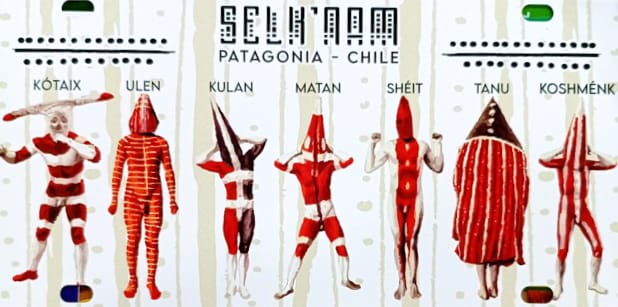
Selknam are the ancient People of the Patagonian region Who Painted the Cosmos on Their Skin according to their belief system.
There are places in Patagonia where the wind doesn’t just blow… it remembers. And if you stand still long enough in the desolate landscape, between the silence and the howl, you might begin to sense echoes of the Selknam people.
They did not live on this land… They lived with it.
The First Time: When the World Was Still Being Decided
In Selknam belief, the world was not created in a single, decisive act… It was shaped. Negotiated. Assigned.
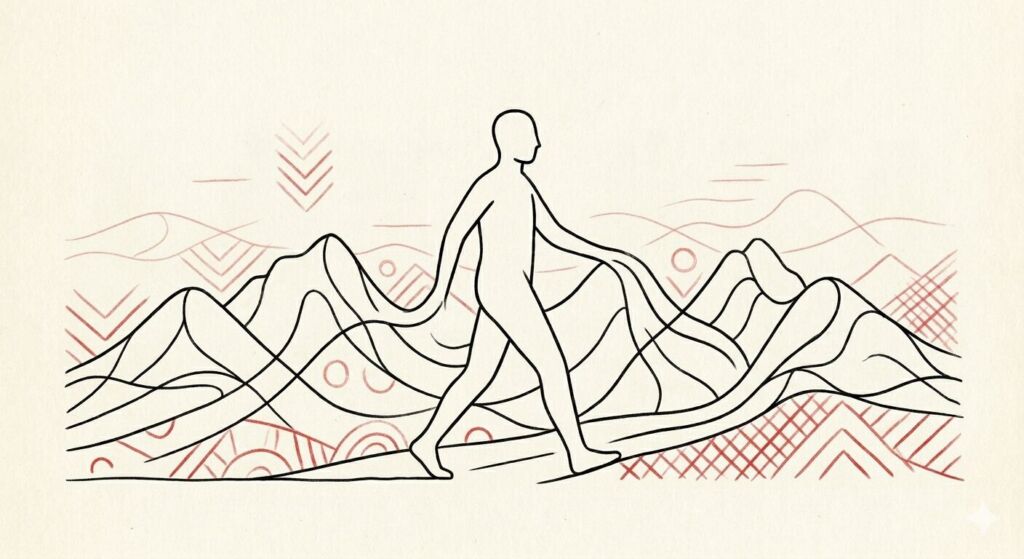
At the center of it all stood Temaukel, a distant creator, more presence than personality. A God who began things, but did not interfere… The real work was done by Kenos, who walked the land of Tierra del Fuego, shaping it into what it would become… raising mountains, carving valleys, placing rivers like deliberate strokes on a canvas.
Nothing was accidental… Everything had intention. Even humans were assigned roles, not as rulers of nature, but as participants within it. A radical thought, isn’t it?
When the World Was Ruled by Women – Selknam
And then comes the story that feels almost too sharp, too self-aware for something so ancient. Once, the Selknam believed, women ruled the world. Their power came from a secret.
They convinced men that supernatural spirits controlled life itself… when in truth, it was the women behind the masks, orchestrating fear, shaping belief, maintaining order… Until the secret broke.
What followed was not subtle. It was not symbolic. It was a violent reversal. Power shifted… Permanently.
And the memory of that deception? It was never erased. Instead, it was preserved. Performed. And passed on as a ceremony – The Hain Ceremony.
The Hain Ceremony of the Selknam: Theatre, Fear, and Truth
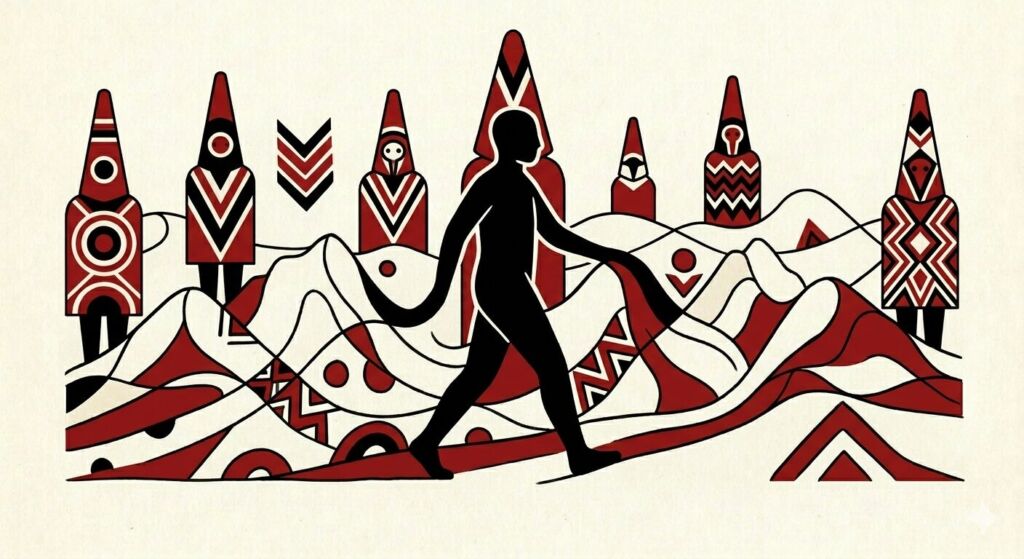
The Hain ceremony was an initiation ritual for young men where myth became lived experience. The elders painted their bodies in stark whites, blacks, and reds. They became spirits.
Towering, other-worldly figures emerged from darkness, confronting initiates who believed they were witnessing something supernatural.
Except… they weren’t… They were watching a carefully constructed illusion. A recreation of the original deception…
A lesson disguised as fear.
Across Oceans, The Same Masks – Selknam and other Ancients
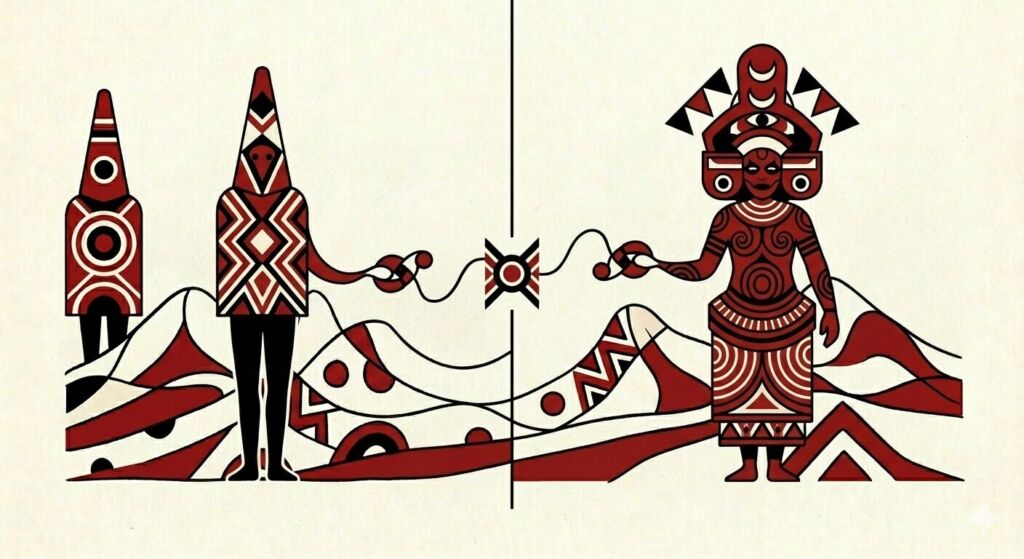
And here’s where Patagonia began to feel strangely familiar to me…
Because thousands of kilometers away, in the humid forests and backwaters of India, the same ideas take different forms.
In Kerala, folklore speaks of the Odiyan, a shadowy figure of the night, said to transform, deceive, and terrify. A master of illusion. A creature that bends perception itself…
In case you haven’t heard of this Kerala legend before, check out this very interesting movie which is about one of the last of the Odiyan lineage in the current day and age… Its a Malayalam film called “Odiyan” starring the superstar from Kerala – Mohan Lal. Watch it, its worth a watch (comes with English sub-titles in case language is a barrier)…
The Odiyan of Kerala legend is not unlike the Selknam spirits of the Hain… Fear, once again, as a tool. And Belief, once again, as architecture.
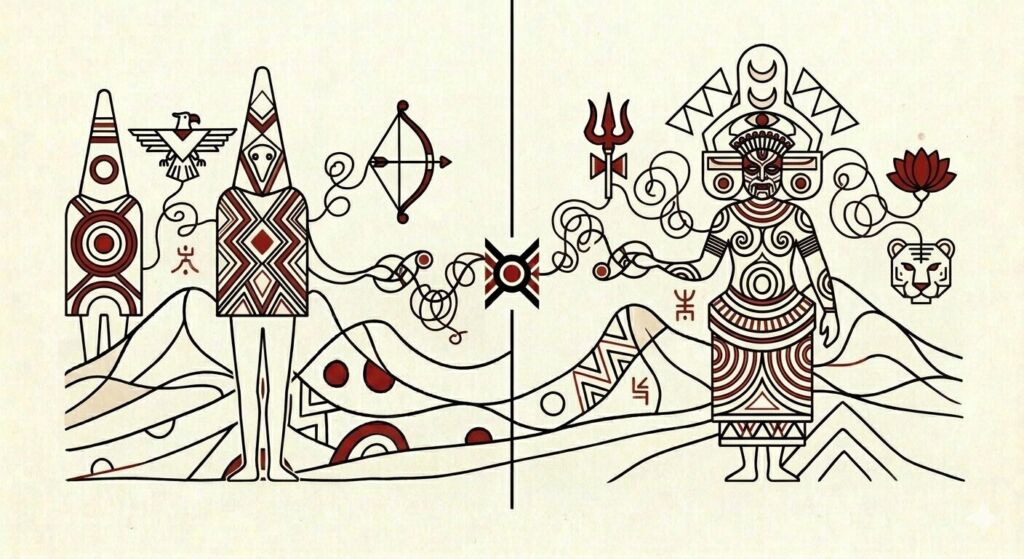
Further east in Bengal and Bangladesh, in the dense mangroves of the Sundarbans, survival itself is negotiated through belief… Before entering the forest, people invoke Bonbibi, protector of those who walk into tiger territory. And they acknowledge Dakshin Ray, the embodiment of the wild, unpredictable force of the jungle.
Because here too, the forest is not empty… It is inhabited… Watching… Deciding.
Across central and northeastern India, among forest communities, masked rituals, painted bodies, and spirit impersonations have long served purposes beyond religion… the purposes of initiation, storytelling, social order… Just like the Selknam.
The Language of Paint
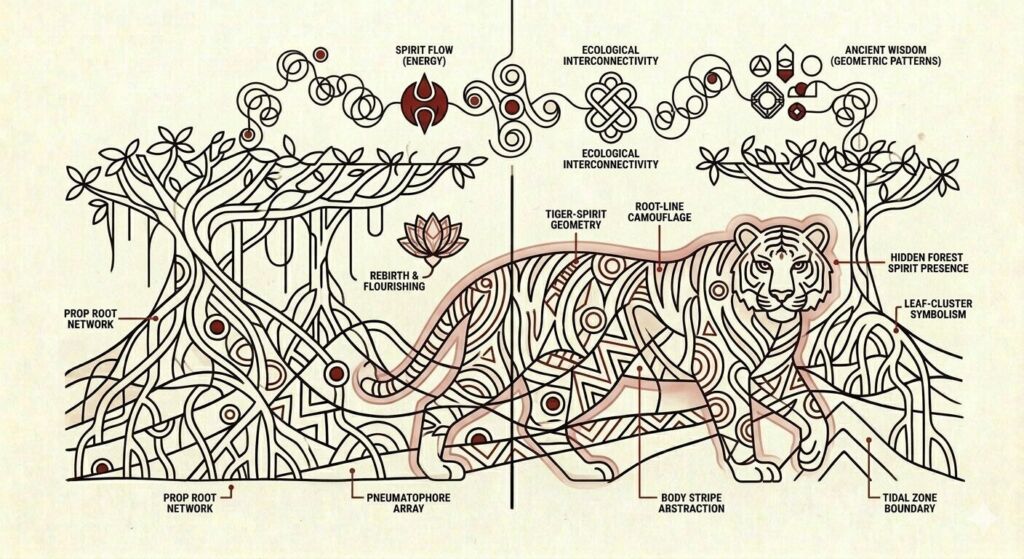
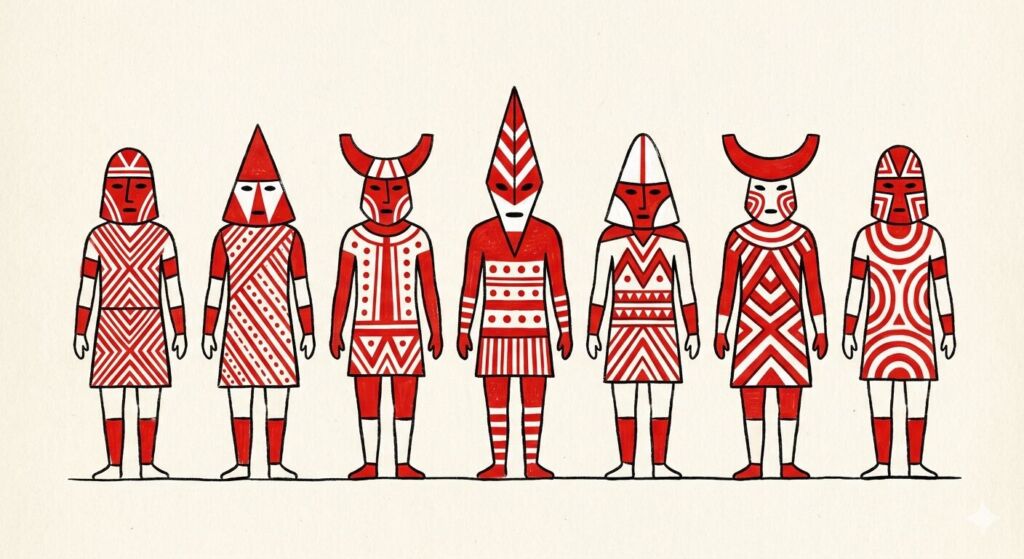
Back in Tierra del Fuego, the Selknam painted their bodies not for beauty, but for meaning… Lines. Circles. Contrasts. Each pattern carried identity. A painted body was no longer human.
It was myth made visible. A walking idea.
Same Story, Different Landscapes – Selknam and India
What connects Patagonia to Kerala… Tierra del Fuego to the Sundarbans… is not coincidence. It is instinct:
- Fear as a teacher
- Illusion as a tool
- Nature as something alive, not passive
The Selknam performed spirits. The Odiyan became one. The Sundarbans negotiates with the forest before entering it.
Different geographies… Same understanding.
The End That Came Too Quickly
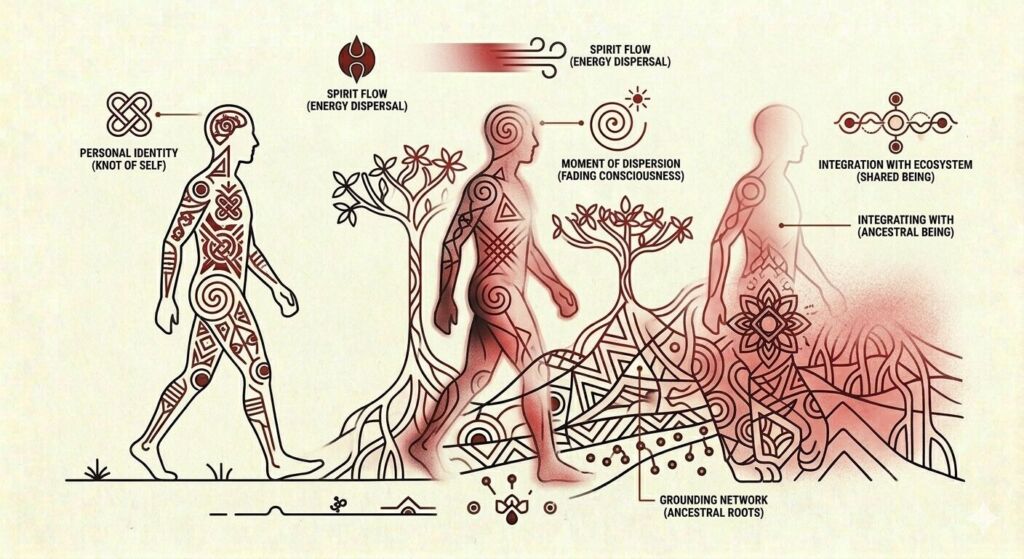
And then, like so many indigenous stories, this one fractures. By the late 19th century, with European settlers expanding sheep farming across Tierra del Fuego, the Selknam lost their land.
Then came the unthinkable…
They were hunted. Bounties were placed. An entire people, whose cosmology was built on balance with nature, were systematically erased… Within decades, their world collapsed.
And Yet… The Selknam Are Still Here
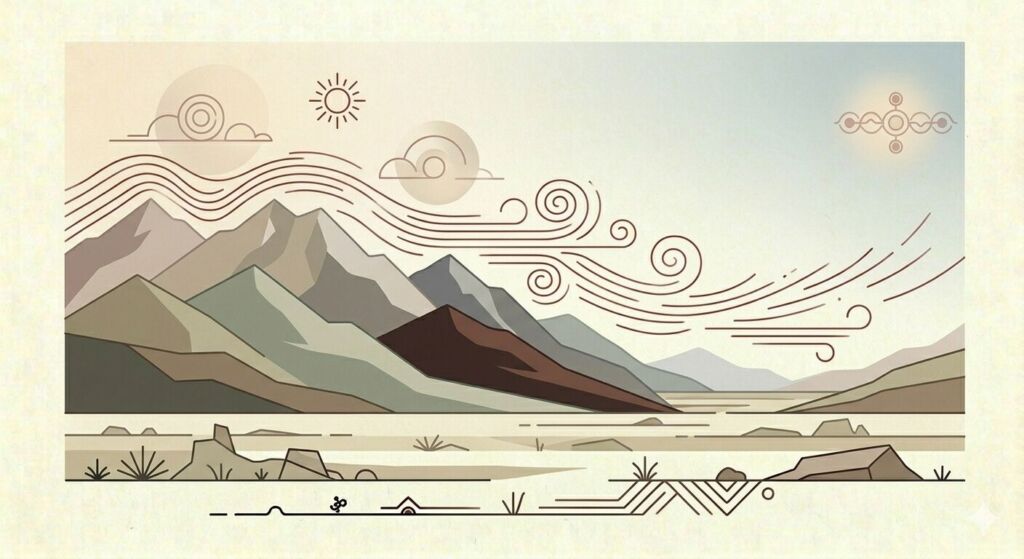
Stand in Patagonia long enough. Watch the wind move across the plains. And watch shadows drift across mountains.
And you begin to feel it… Not absence… Presence!
The Selknam may no longer walk this land. But their way of seeing it?
That lingers… In the silence. And in the wind… In the unsettling sense that this place is not empty…
Its just indifferent.
A Final Thought
The Selknam did not believe humans owned the land… They believed humans were placed within it. And given a role… A responsibility.
And across the world, in forests of India, in mangroves of Bengal, in stories whispered after dark… Others believed the same.
So perhaps the question isn’t whether these spirits were real…
The question is, why did so many cultures, so far apart, feel the need to imagine them?
Because maybe… just maybe… they weren’t imagining at all!
In case you wish to read about my travels in Chile, click here. And in case you wish to travel to Chile (or other places for that matter), check out Beyonder Travel.


Leave a Reply