
Brazil: Where the Streets Samba and the Rivers Dream
My Brazil odyssey began with a glass…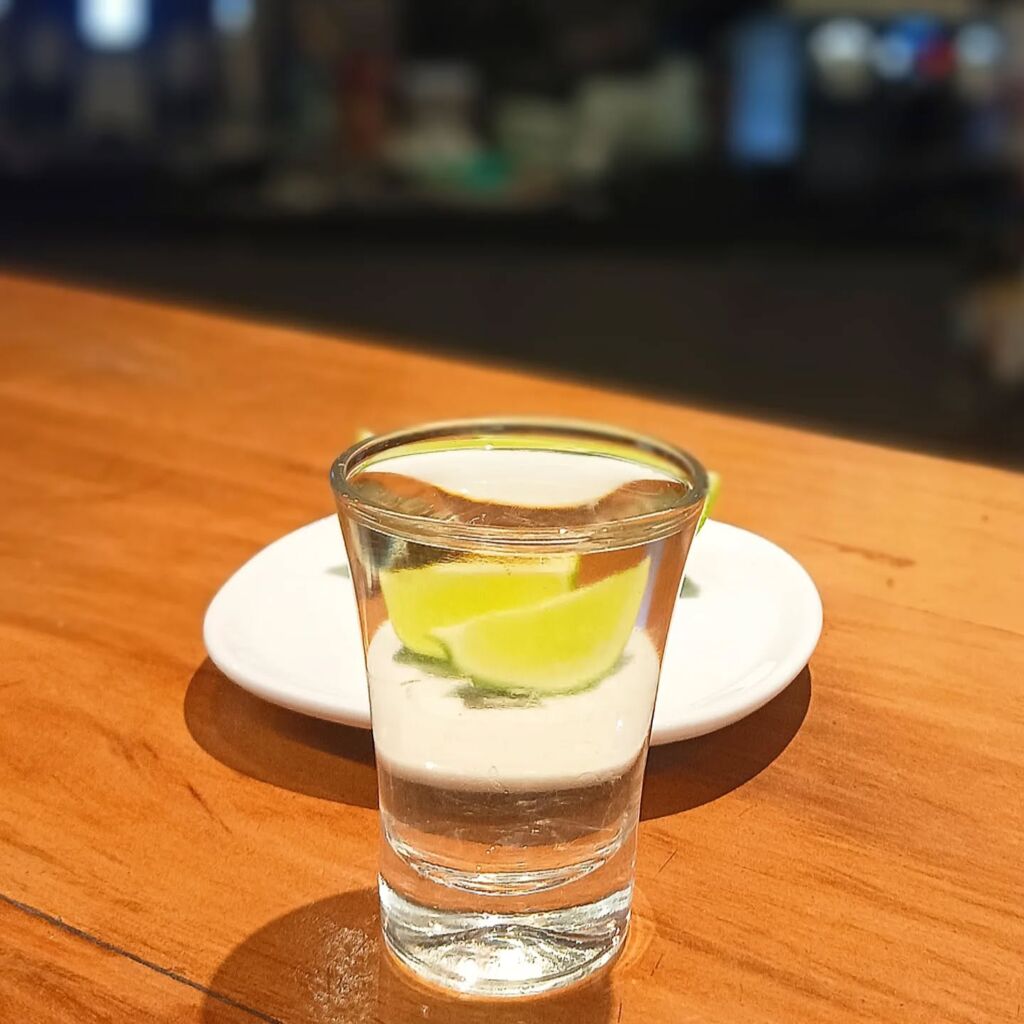
“Cachaça — Brazil’s liquid gospel.”
A simple shot of something clear, honest, and slightly dangerous — Cachaça, Brazil’s liquid gospel. I had barely landed in São Paulo before a bartender with the easy smile of a man who’s seen it all slid it across the counter, added a slice of lime, and said, “Welcome. This is how Brazil begins.”
It burned politely. Like a samba dancer brushing past you on purpose. And in that moment, I realized: this wasn’t going to be one of those “tick off the sights, click the photo, move along” sort of trips. Brazil doesn’t let you move along. It pulls you in, swirl by swirl — until you forget where the beat ends and you begin.
Samba, Streets, and Stories in Sao Paulo, Brazil
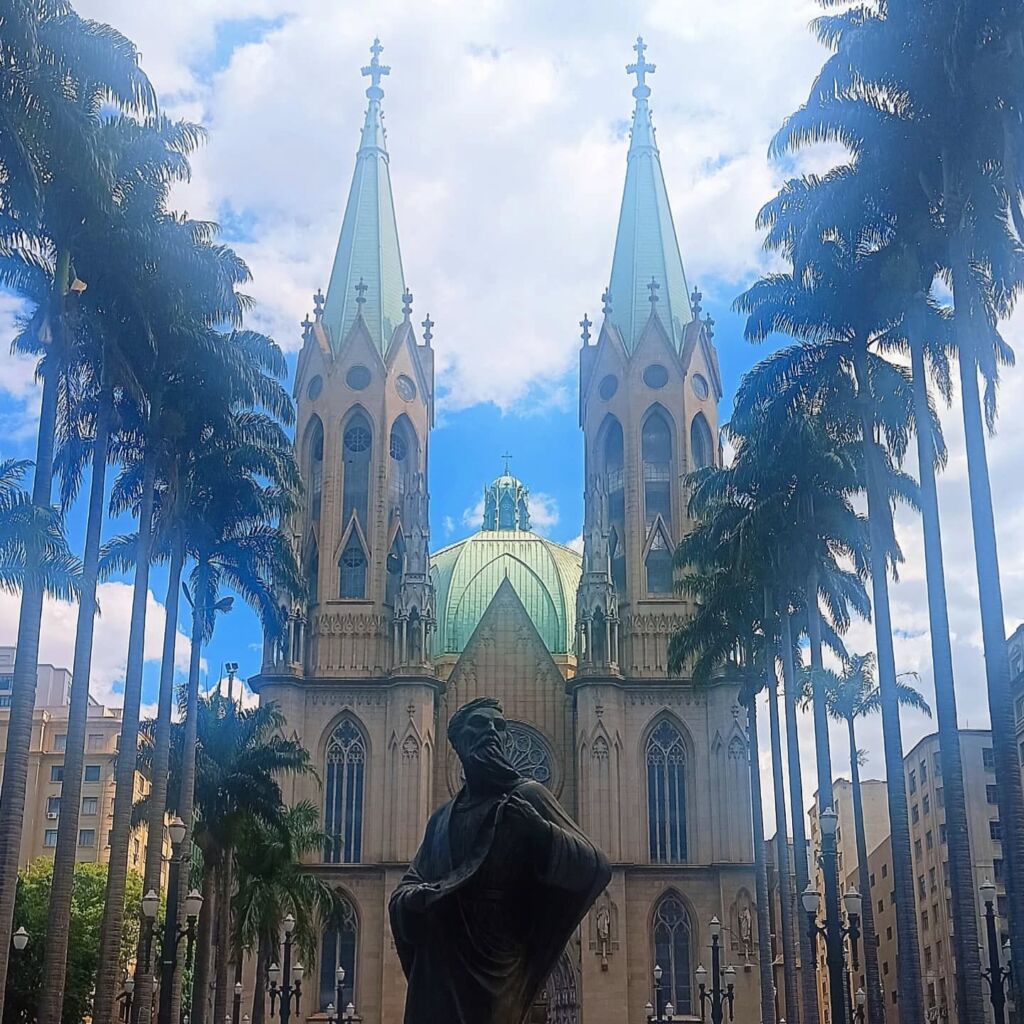
Between prayer and percussion — São Paulo knows both
São Paulo is the kind of city that laughs at itineraries. It’s not pretty in a postcard sense — it’s alive in the way jazz is alive, unpredictable and brilliant. On one street, you find a Gothic cathedral whispering prayers from another century; on the next, a wall explodes into color — dragons, birds, abstract dreams, and the occasional Joker staring you down from the graffiti wonderland of Beco do Batman.
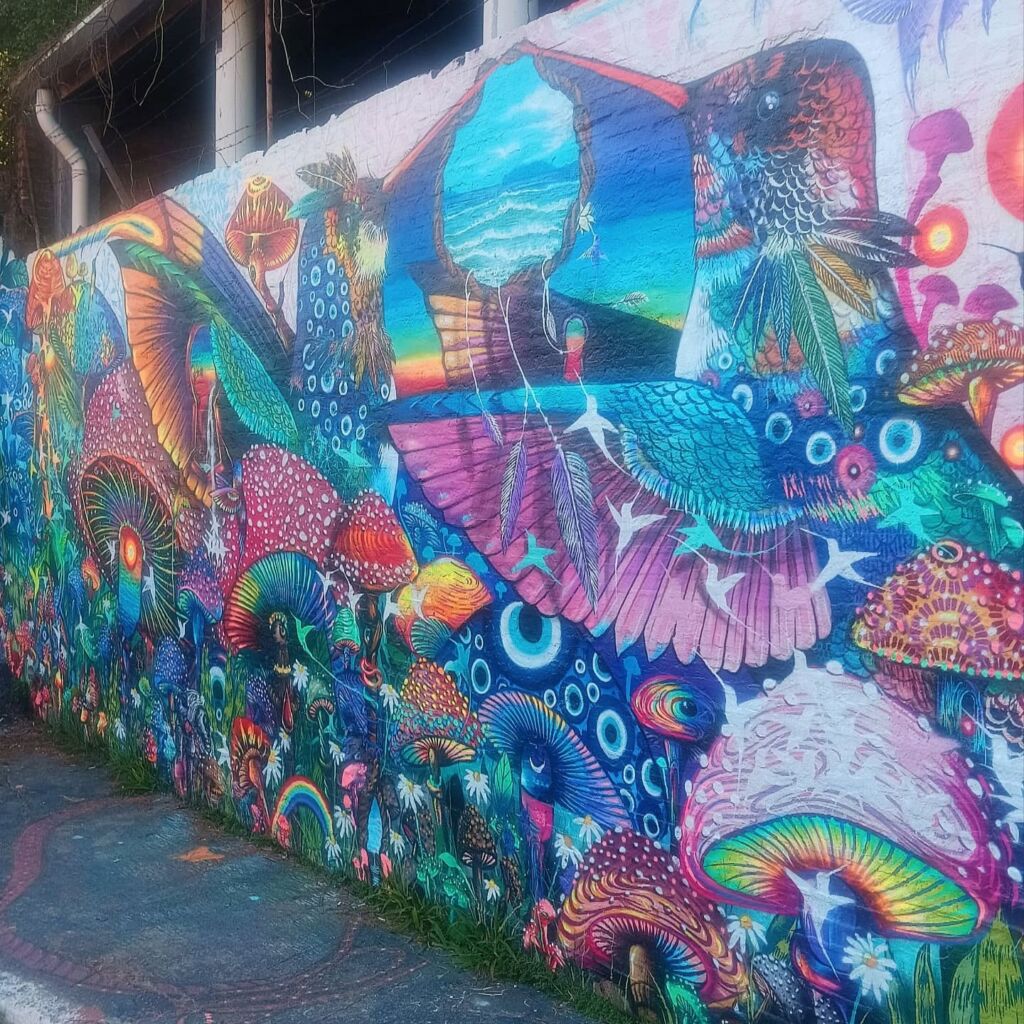
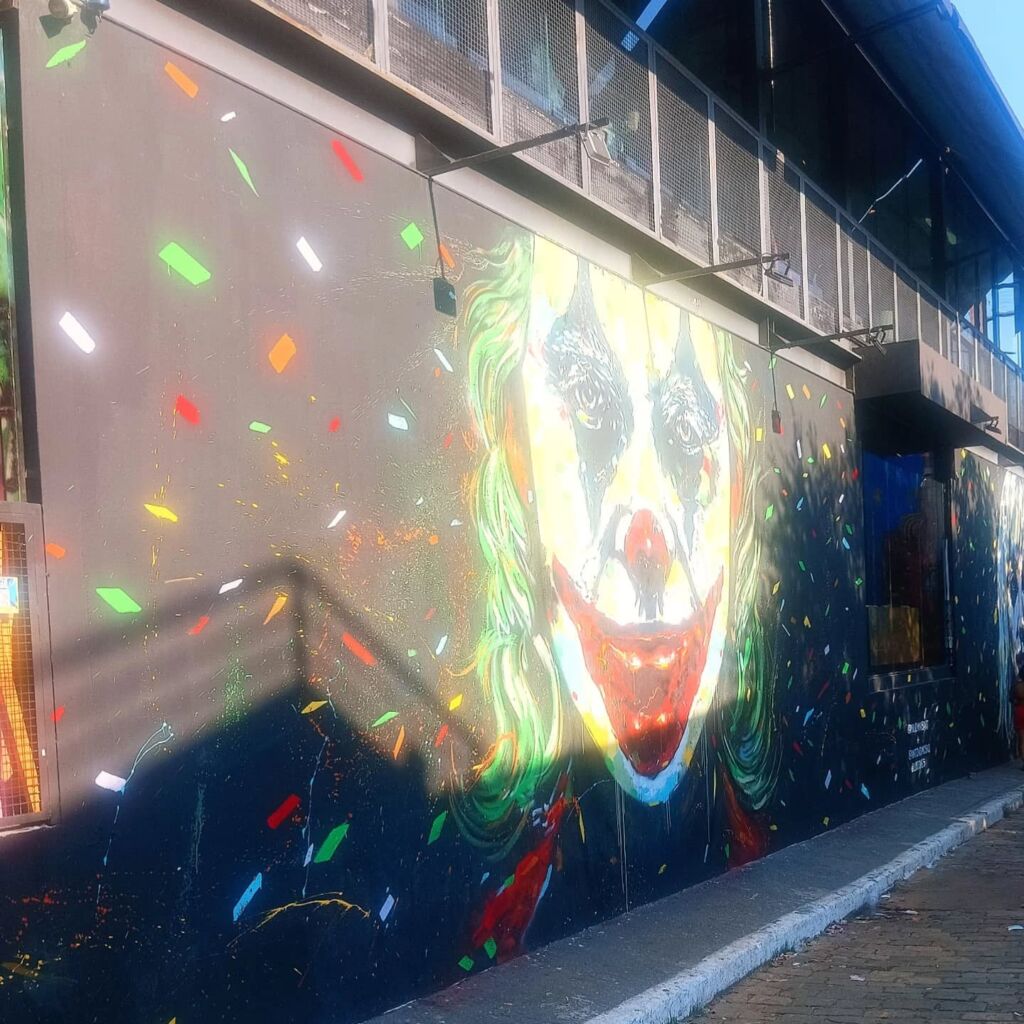
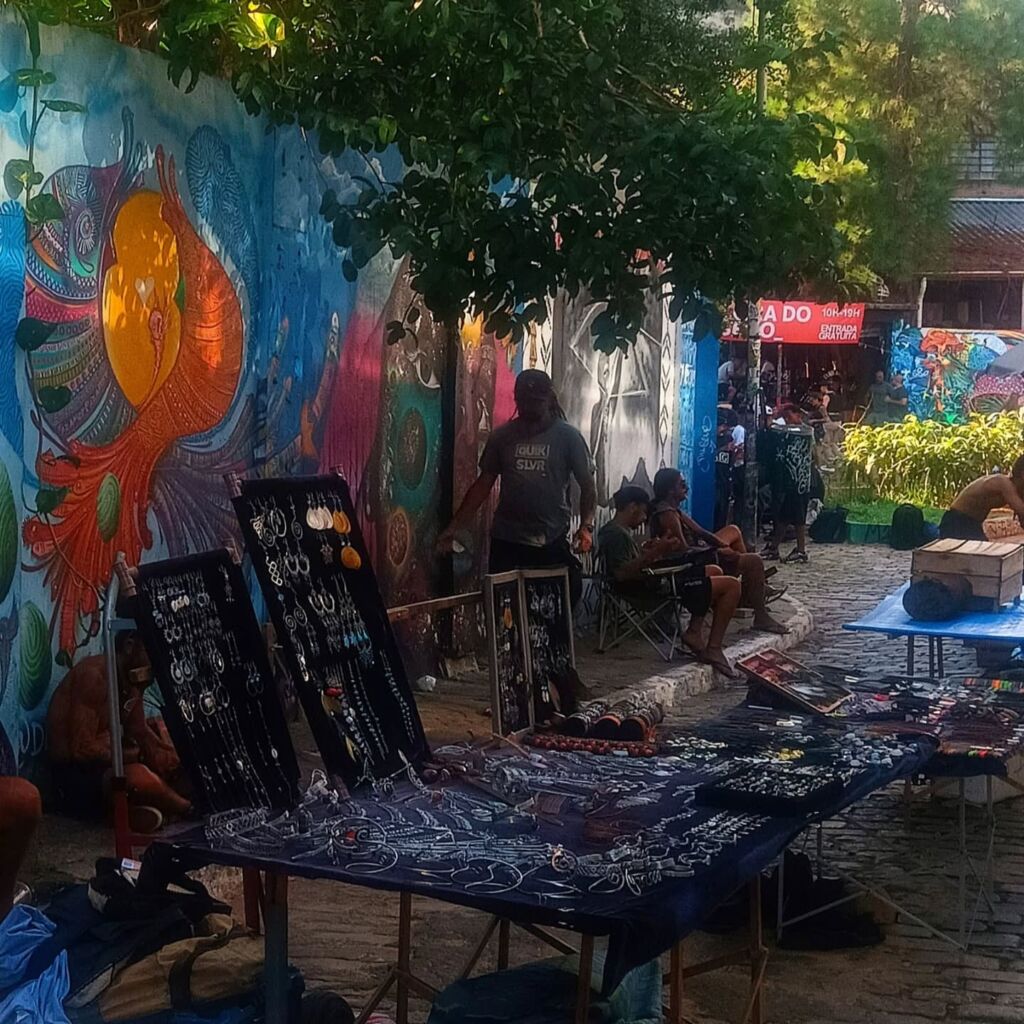
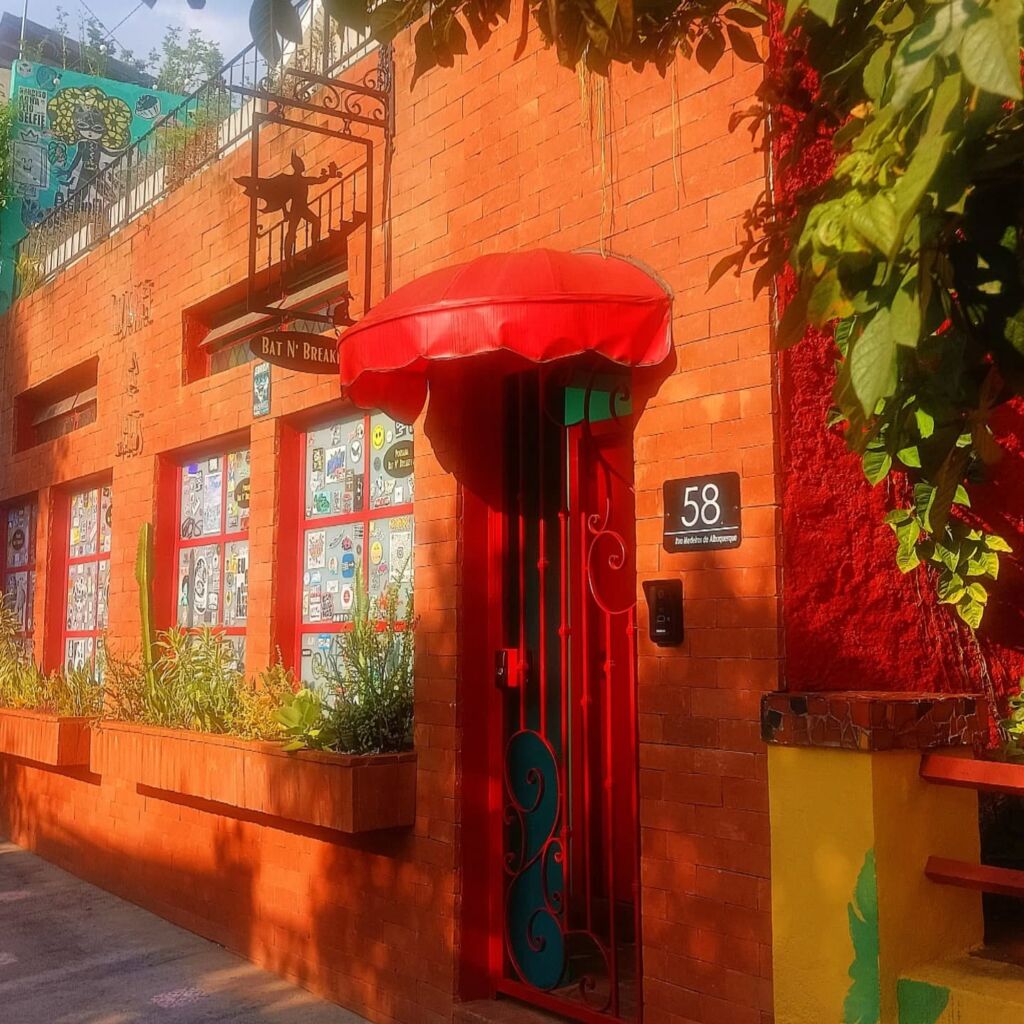
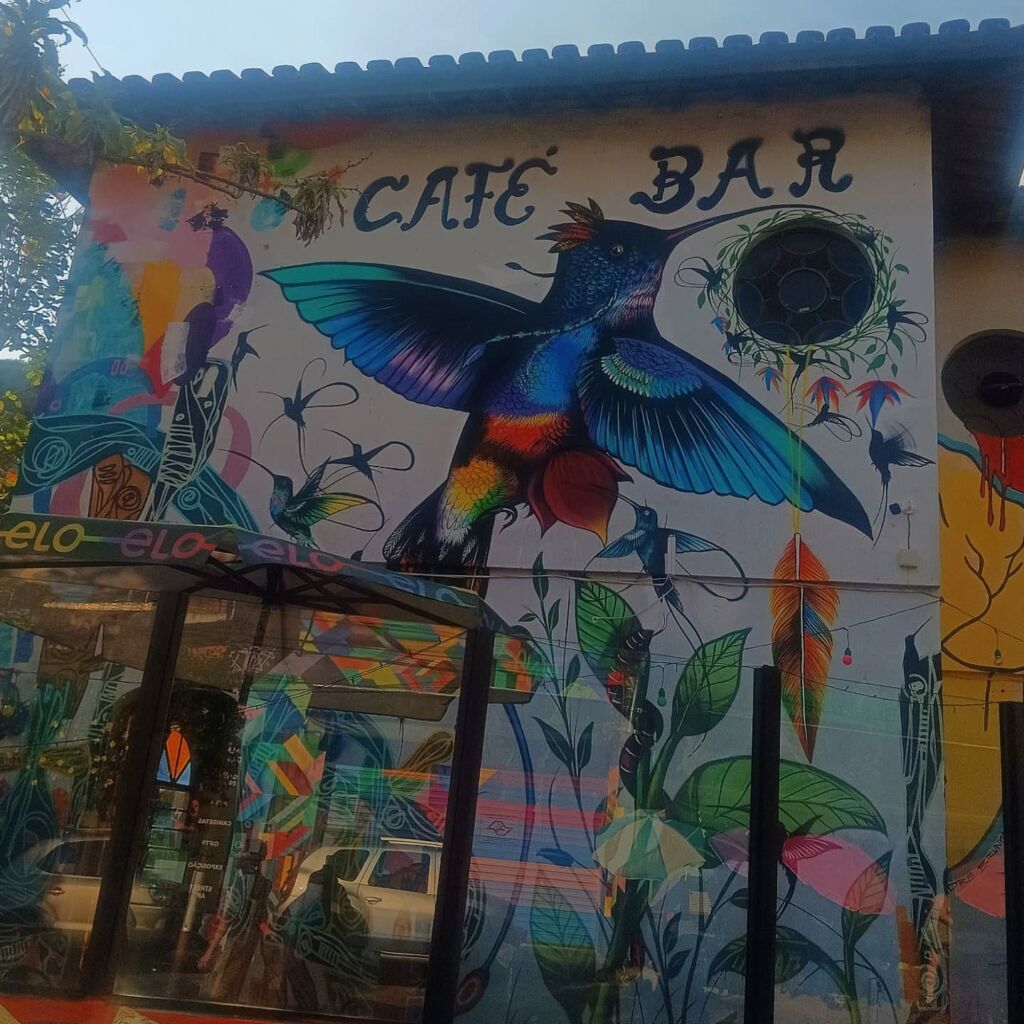
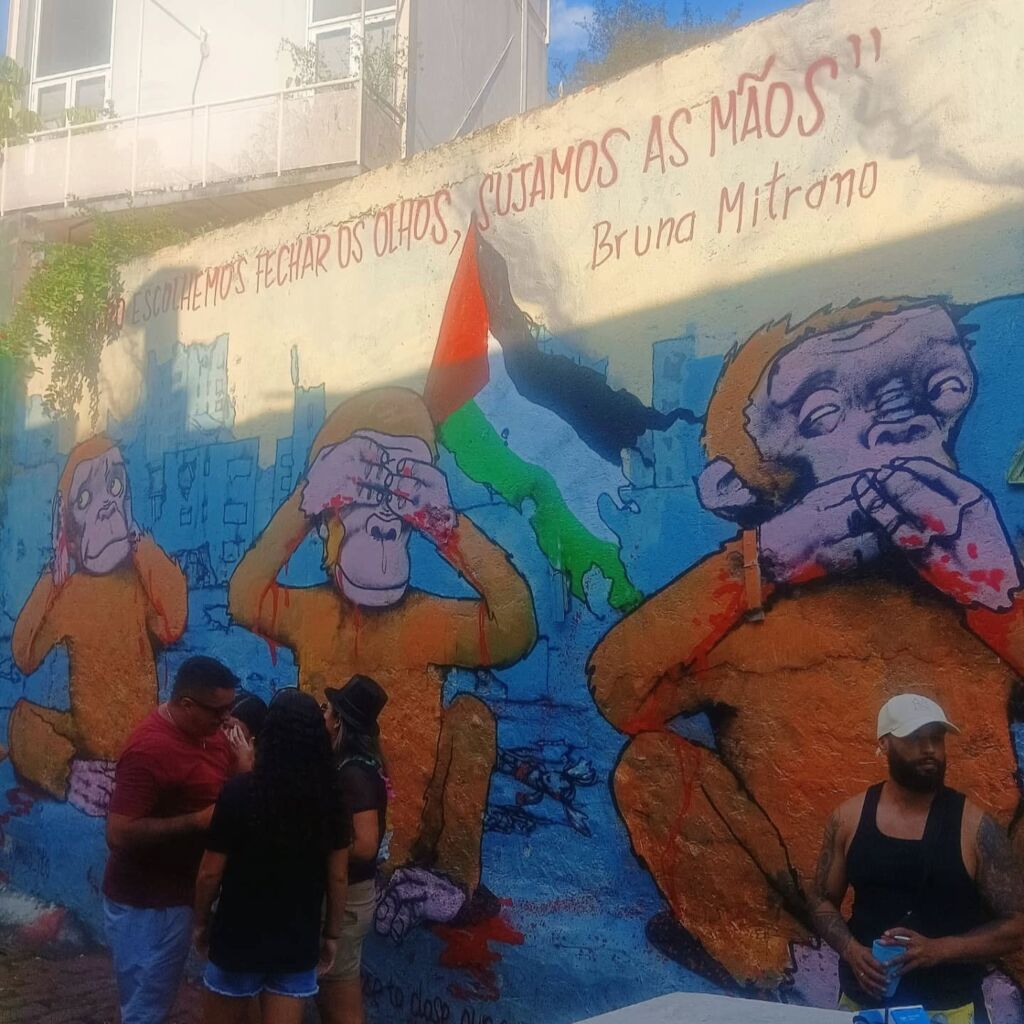
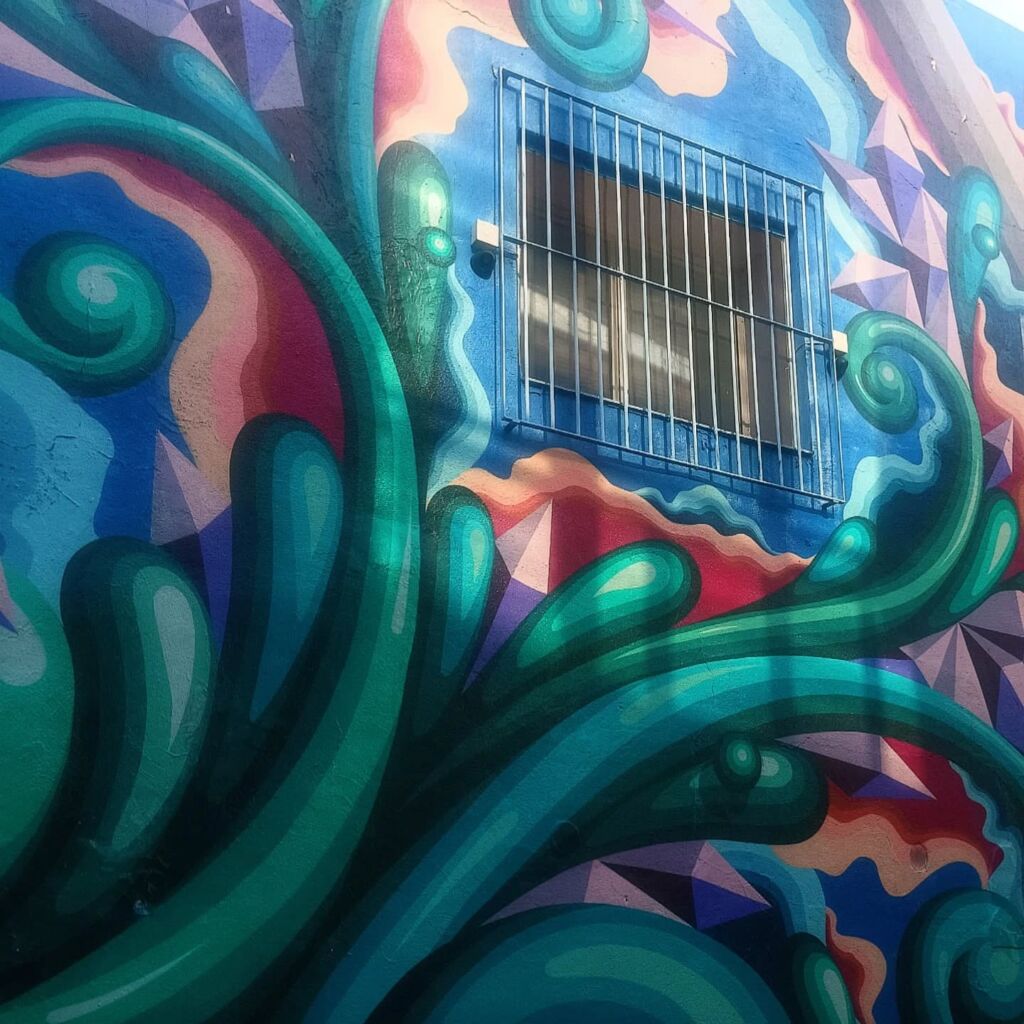
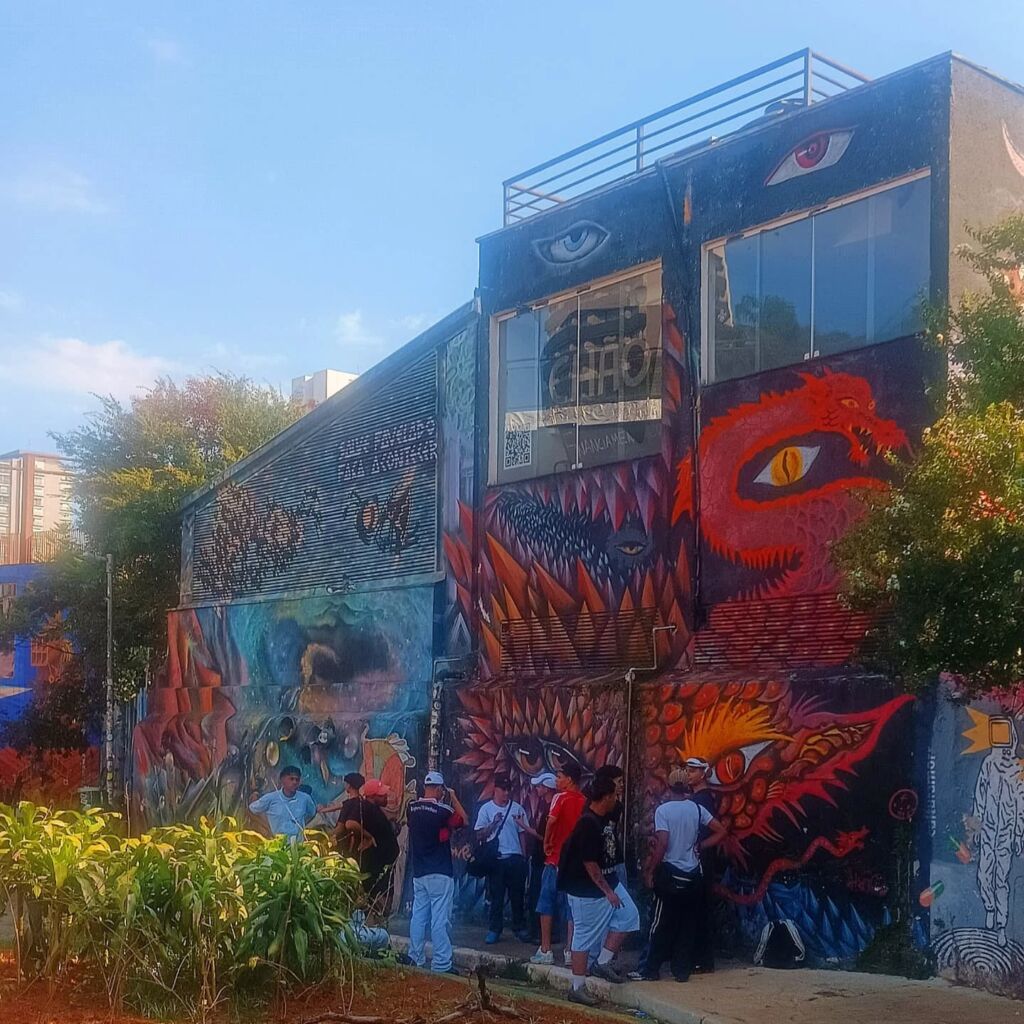
Beco do Batman — where the walls have louder stories than the people
Here, street art isn’t rebellion — it’s religion. And every wall has its preacher.
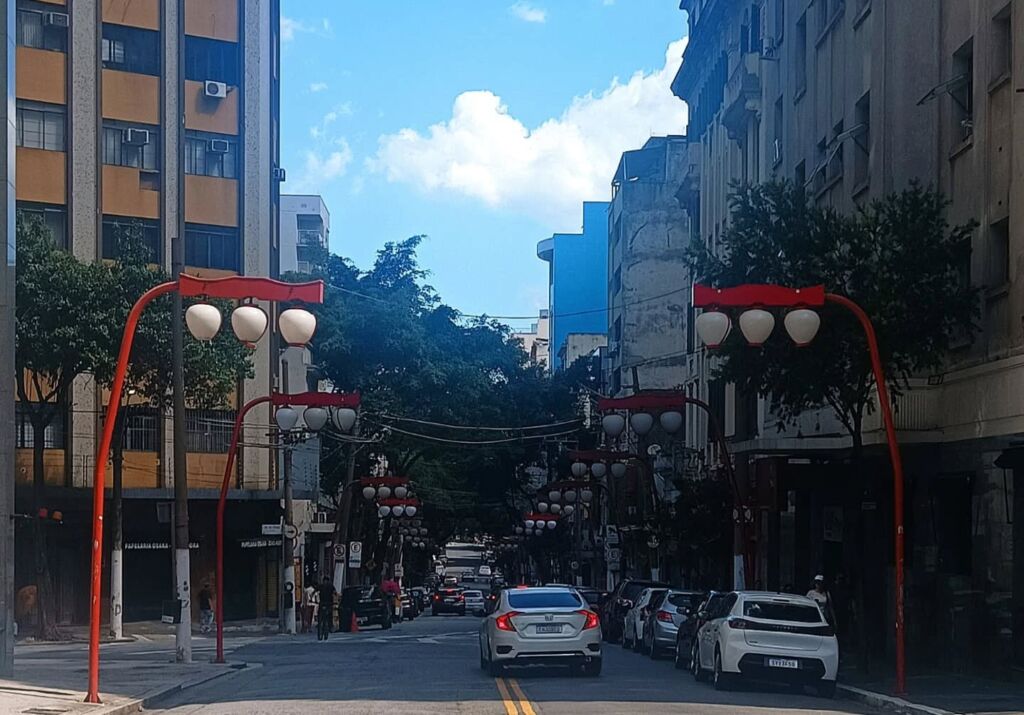
By day, I wandered through Liberdade, São Paulo’s Japanese heart — lanterns, kanji signs, and ramen stalls humming with Sunday joy. You could easily forget you’re in South America till someone offers you pastel de queijo with chopsticks and a grin.
By night, I was at the Sambadrome — that fever dream of feathers, sequins, and soul.
Of Joy and Joyous exuberance, Brazil-style
Carnaval here isn’t just a festival. It’s an exorcism.
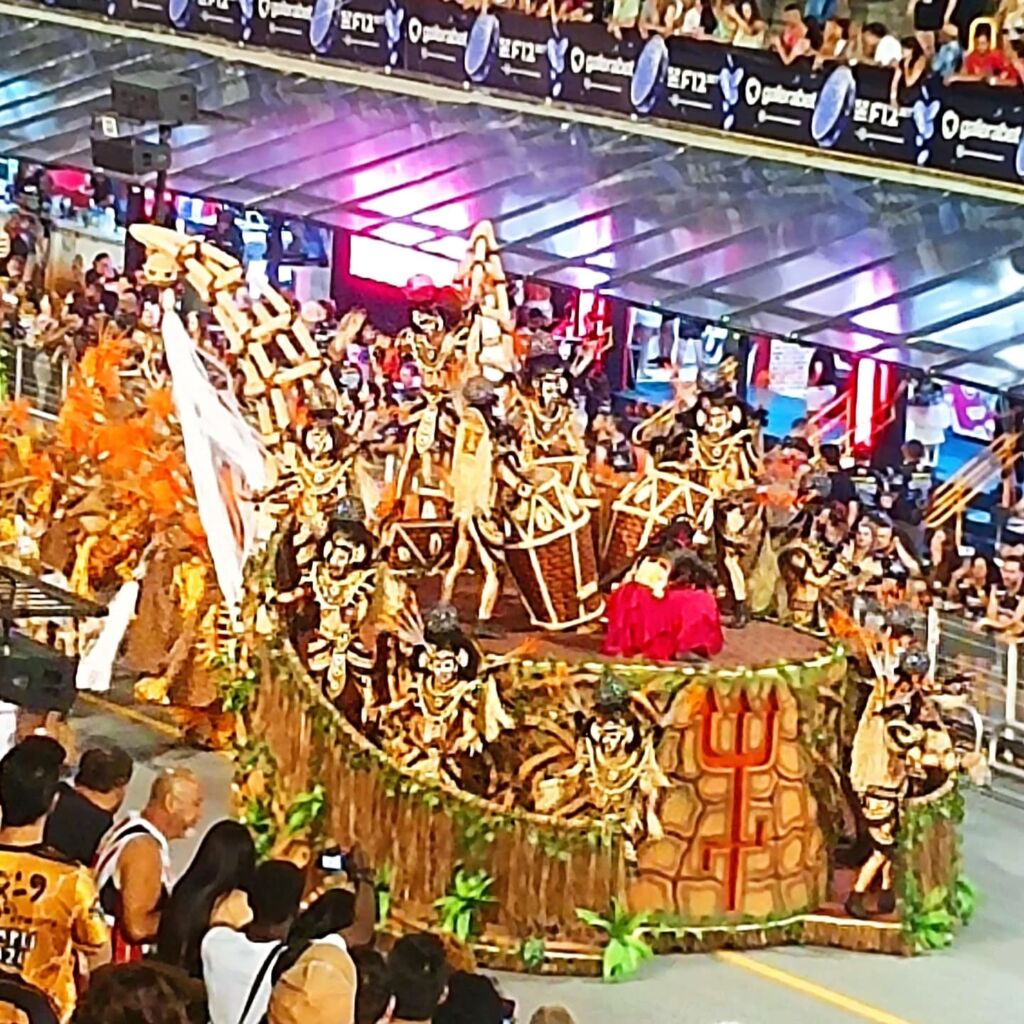
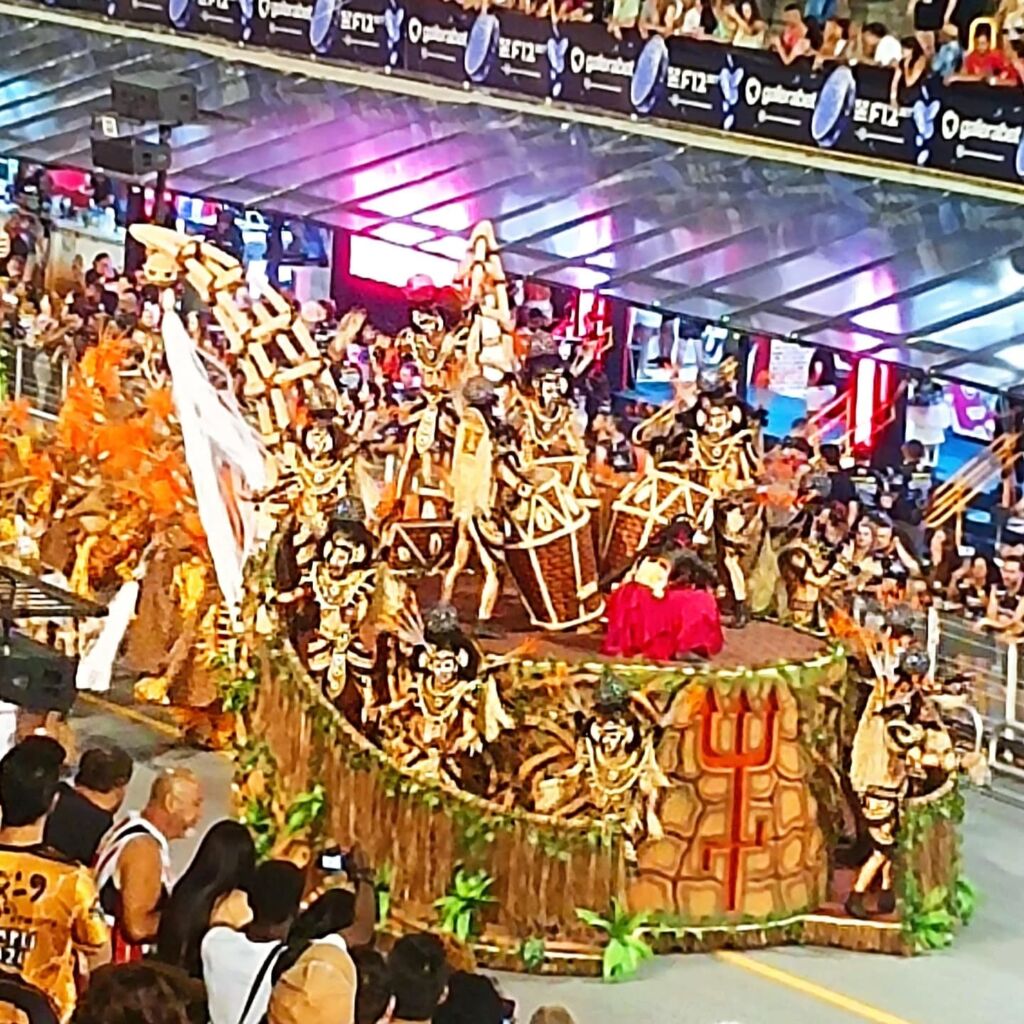
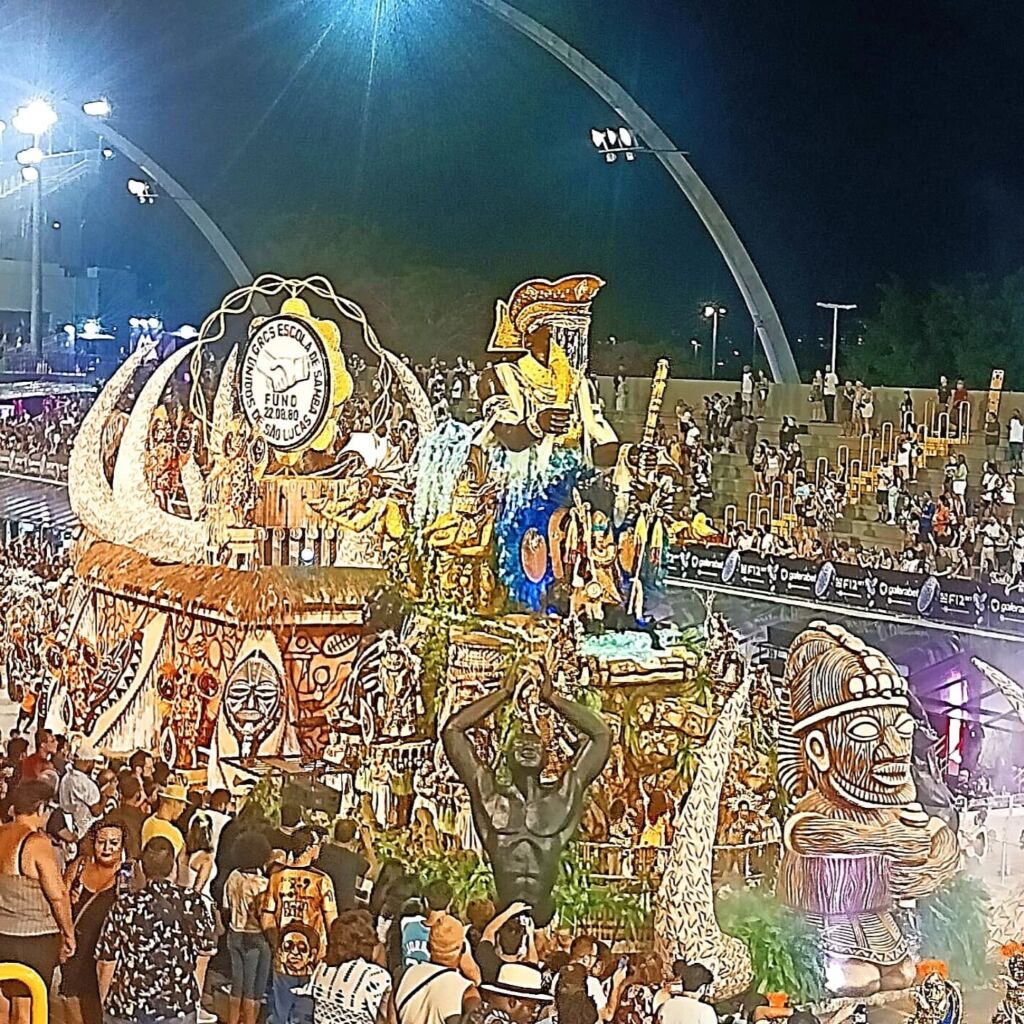
São Paulo Sambadrome: rhythm, sweat, and sequins under a thousand spotlights
The drums hit you in the chest like truth. Floats taller than temples rumble by — gods, myths, pirates, and divas all marching to the same divine tempo. Each escola de samba tells a story: of resistance, of love, of the Afro-Brazilian spirit refusing to bow. Somewhere between the rhythm and the beer stalls, I found myself grinning like a fool — moved, humbled, and slightly drunk on a country that wears its heart louder than its clothes.
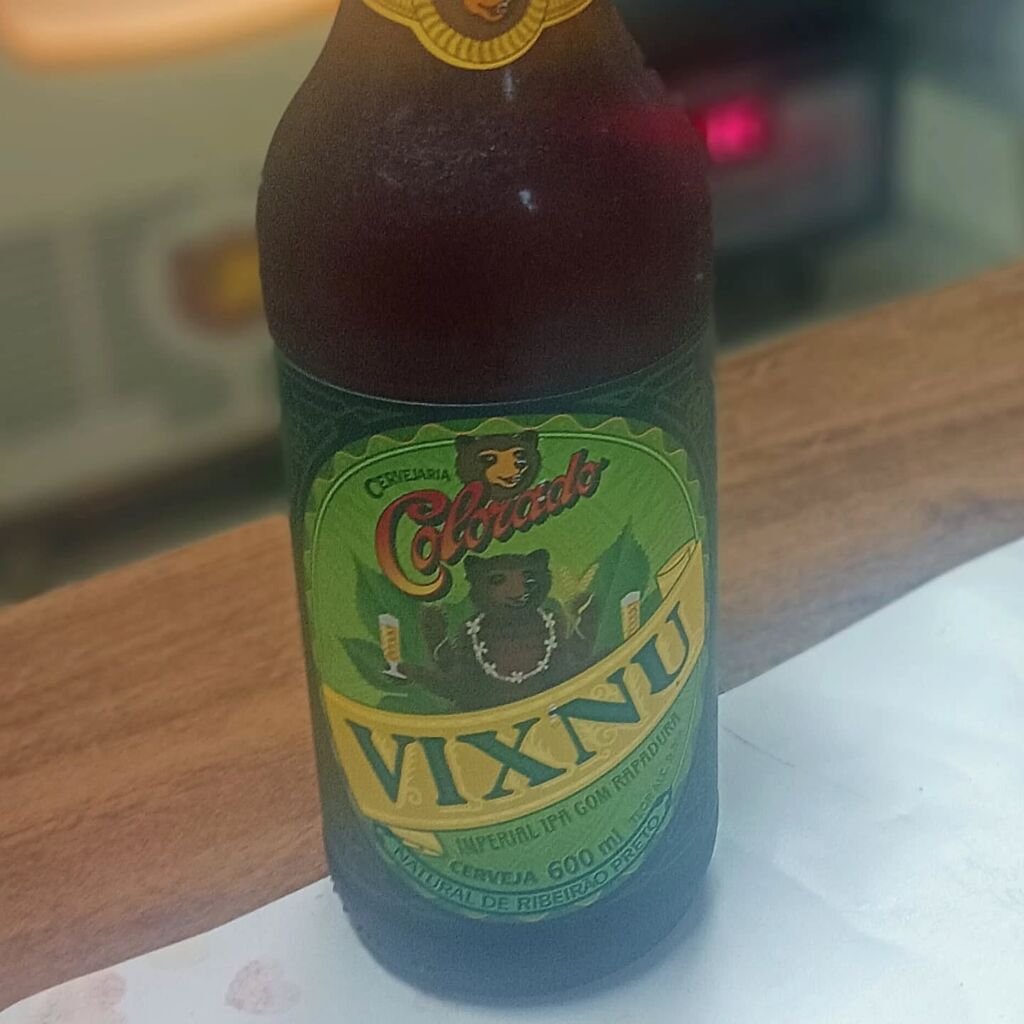 And then, as if the night hadn’t been generous enough, I discovered Vixnu — a local IPA strong enough to make even Vishnu raise a skeptical eyebrow. Potent, hoppy, unapologetic — like Brazil itself. Its like a cheeky amber deity in a bottle. One sip and it feels like the city’s chaos just bent a knee in reverence. It’s hoppy enough to flirt, smooth enough to seduce, and bold enough to remind you you’re alive. On a warm Paulista night, it tastes like samba with a mischievous wink. As the helpful bartender said, “Drink it slow, smile wide”… This is an IPA potent enough to make even the Gods blink.
From Concrete to Canopy – Manaus and the Amazon in Brazil
The next morning, Brazil changed channels on me. One flight and a few yawns later, I was in Manaus, the fabled gateway to the Amazon.
If São Paulo was a samba drum, Manaus was a whispered prayer.
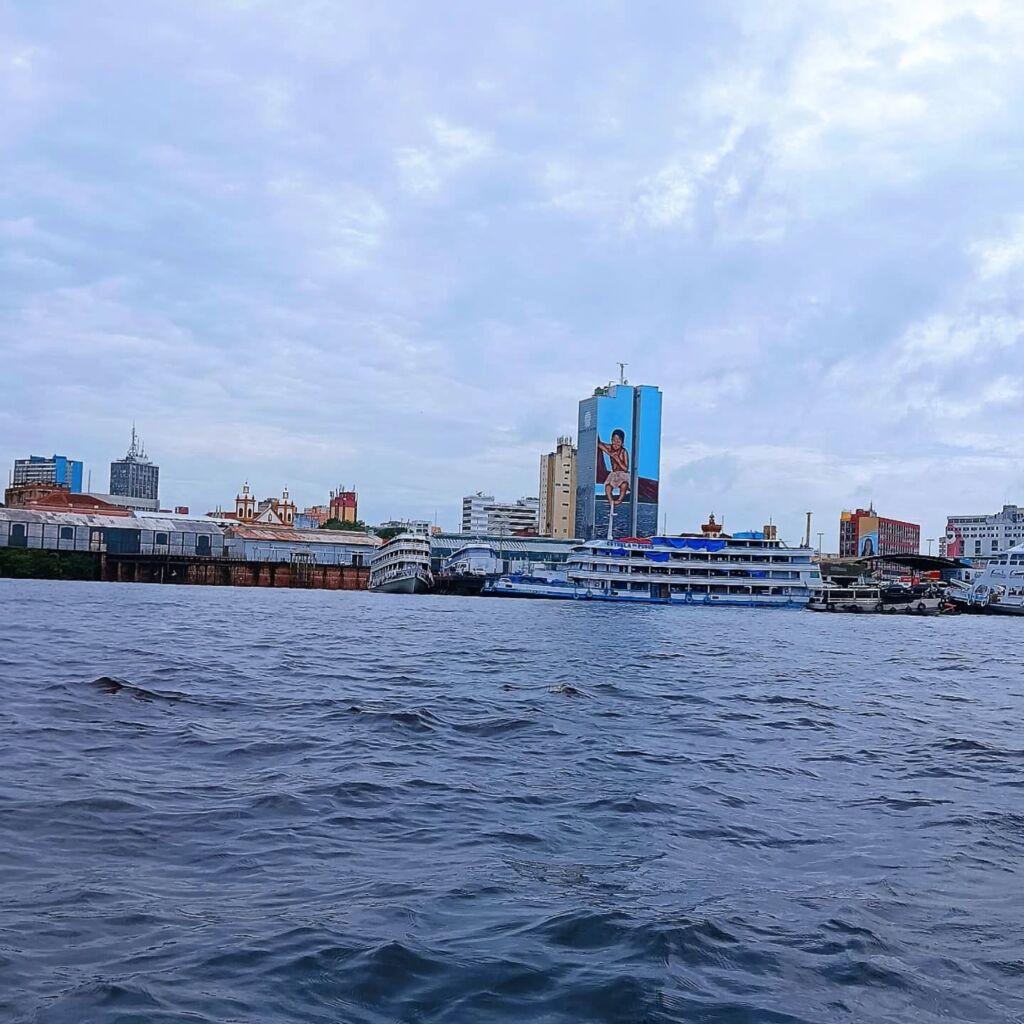 Manaus — the improbable city that grew between dreams and damp
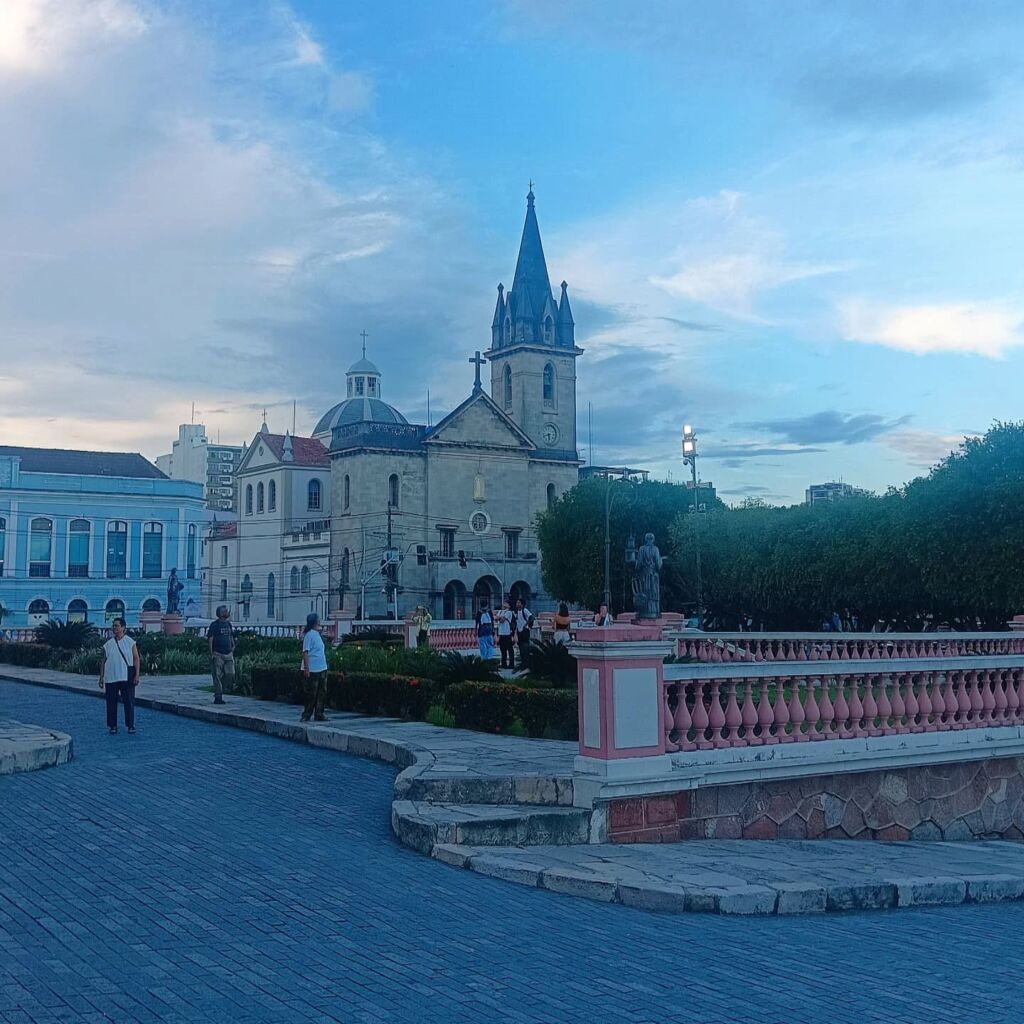
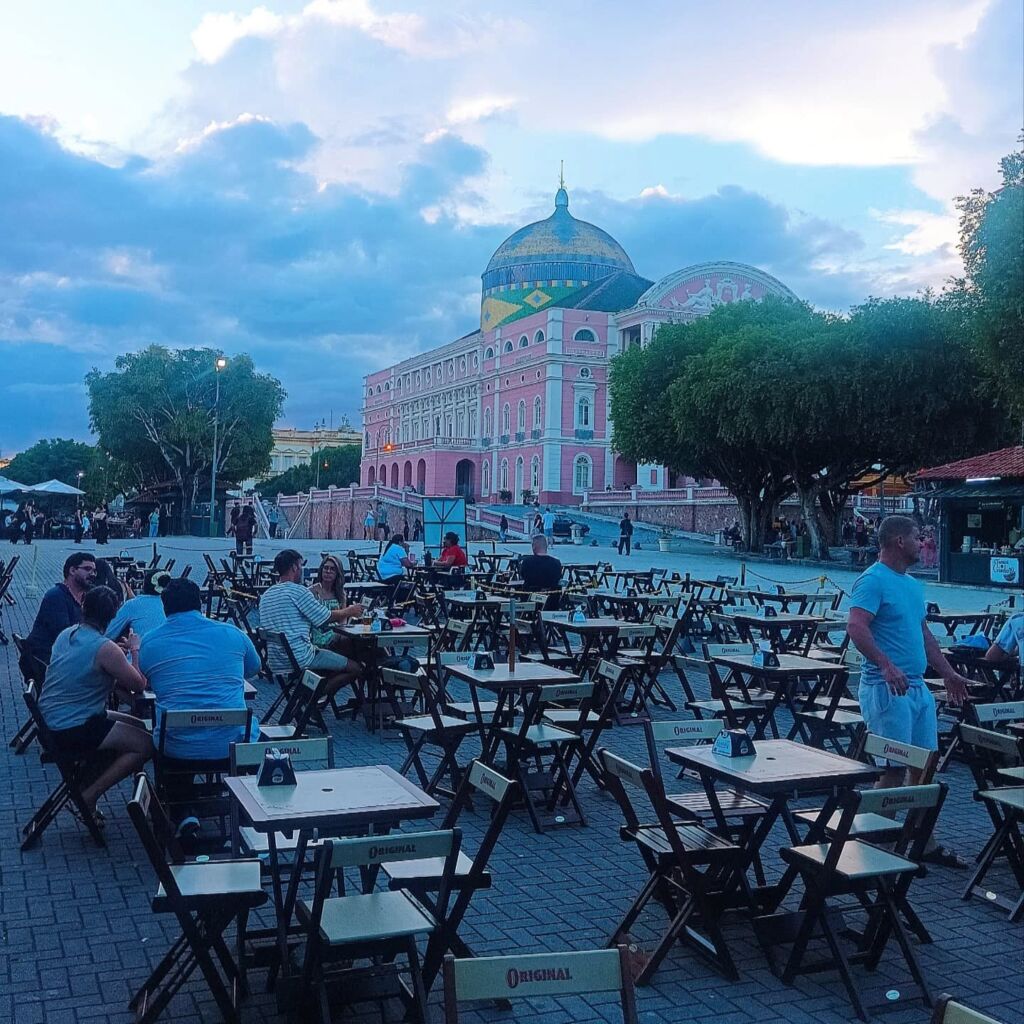
Old façades, new rhythms
Built on the ghosts of the rubber boom, this city sits quietly by the world’s largest rainforest, its pink opera house — Teatro Amazonas — a strange European dream in the middle of green infinity. Around it, colonial façades fight humidity and time, while hawkers sell beer and cigarettes from carts that look like they’ve survived multiple governments.
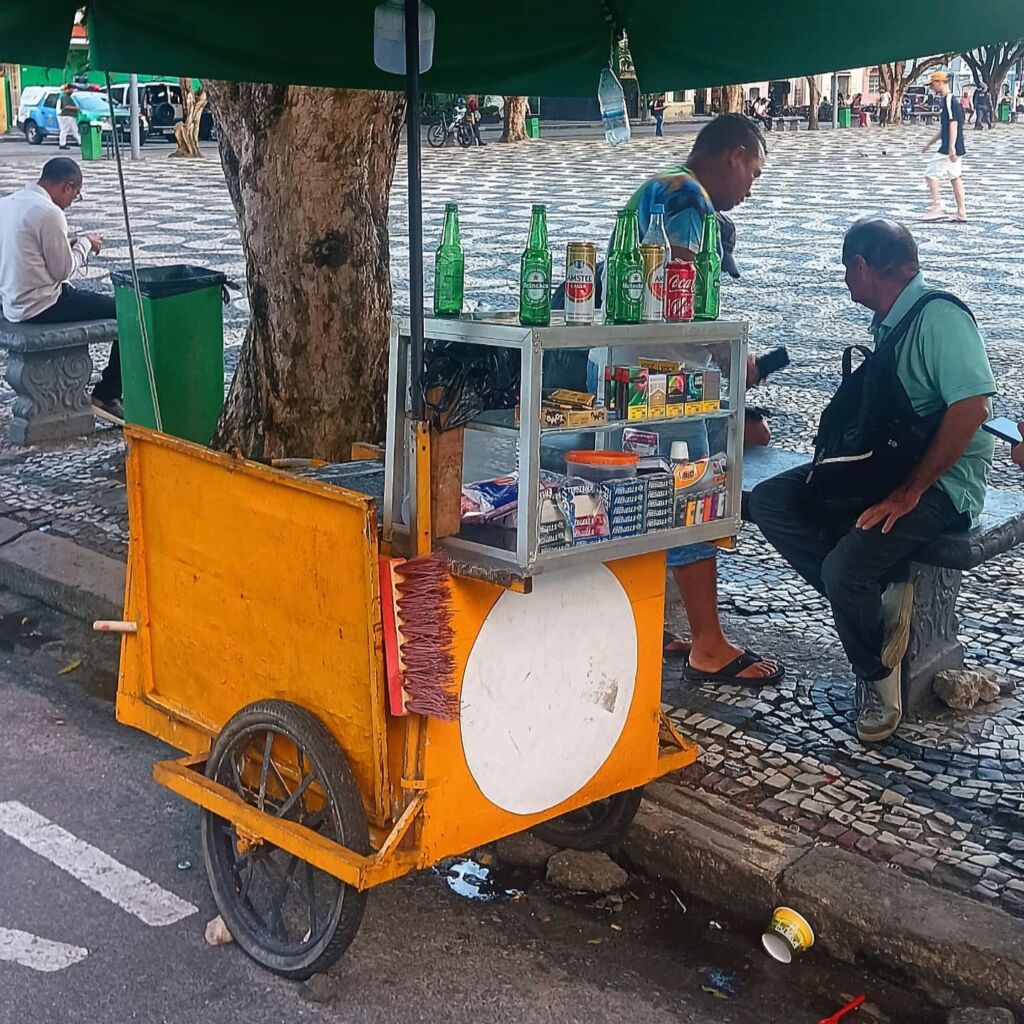
Street philosophy: if you can’t buy happiness, beer and nicotine will do
I watched two locals play chess by the roadside, a glass of an unknown liquid beside the rook. Civilization, it seemed, had adapted beautifully to chaos.
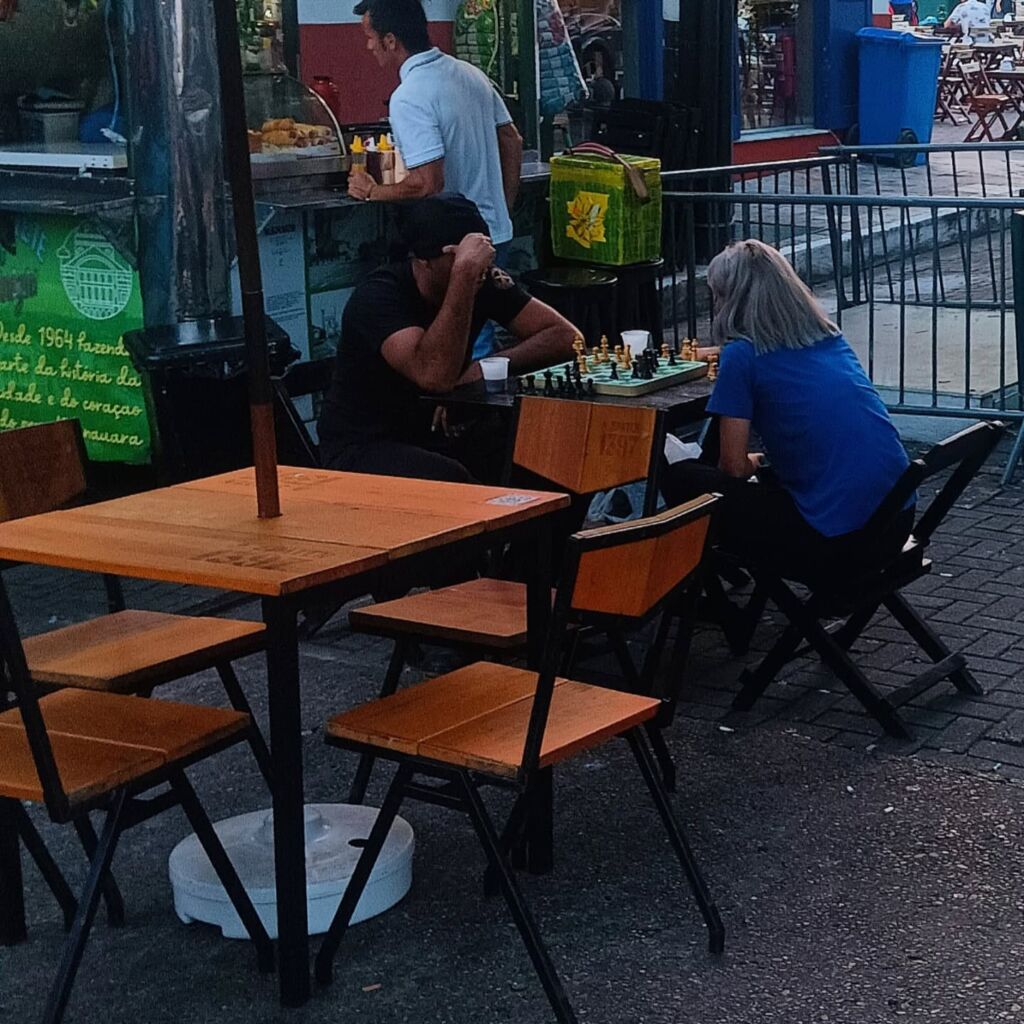
When kings fall quietly beside food stalls
But it’s what lies beyond Manaus that begins to blur the edges of reality.
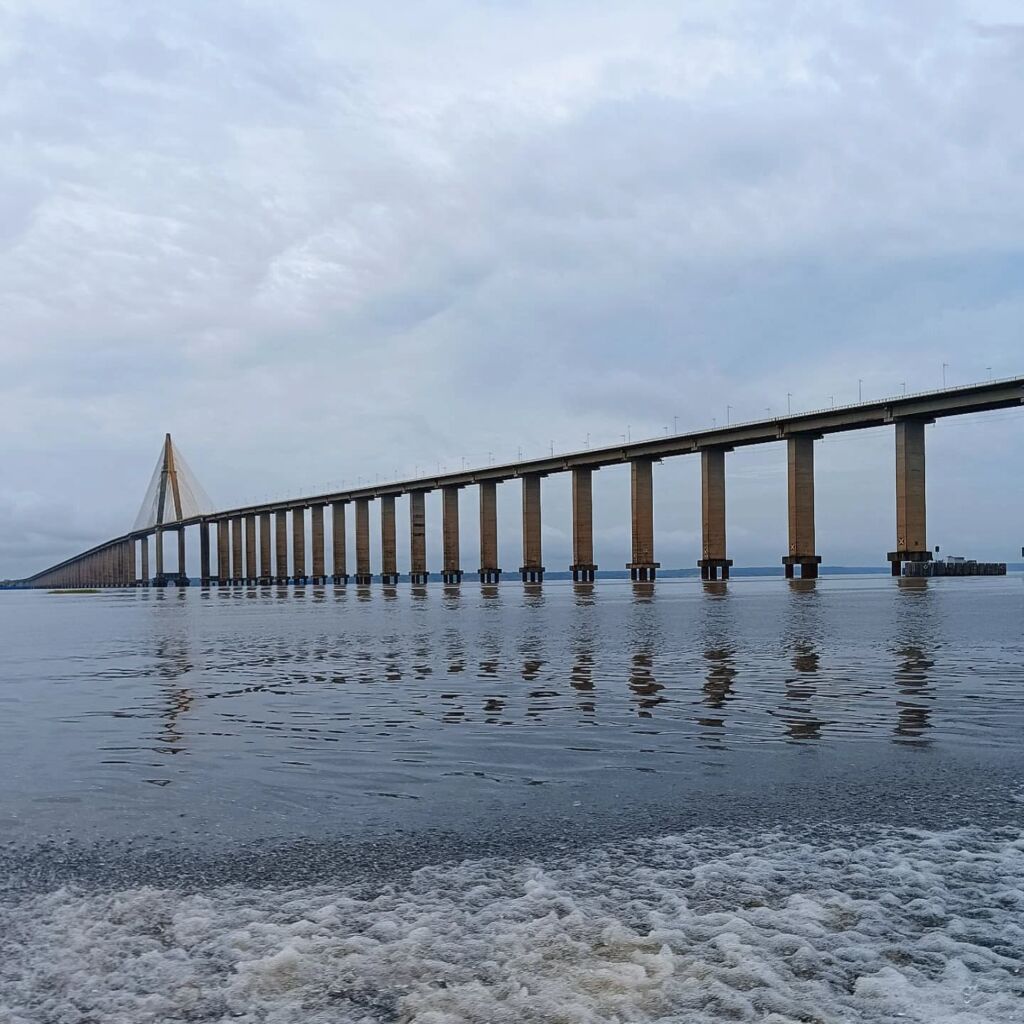 Manaus bridge — Crossing the Rio Negro — gateway to infinity
A boat. A river that smells of rain and time. And a horizon where black water meets brown — the legendary Meeting of the Waters, where the dark Rio Negro and the sandy Rio Solimões flow side by side for miles without mixing. A painter’s palette in motion.
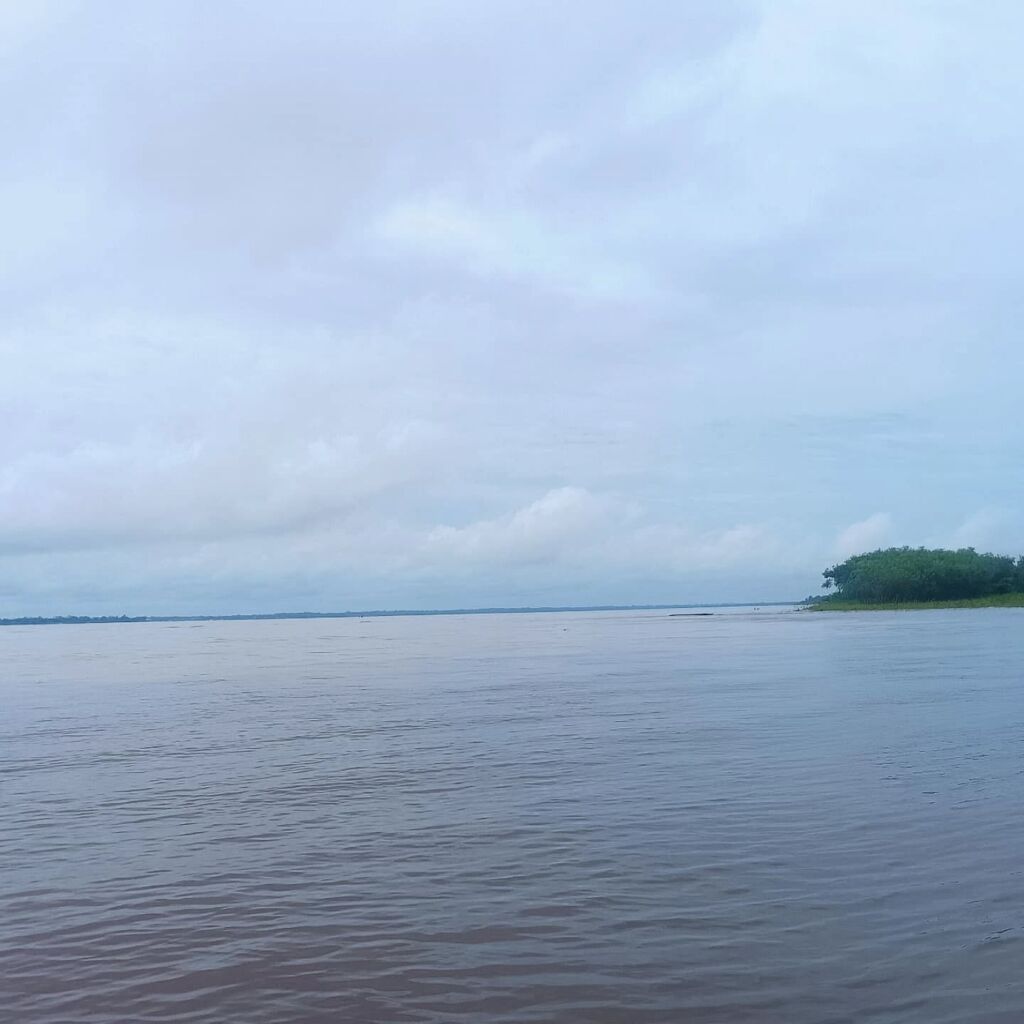
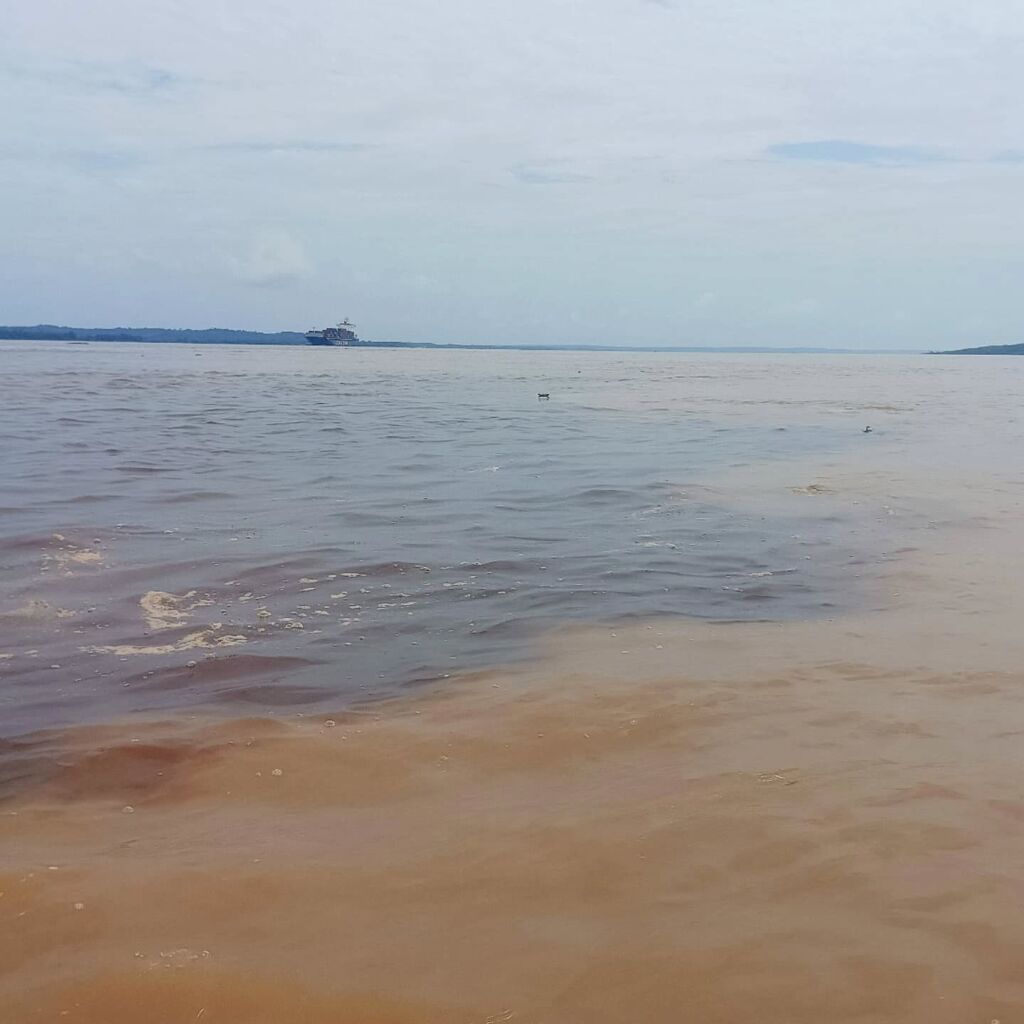
Where dark Rio Negro meets sandy Solimões — and they refuse to mix
The explanation is scientific — temperature, density, speed — but standing there, it felt spiritual. Two worlds coexisting, stubbornly different, endlessly beautiful. Somewhere on that endless expanse was my next home — a jungle lodge accessible only by boat.
The Brazil Amazon: Symphony of the Slow
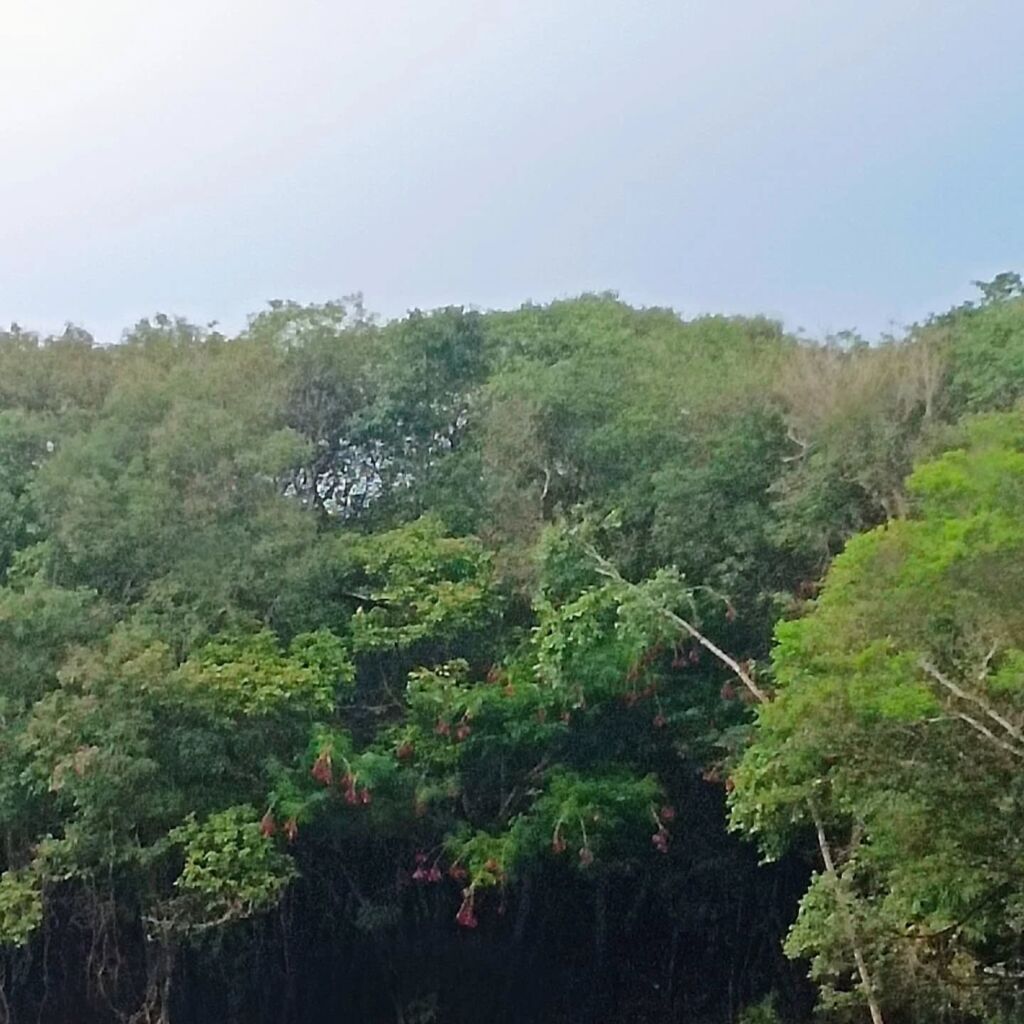 When home is a hymn to the river
There’s a moment, as you glide into the heart of the forest, when sound itself changes texture. The city hum is replaced by a living orchestra: frogs beatbox, cicadas whisper gossip, and invisible birds rehearse for dawn. Days here aren’t planned — they just happen to you.
Morning:
A jungle walk that turns into an education – Bullet ants (the jungle’s version of an electric shock therapist), leaves that double as mosquito repellent, wild clove for perfume, camphor for courage. The guide teaches you how to start a fire from powdered bark and how to thump a tree trunk to send a distress signal across two miles. Tarzan had it easy.
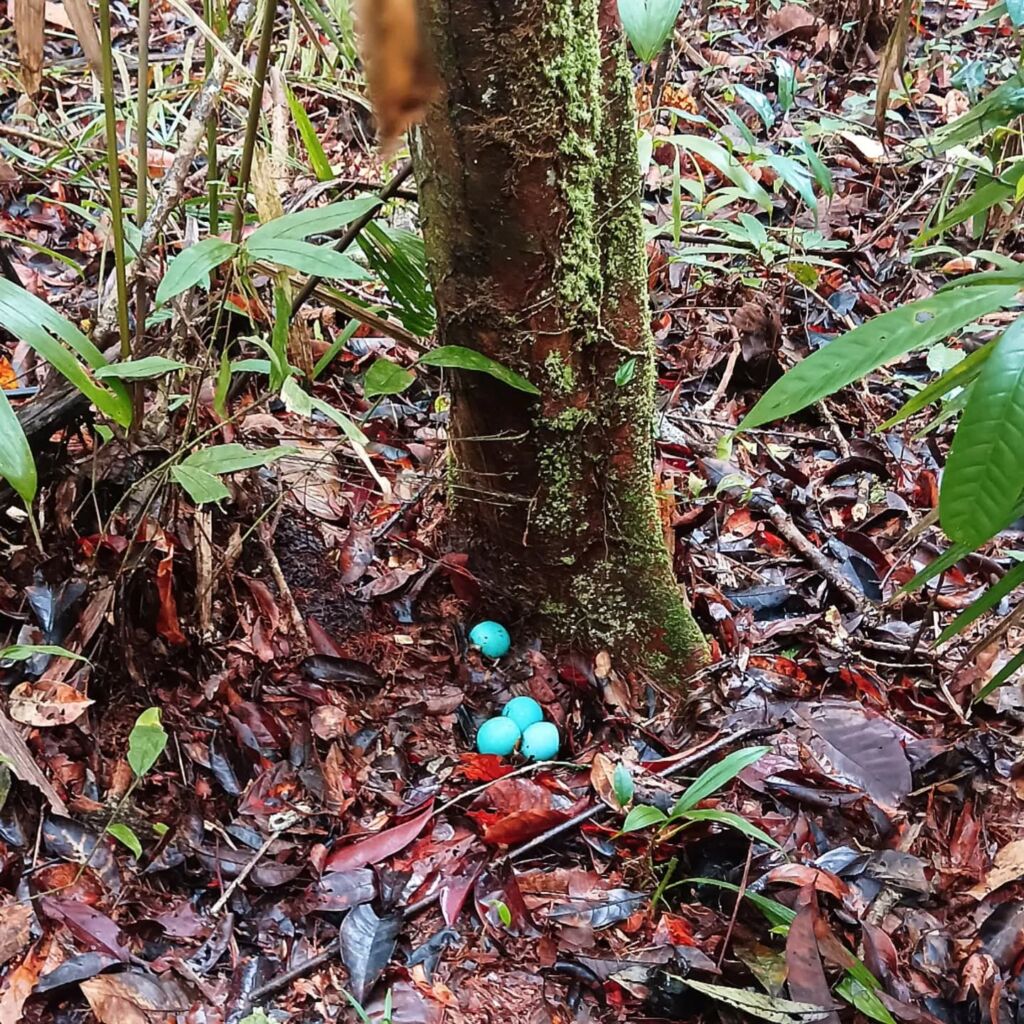
Somewhere along the trail, we find a clutch of blue eggs under a mossy trunk — fragile miracles waiting for wings. Nature’s version of hidden treasure.
Afternoon:
Piranha fishing. The idea sounds macho till you catch none and the guide, with the grace of a saint, reels in one effortlessly. Up close, they’re the ugliest beautiful things I’ve seen — all teeth and attitude. “Don’t worry,” laughs the guide, “they don’t bite unless you’re bleeding.” Comforting.
The piranha, by the way, ended up as dinner — proving that karma works faster in the Amazon.
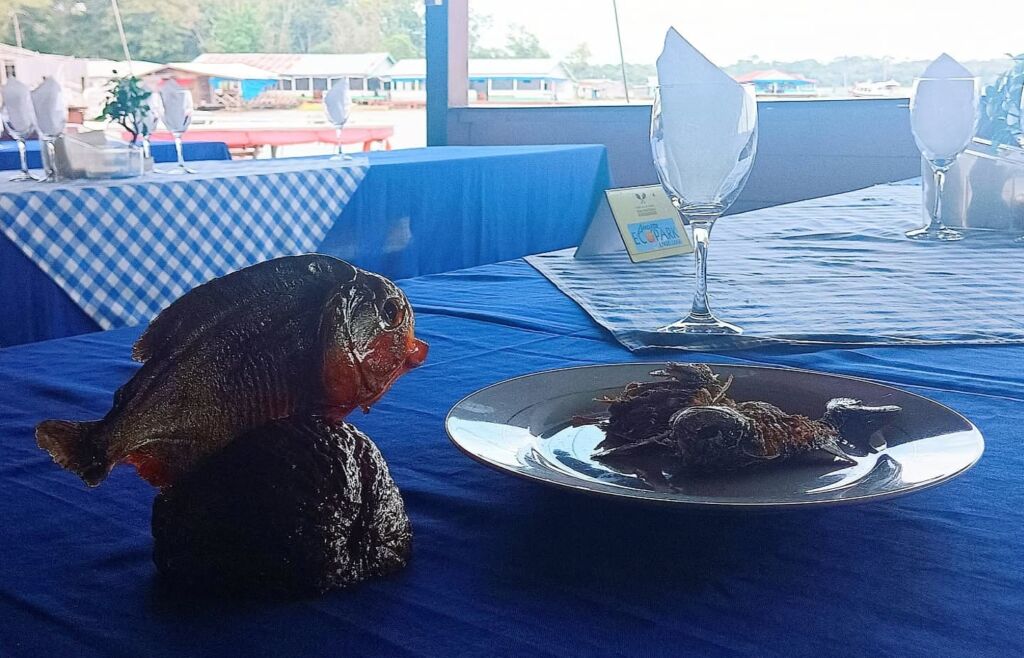
Fishing, failing, and yet feeding…
Evening:
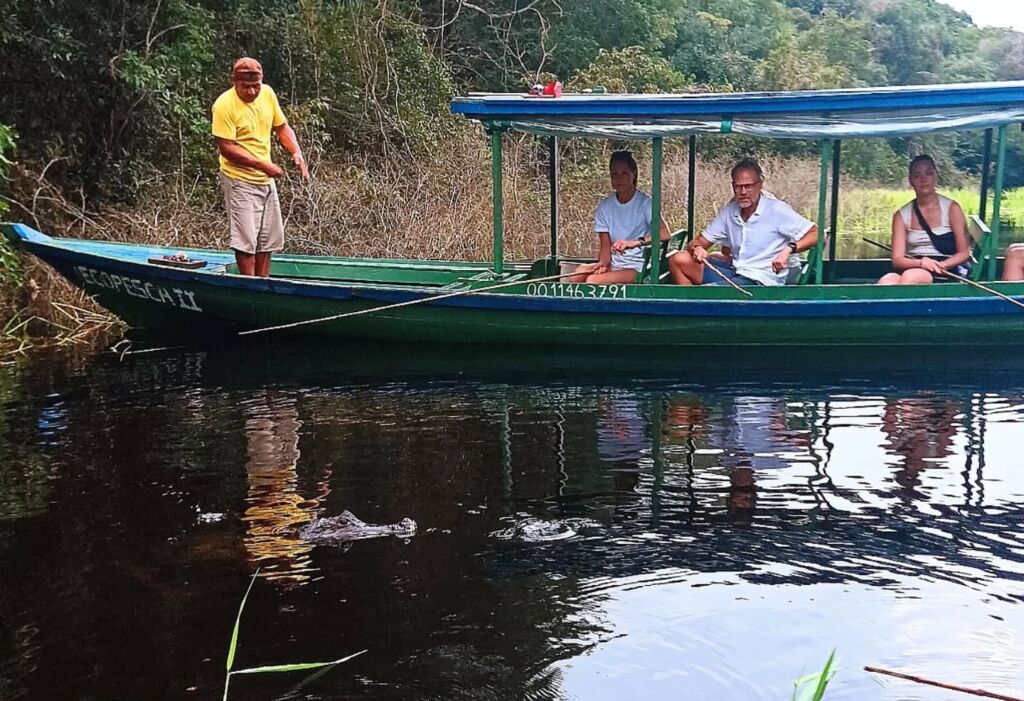
We feed the caimans. The river turns to liquid ink under the moonlight. One by one, the reptiles glide up — prehistoric, patient, perfect. One leaps out of the water to grab the bait — pure muscle and hunger, framed against the starlit sky. Jurassic Park, but unscripted.
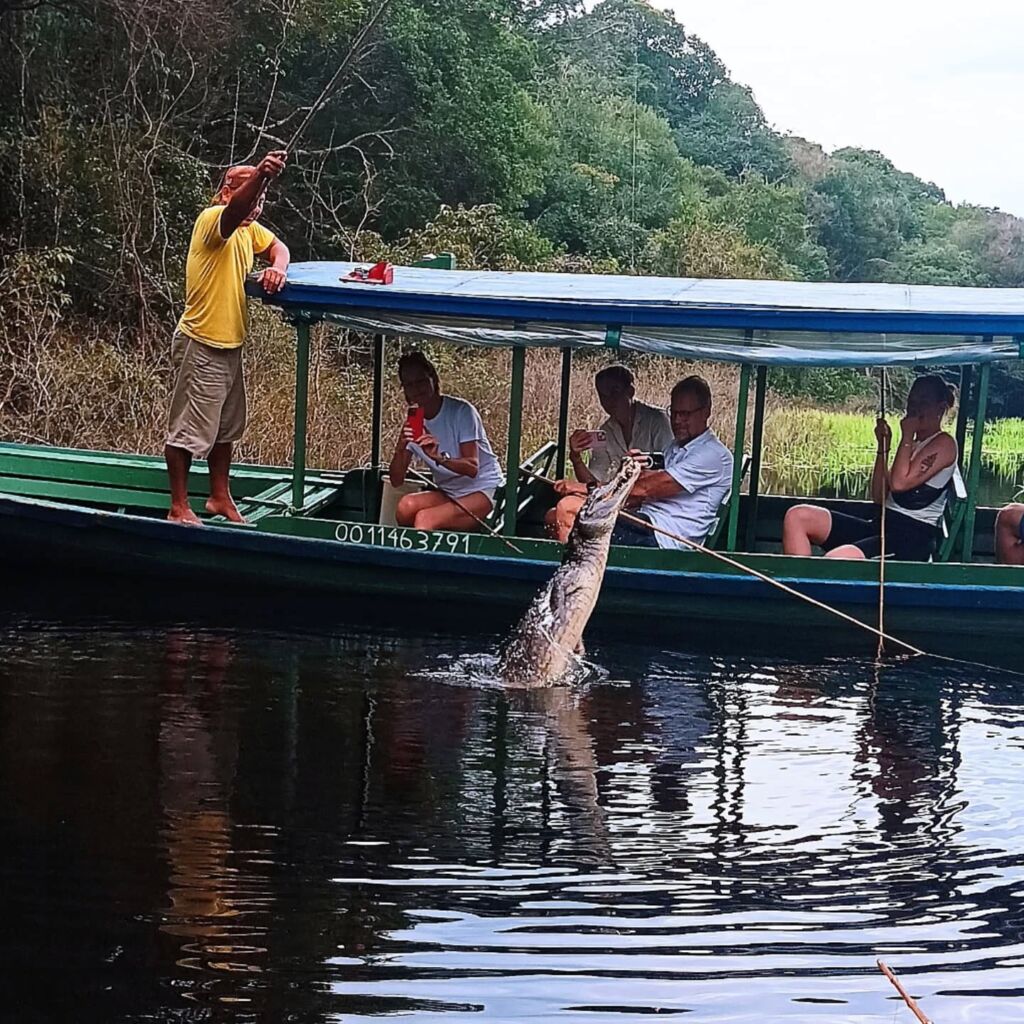 When dinner bites back
Later, a night safari on the river — fireflies, frog calls, and a sudden glimpse of red eyes gleaming on the banks. I’d like to say I was brave, but let’s just say I was holding onto the flashlight like it was holy.
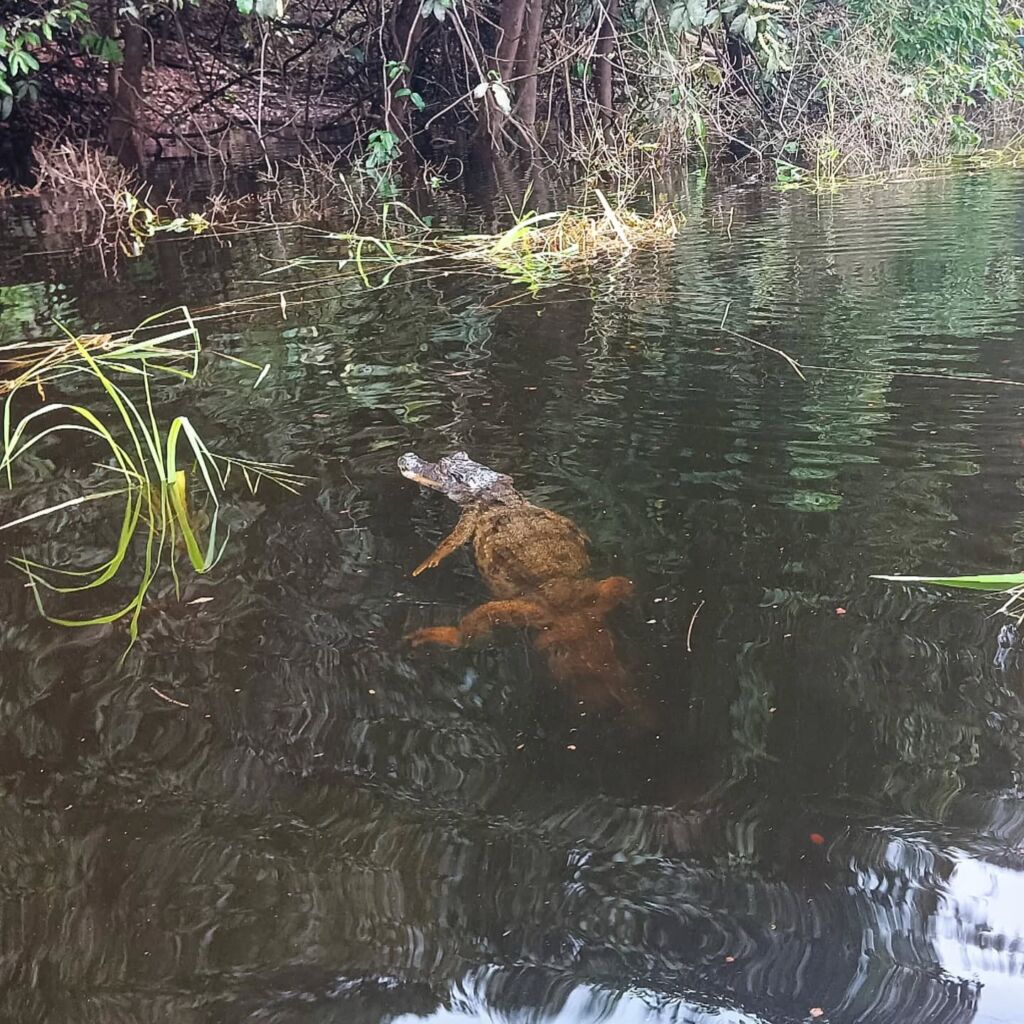
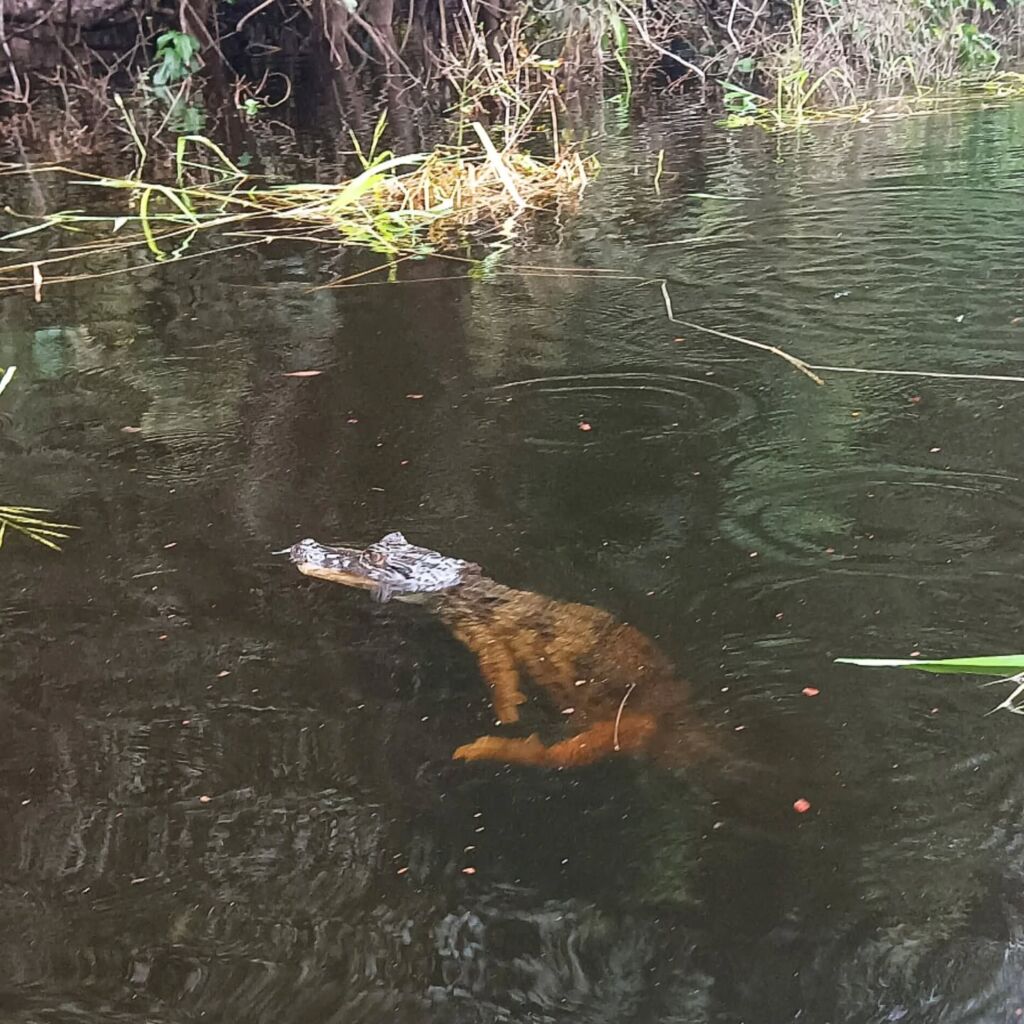
Next morning:
The jungle gifts me a sloth. Literally. Hanging from the rafters of the boathouse, as if posing for a Renaissance painting on leisure. It blinks once, decides I’m irrelevant, and goes back to being the patron saint of unhurried living.
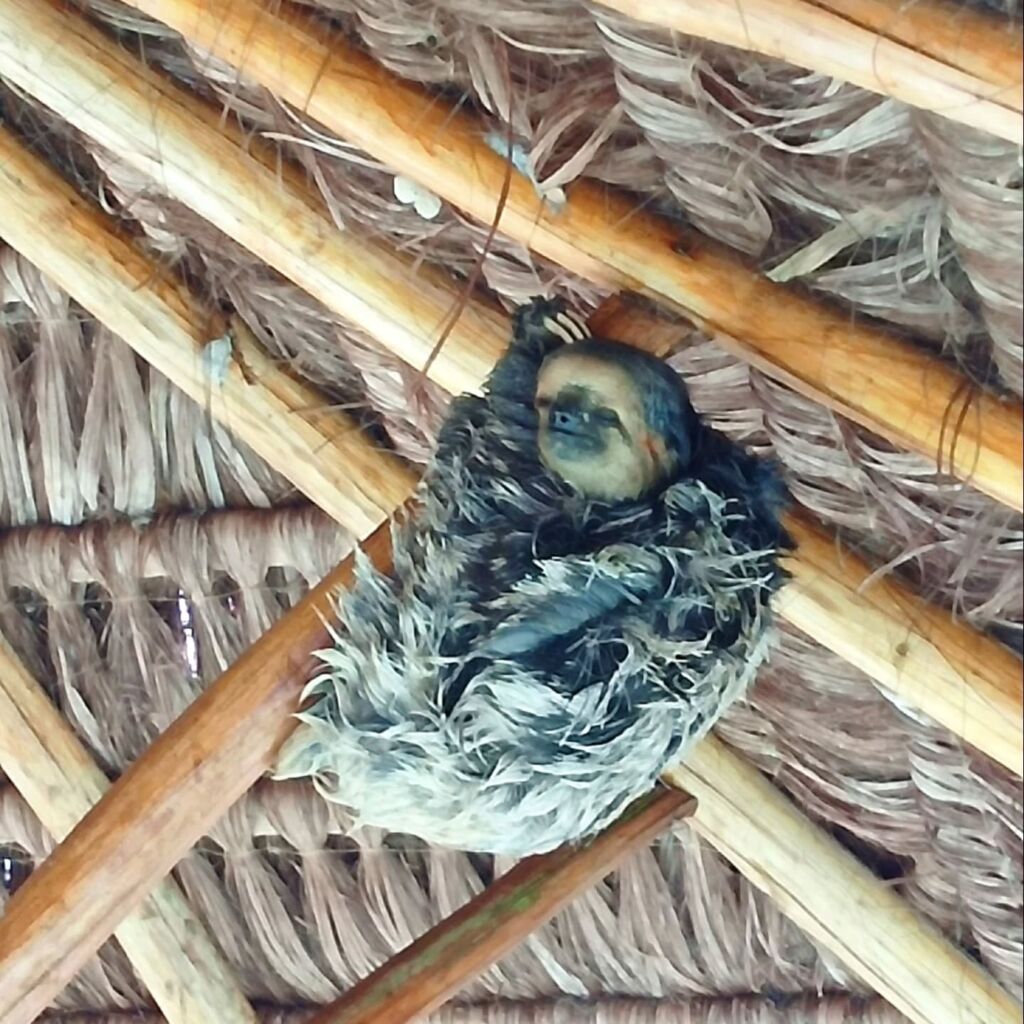 The patron saint of leisure, hanging in quiet judgement
Somewhere nearby, monkeys chatter, parrots argue, and time — that relentless taskmaster — takes a long nap.
Caboclos: The Forest Folk of Brazil Amazon
One day, we visit a Caboclo’s house by the Rio Negro.
The Caboclos are the mixed-heritage children of the Amazon — descendants of Indigenous tribes and Portuguese settlers. Too wild for cities, too rooted to leave. They live in homes made of wood and thatch, built by hand, expanded when money allows. Their backyards are half garden, half graveyard — life and death comfortably sharing a fence.
During World War II, thousands of Caboclos were drafted as “Rubber Soldiers,” extracting latex for the Allied war effort. Many never came back. Their descendants still live by the same code: simplicity, resilience, and a deep conversation with nature.
They eat what they grow — manioc, the humble tapioca root, reborn as flour, starch, or drink. They craft, they farm, they sing. There’s poverty, yes, but no despair. When you wake up to a view of the river glowing like molten silver, you learn that wealth has many disguises.
Farewell on the Rio Negro
On my last night, we sat by the water — a few fellow travelers and a bottle (or two) of cachaça.
We talked about everything — mythology, films, philosophy, love. The kind of conversation that happens only when you’ve stopped pretending to be from somewhere else.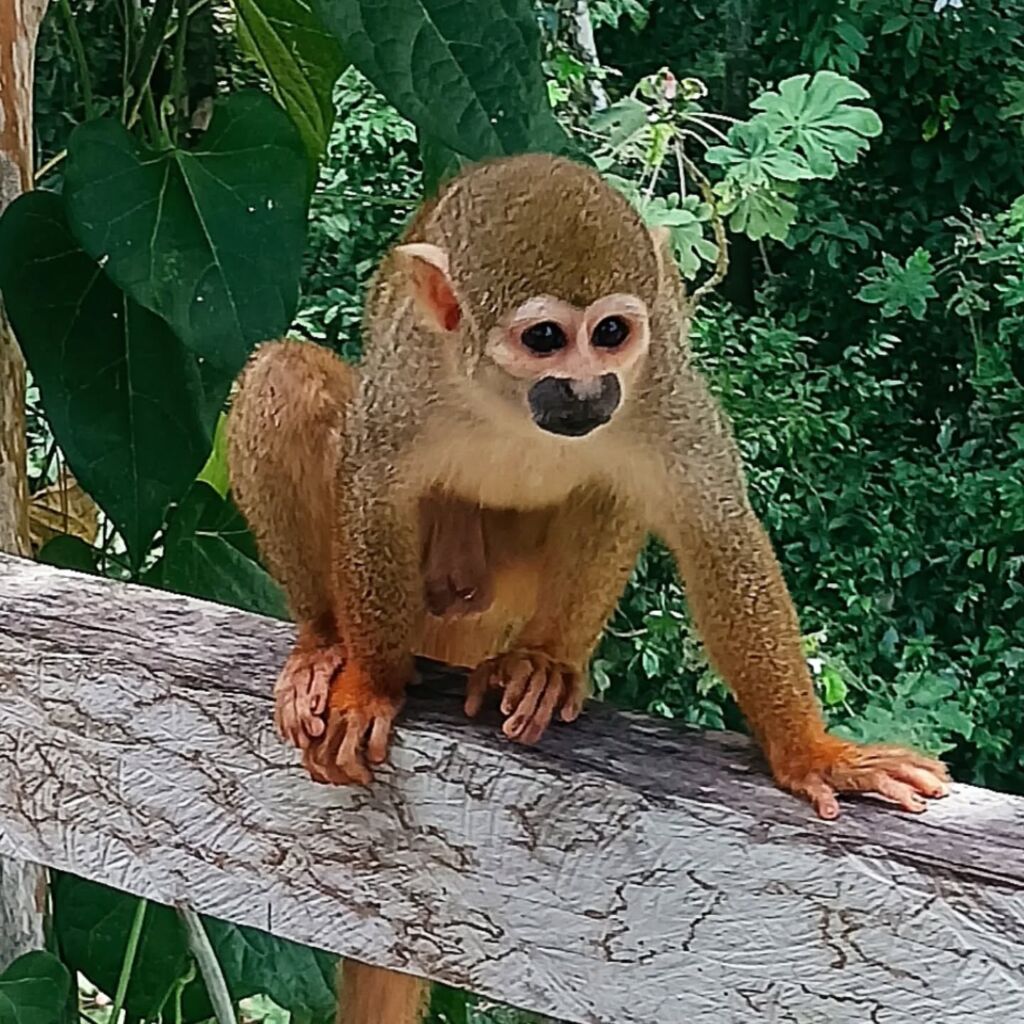
Across the river, the jungle breathed — vast, silent, awake. Somewhere, a monkey called out, and a frog answered.
It was a farewell worthy of Brazil — not loud, not showy, but soaked in rhythm.
And the next morning, as if the forest wanted to sign off properly, a spider monkey swung by the lodge, landed near the deck, looked at us, and left — a small wave from the green gods.
A final wave from the treetops
Brazil had danced, sung, bitten, floated, and whispered its way into my bloodstream.
From the samba drums of São Paulo to the heartbeats of the Amazon, it had been one long lesson in how to live louder, slower, and truer.
And if you ever come here, remember: Don’t trip on the usual.
Brazil isn’t to be seen. It’s to be felt — one shot of cachaça, one drumbeat, one river ripple at a time.
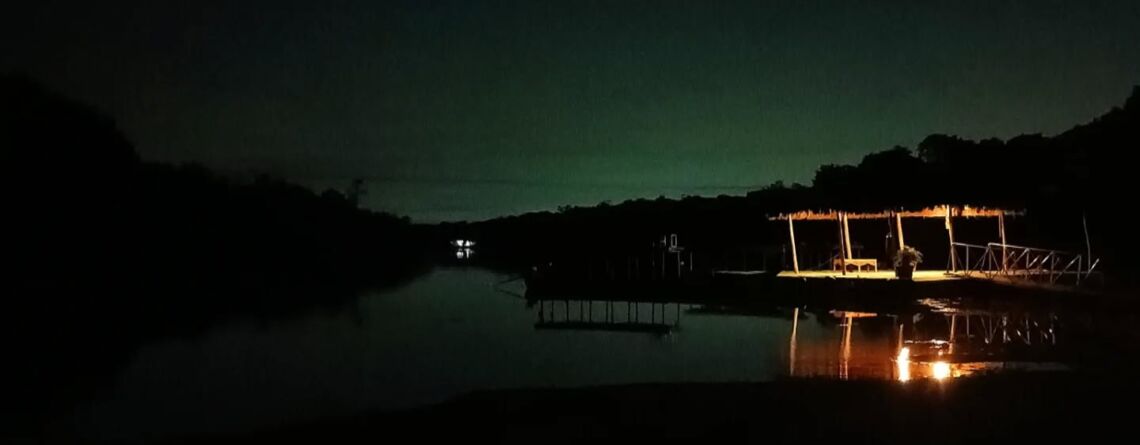
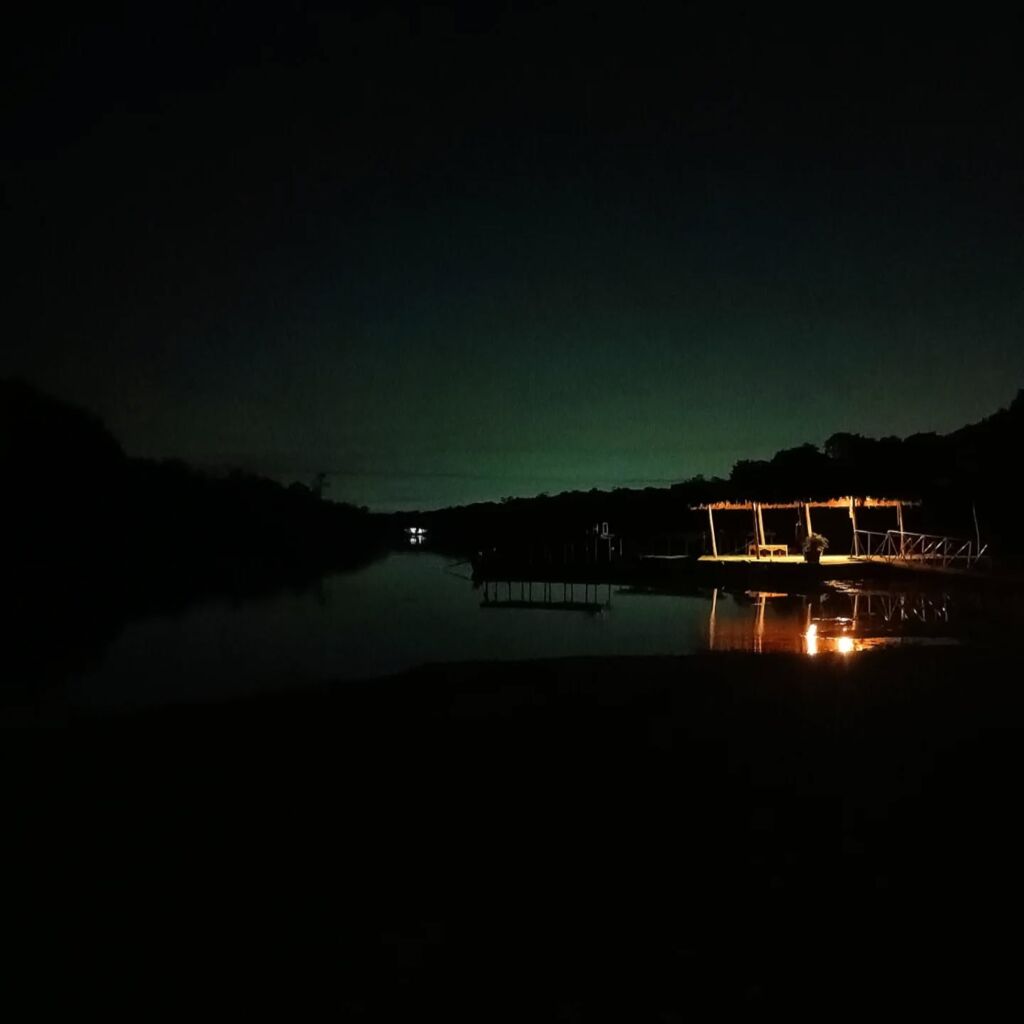 The Amazon at night — breathing, alive, eternal
Want to head to Brazil and the Amazon? Contact Beyonder Travel…
There are some more short posts that I have written about as part of the Brazil Chronicles — snippets from a journey that was a lesson for me on life… Here are some – check them out:
- Samba – Rhythm & Revolution in the Blood
- Caboclos – The Forest Folk
- Food & Drinks of the Amazon jungle
- Animals, Insects & Birds of the Brazilian Amazon




Leave a Reply