
Andaman Islands, the Sloth and “Lyadh” – Beyonder
Andaman Islands – A Masterclass in the Fine Art of Doing Absolutely Nothing
A couple of years ago, in the Amazon rainforest, I encountered a creature that seemed to have cracked the code of life… The sloth.
This remarkable philosopher spends most of its life hanging upside down from a tree branch. It moves with such deliberate slowness that moss grows on its fur. A burst of activity for a sloth involves turning its head a few degrees to the left… Or perhaps to the right.
Watching it, I realized something profound. Evolution had produced an animal that had figured out the optimal strategy for survival: expend as little energy as possible!
Of course, earlier in my childhood and youth in Calcutta, we had a word for this state of being. In Bangla, it is called “Lyadh”. It roughly translates to luxurious laziness. Not the everyday variety where you are simply avoiding work. Lyadh is an elevated state. A cultivated art form.
And if there is one place in India that allows you to practice lyadh with complete commitment, it is the Andaman Islands.
Emerald fragments in the Bay of Bengal
The Andaman and Nicobar Islands are a chain of more than 500 islands scattered across the Bay of Bengal, closer to Myanmar and Thailand than mainland India.
Geologically, they are the peaks of a submerged mountain range, part of the tectonic arc that runs through Indonesia and Southeast Asia. Somewhere out there lies Barren Island, India’s only active volcano, occasionally reminding us that these tranquil islands sit on restless earth.
Dense tropical forests cloak most of the land. Mangroves guard the coasts. Coral reefs protect the islands like delicate underwater fortresses. For thousands of years these islands belonged only to indigenous tribes like the Jarawa, Onge, Great Andamanese and Sentinelese…
Then the British arrived.
Port Blair and the shadows of Cellular Jail
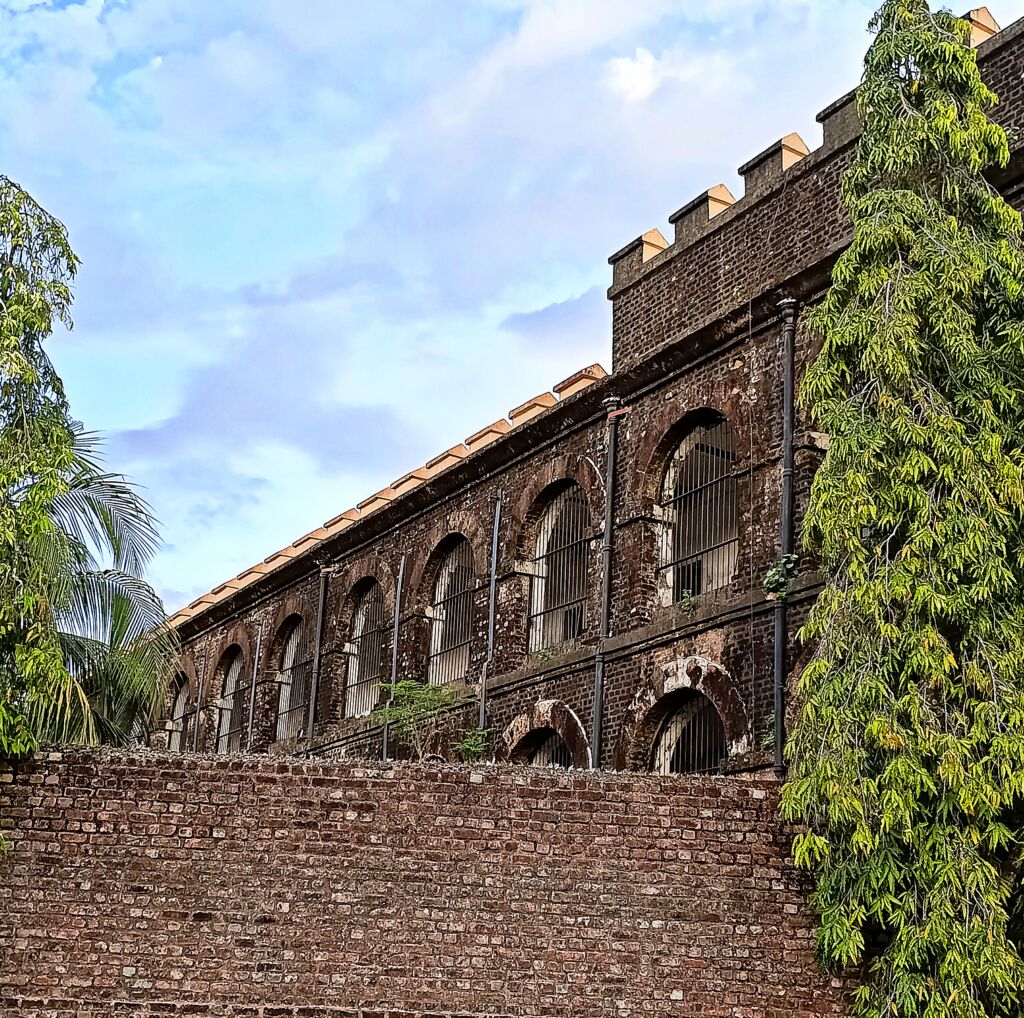 The British saw these islands not as paradise. They saw them as the perfect prison. After the revolt of 1857, Indian freedom fighters began to be transported to these remote islands. The idea was simple: isolate them from the mainland, break their will, and bury them in exile. Thus came the Cellular Jail in Port Blair.
The prison was designed for maximum psychological punishment. Seven wings radiated outward from a central watchtower, each lined with solitary cells. Prisoners were kept completely isolated from each other. No conversation. And no companionship. And of course, no hope.
Many of India’s most prominent freedom fighters spent years here. Walking through the silent corridors today is deeply unsettling. You stand in those narrow cells and realise that these serene islands once witnessed immense suffering.
Through the forest of the Jarawa in Andaman Islands
Leaving Port Blair, the road to Baratang Island passes through dense rainforest that forms part of the Jarawa Tribal Reserve.
The Jarawa are among the oldest surviving hunter-gatherer communities in the world. They lived here in isolation for centuries, avoiding contact with the outside world. Driving through their forest is a slightly uncomfortable experience. Tourists in vehicles passing through land that fundamentally belongs to them. It is a reminder that even paradise carries complicated histories.
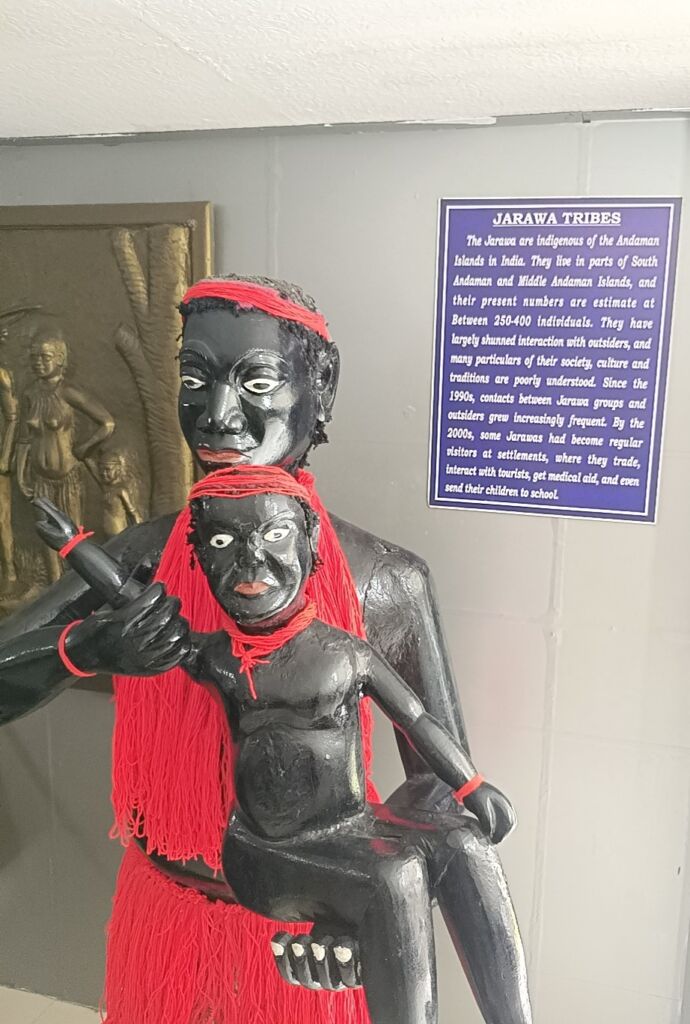 Jarawa tribal display at museum
The mangrove labyrinth of Baratang
From Baratang begins one of the most fascinating landscapes in the Andamans. The journey to the limestone caves starts with a boat ride through mangrove creeks. Mangroves are extraordinary trees. They thrive in salty water where most plants would simply die. Their roots rise above the water in tangled structures that look like a giant natural sculpture.
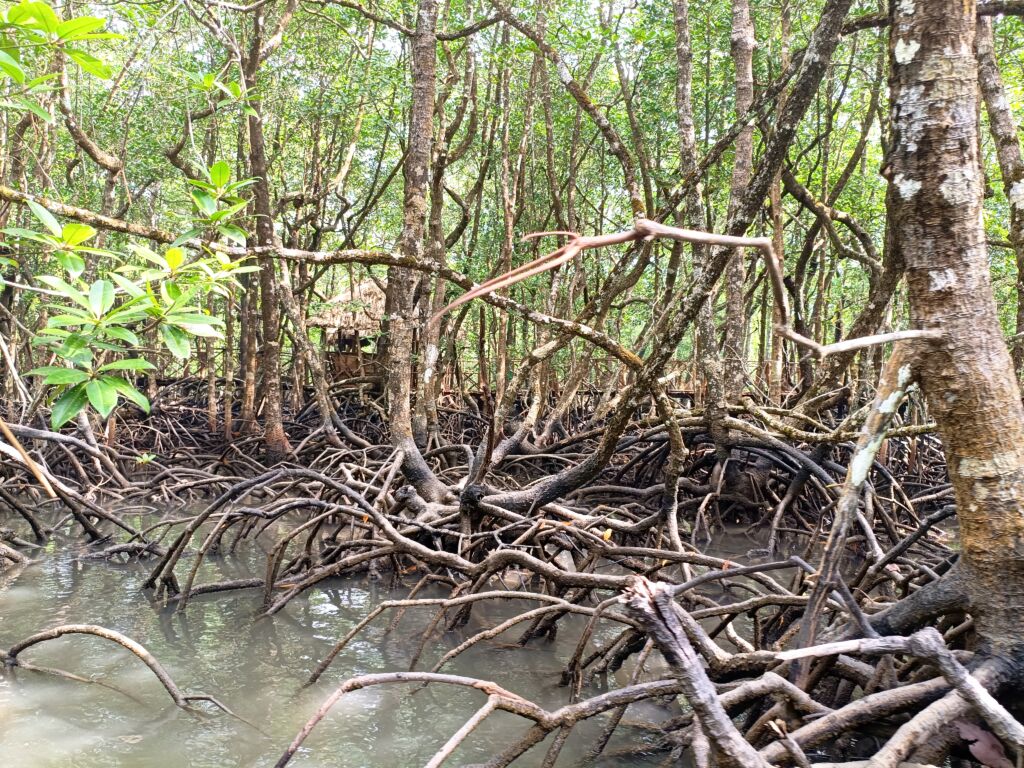
Dense mangrove root systems
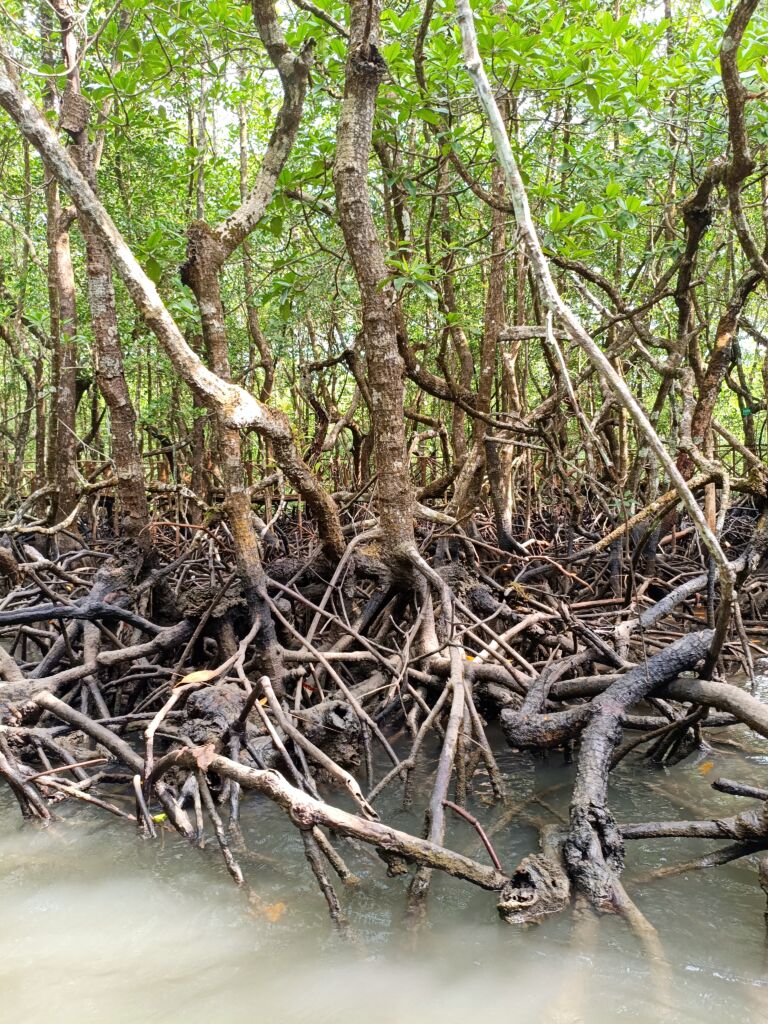 Mangrove creek channel
Moving through these waterways feels like entering a green labyrinth.
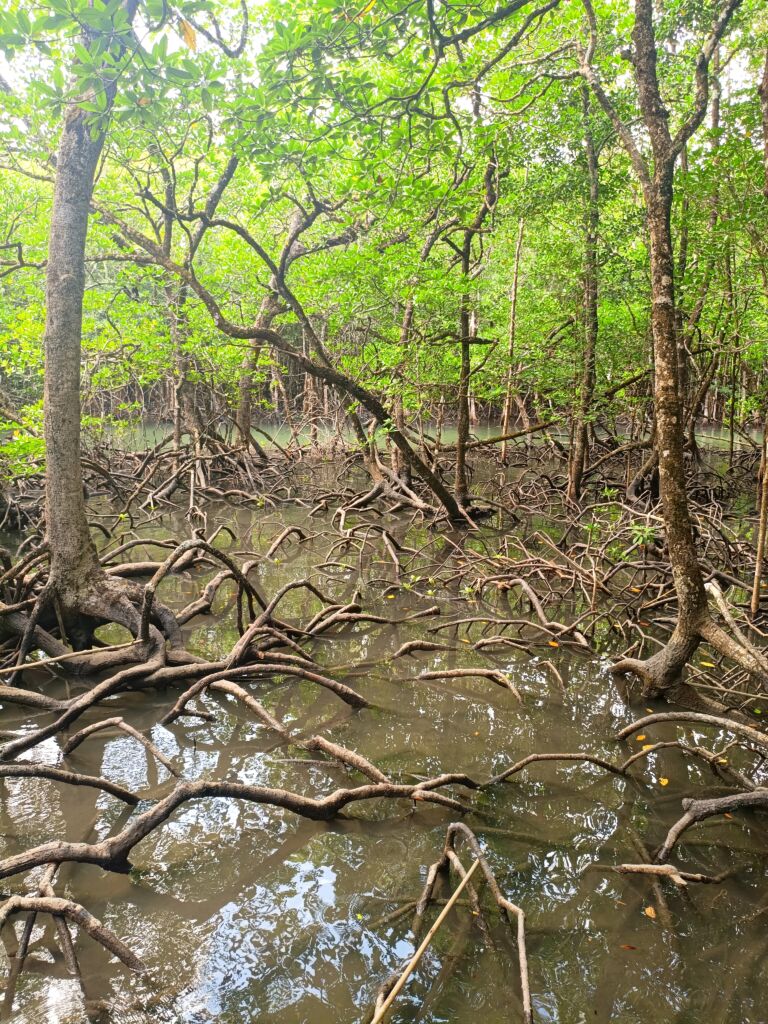 Wider mangrove ecosystem view
The roots filter sediment, protect the shoreline from erosion, and provide nursery grounds for fish and marine life. Without mangroves, coastal ecosystems would collapse. Nature, as usual, has already solved the engineering problem.
The limestone caves of Baratang
After the boat ride comes a short walk, through a forest to the limestone caves. These caves formed over millions of years as rainwater slowly dissolved limestone deposits underground, creating intricate formations of stalactites and stalagmites. Inside, the cave feels almost cathedral-like.
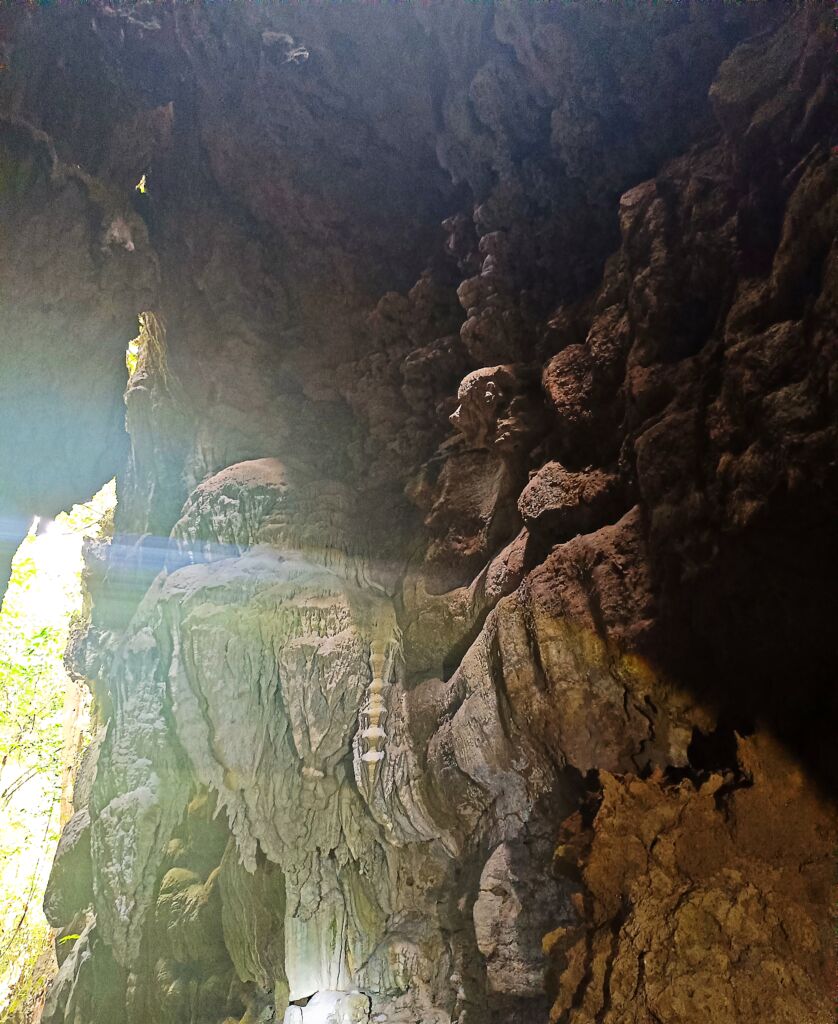
Entrance chamber of limestone cave
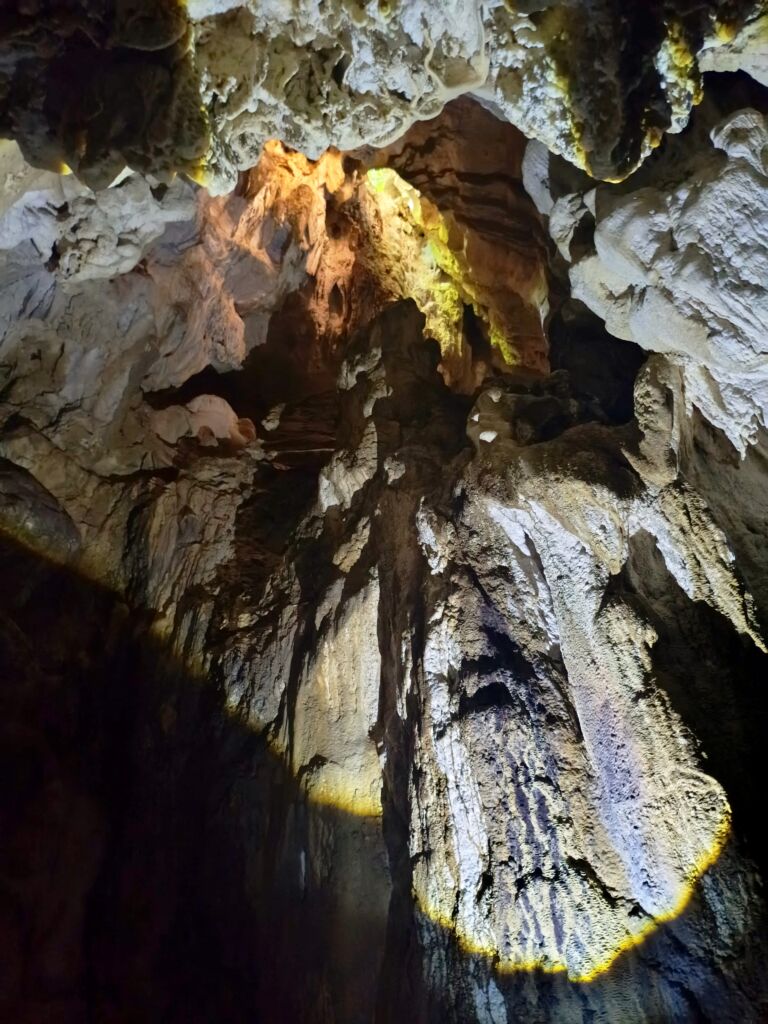 Large stalactite formation
Some formations resemble frozen waterfalls.
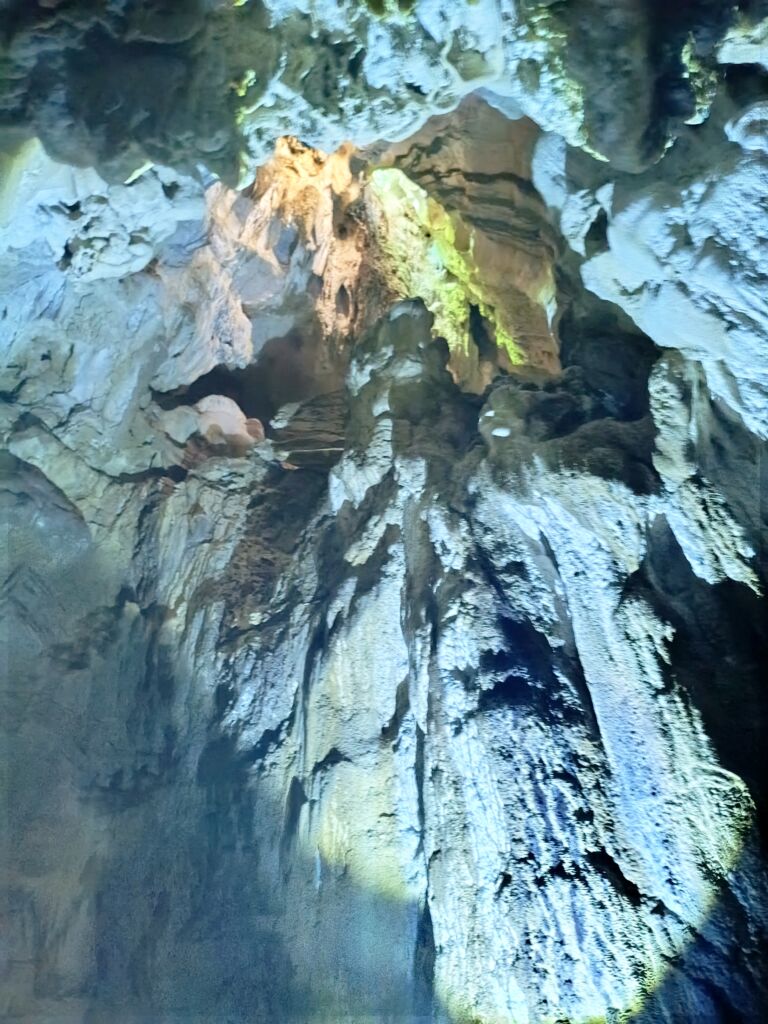 Stalactite structures illuminated
Others appear like sculptures shaped by time itself.
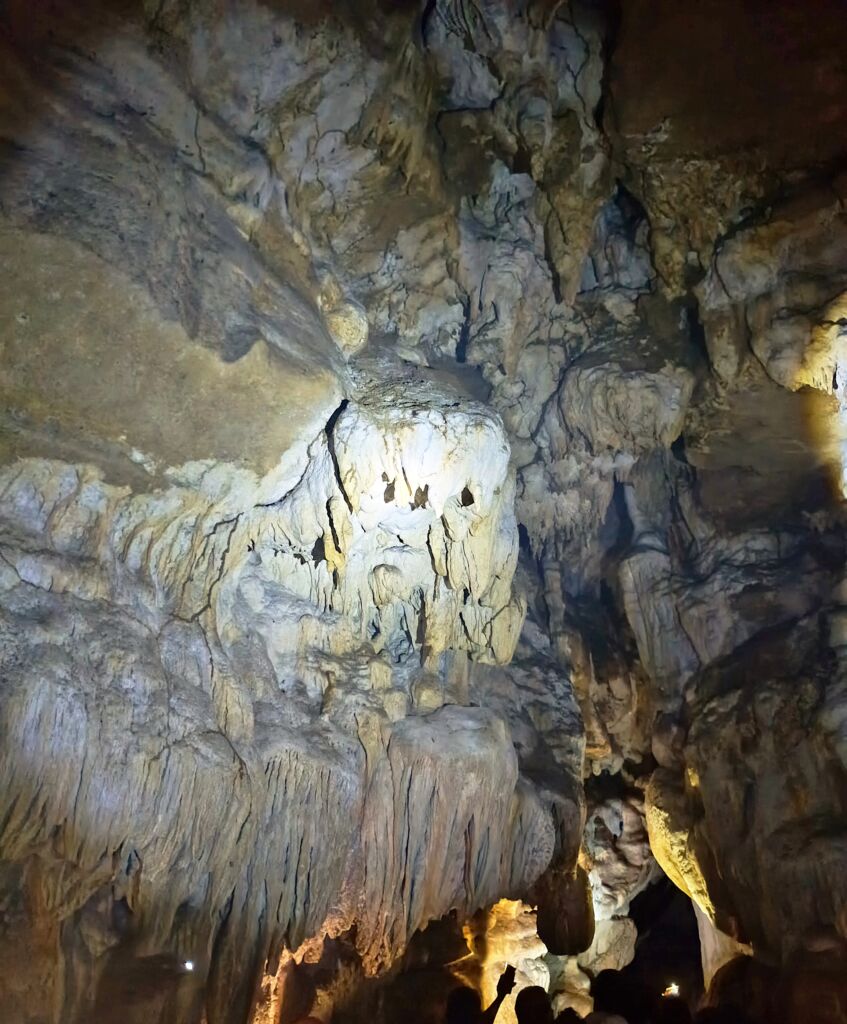 Colour-lit cave formations
The scale of the chambers is astonishing.
Towering cave chamber
Standing inside, you realize that nature has been patiently working on this artwork for millions of years. We humans merely wander through it with flashlights.
The beaches of Havelock, the gem of the Andaman Islands
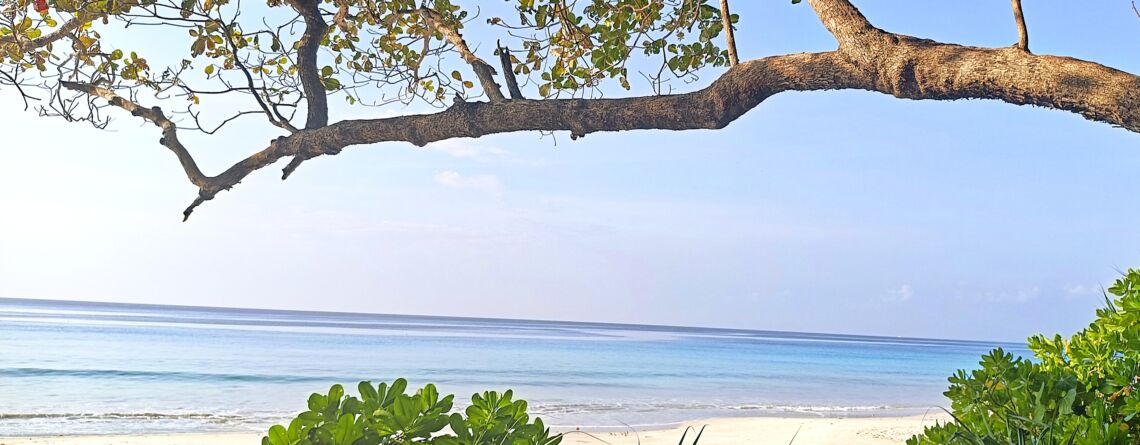
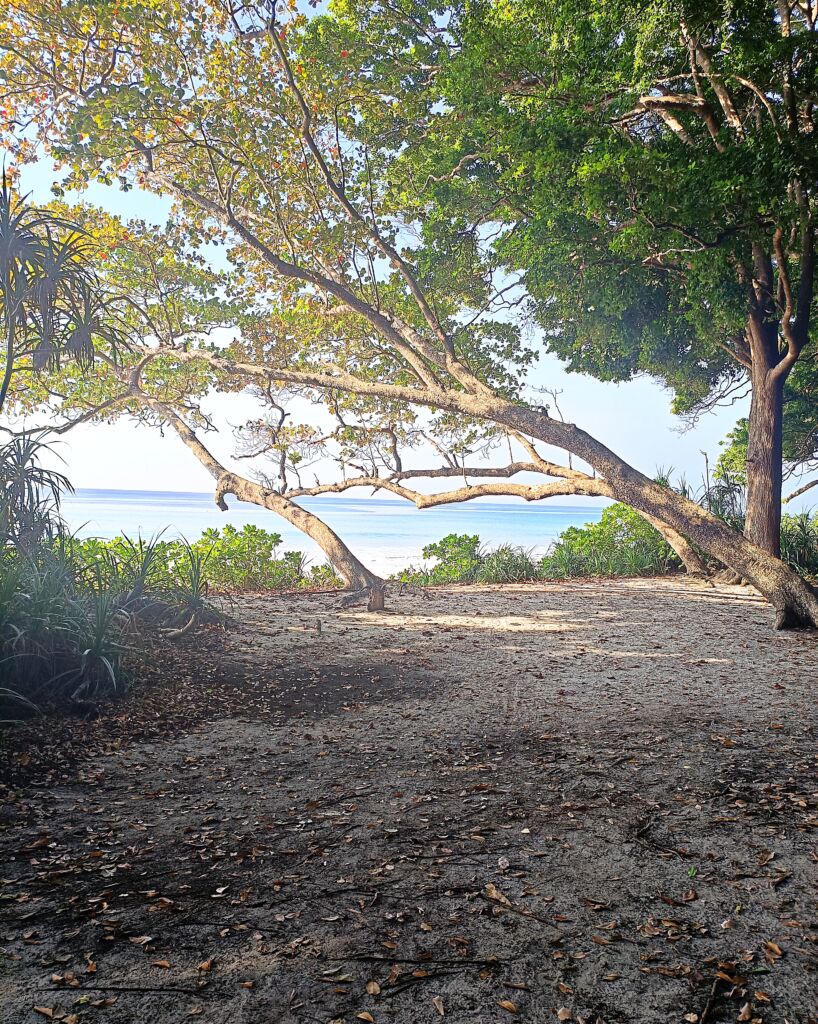
Then comes Swaraj Dweep, better known by its old name, Havelock Island. This is where the Andamans reveal their true magic. The beaches here stretch endlessly. The sand is pale and soft. The forest leans right up to the sea as if trying to listen to the waves. Sunrise here is not merely sunrise. It is theatre.
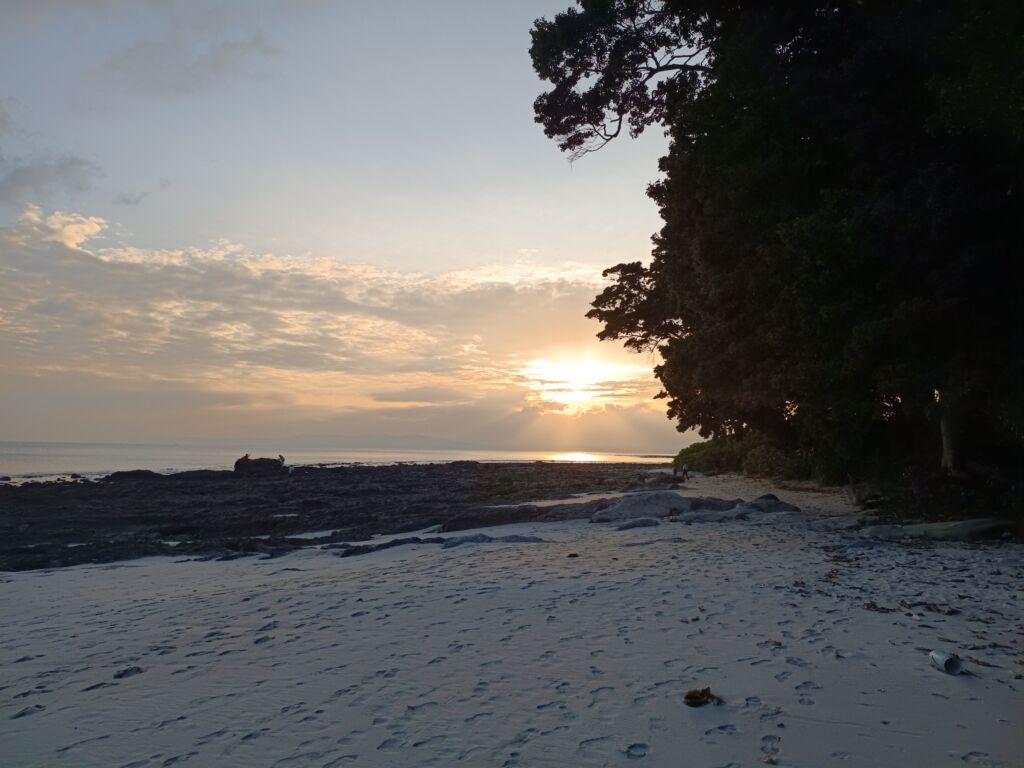
Golden sunrise over beach
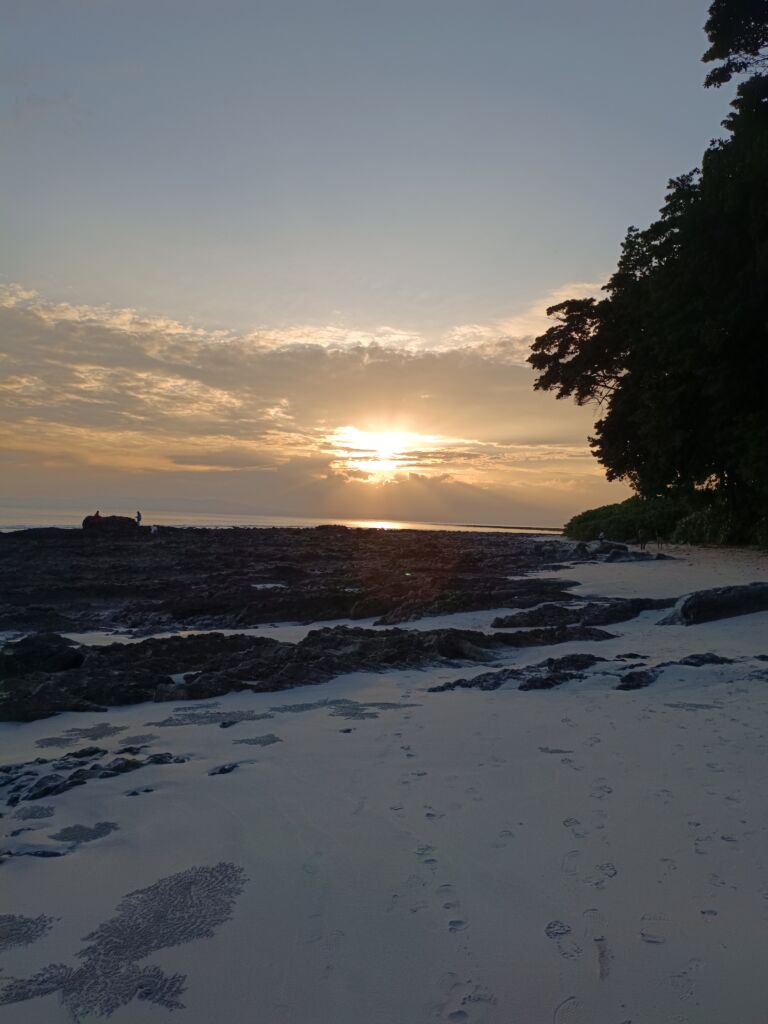
Sun rays breaking through clouds
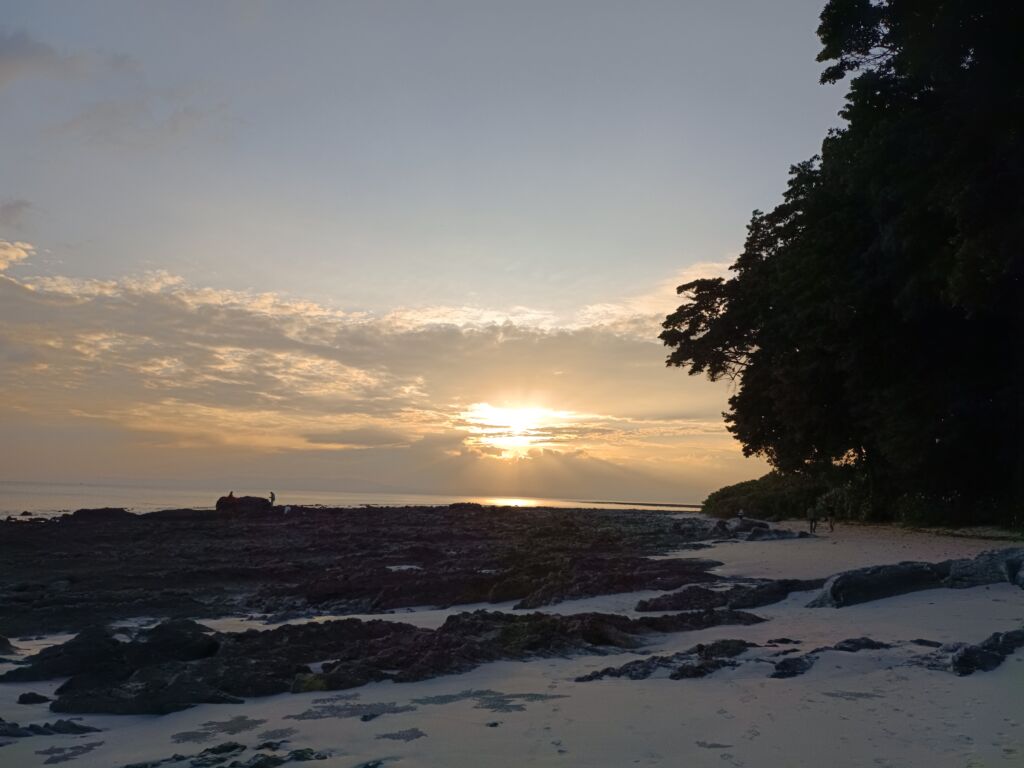 Wider beach sunrise
Clouds gather like stage curtains while the sun slowly lifts itself above the horizon. Sometimes the wet sand reflects the sky like a mirror.
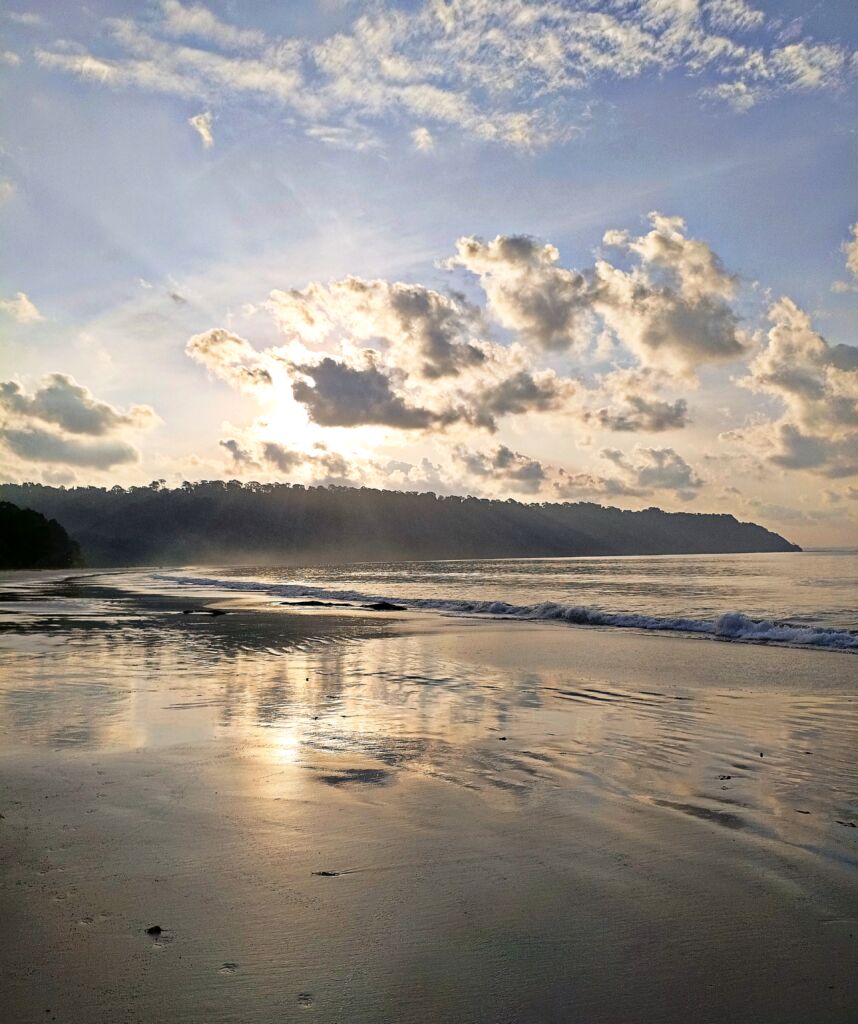 Reflections on wet sand
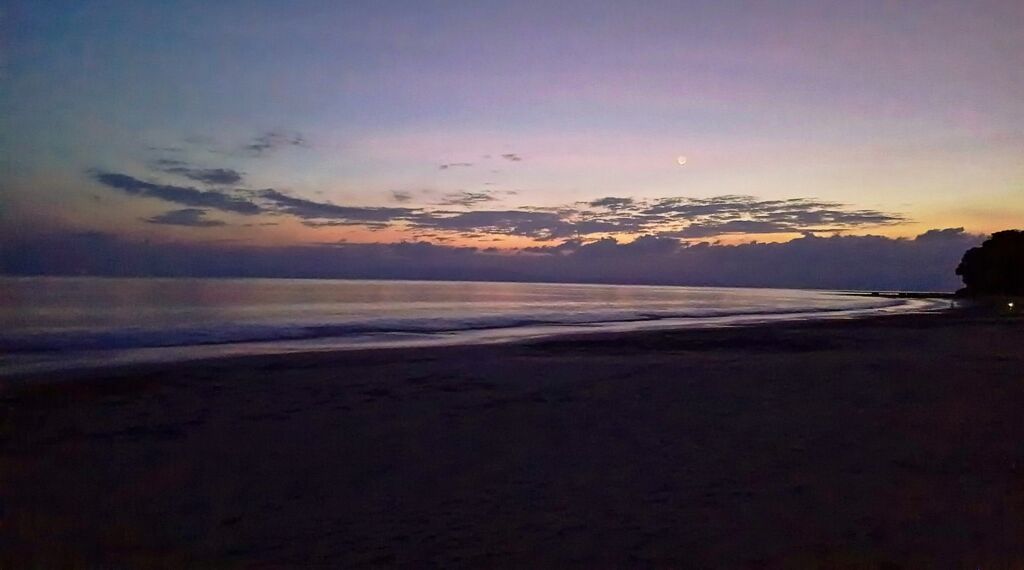
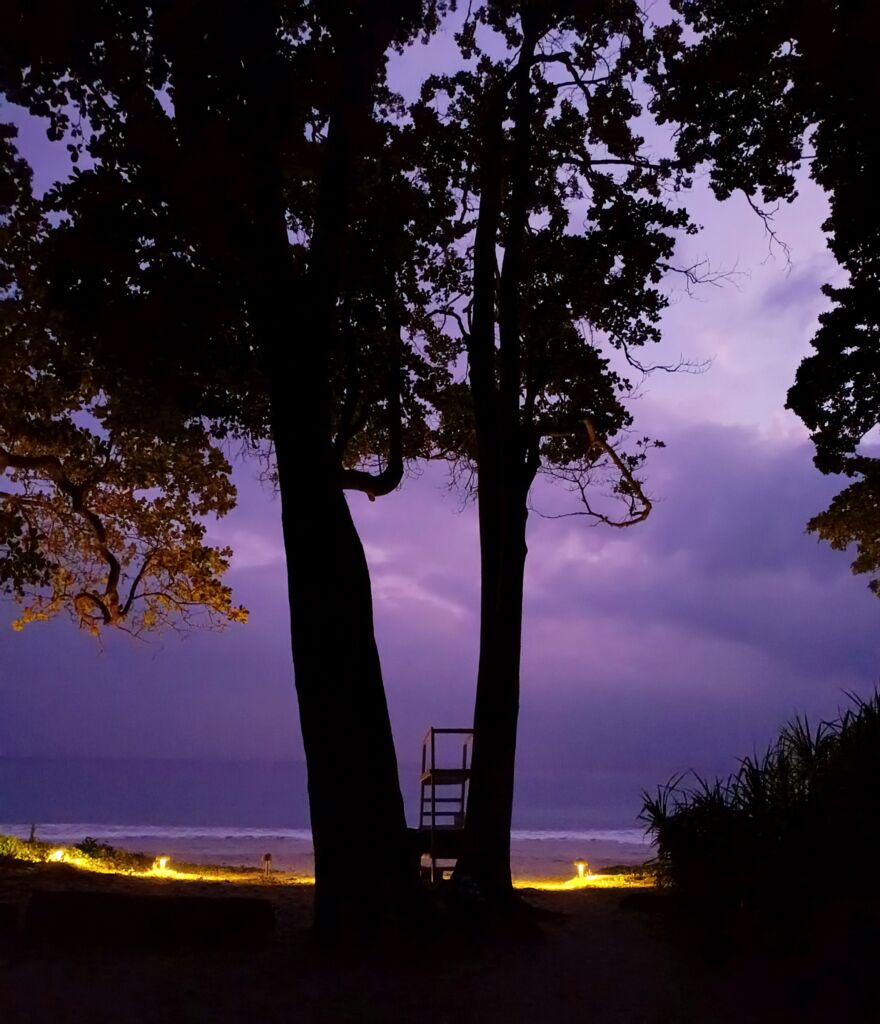
And when evening arrives, the colors soften into pastel shades.
The secret artists of the beach
If you walk slowly along the beach at low tide, you will notice something remarkable. Tiny geometric patterns across the sand. Perfect radial designs. These are made by sand bubbler crabs.
Each crab digs a small burrow and collects sand grains around it. The crab filters microscopic organic matter for food and rolls the leftover grains into tiny balls, creating intricate patterns.
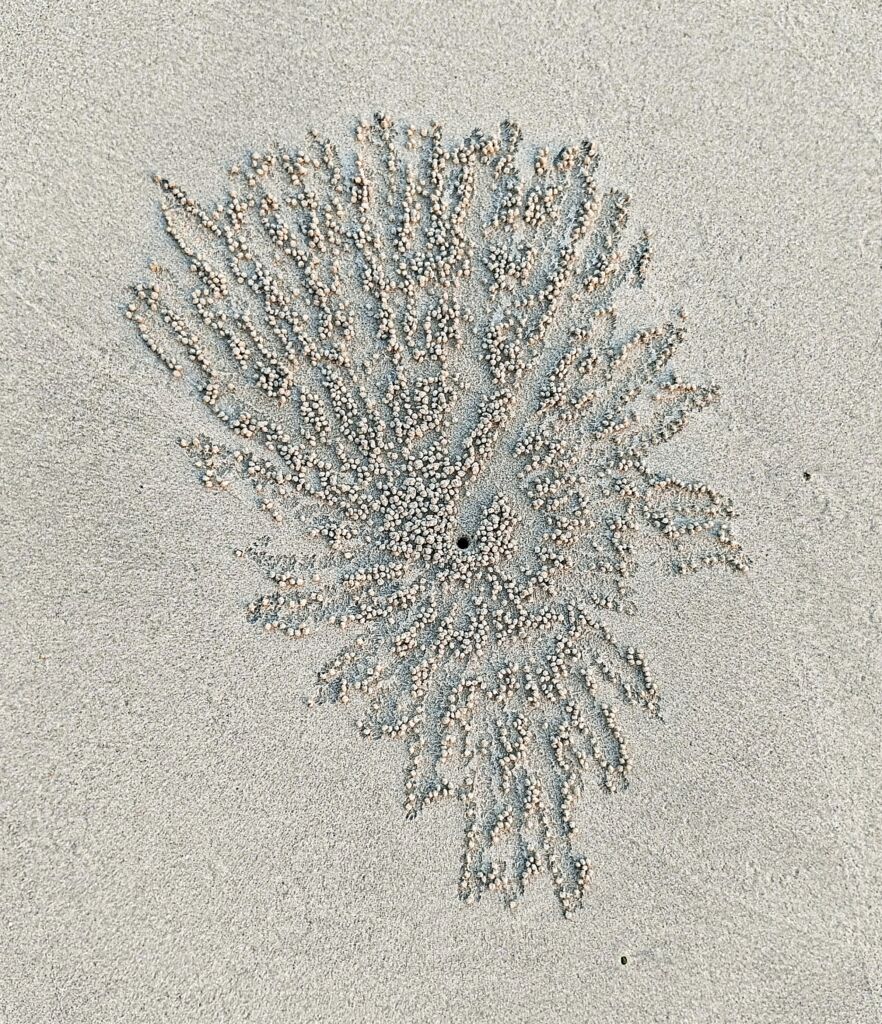
Single sand-bubbler crab pattern
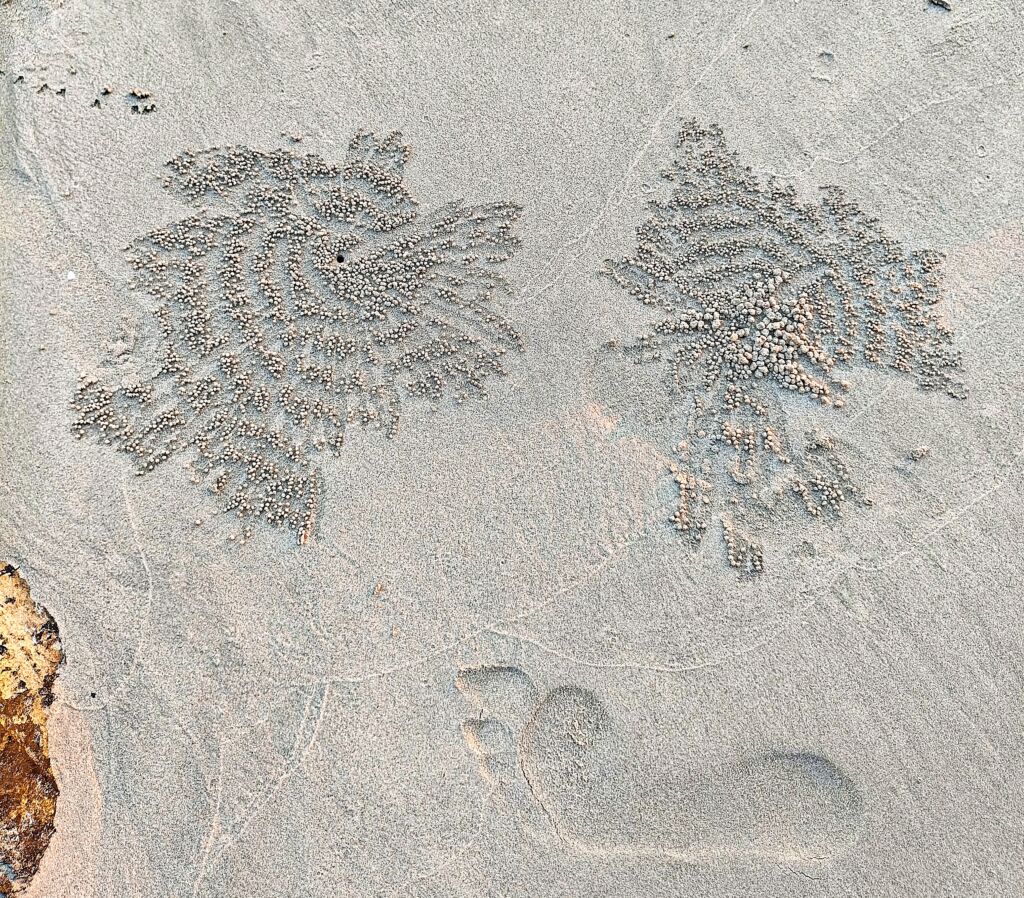
Twin crab patterns
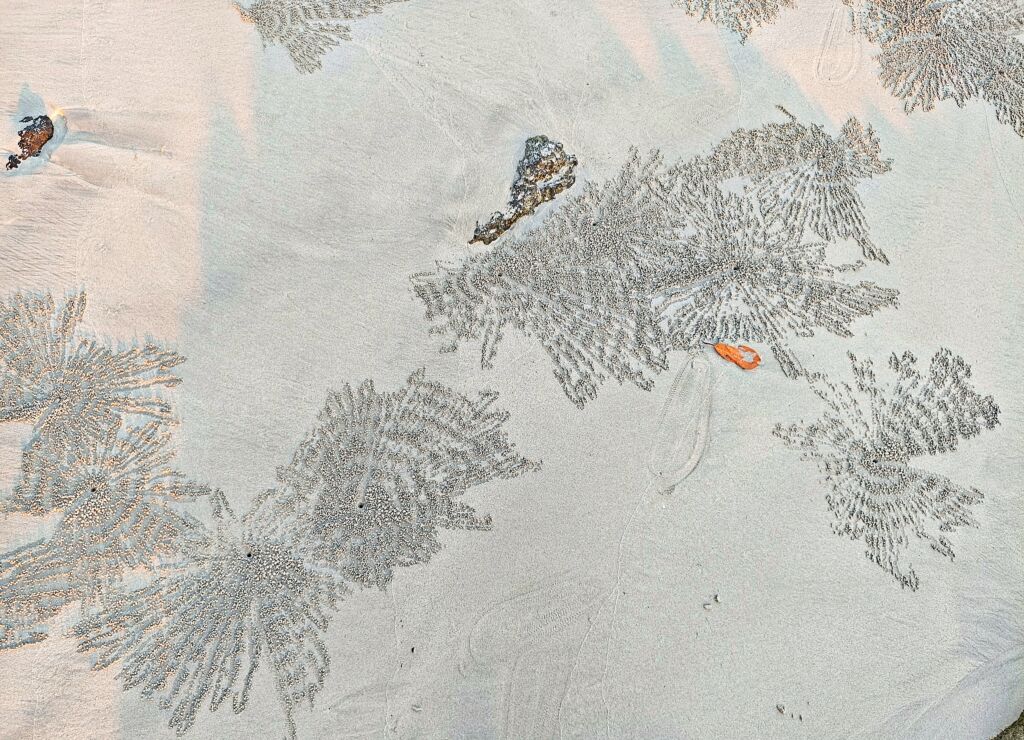 Cluster of crab designs
Entire sections of beach become covered in these natural artworks.
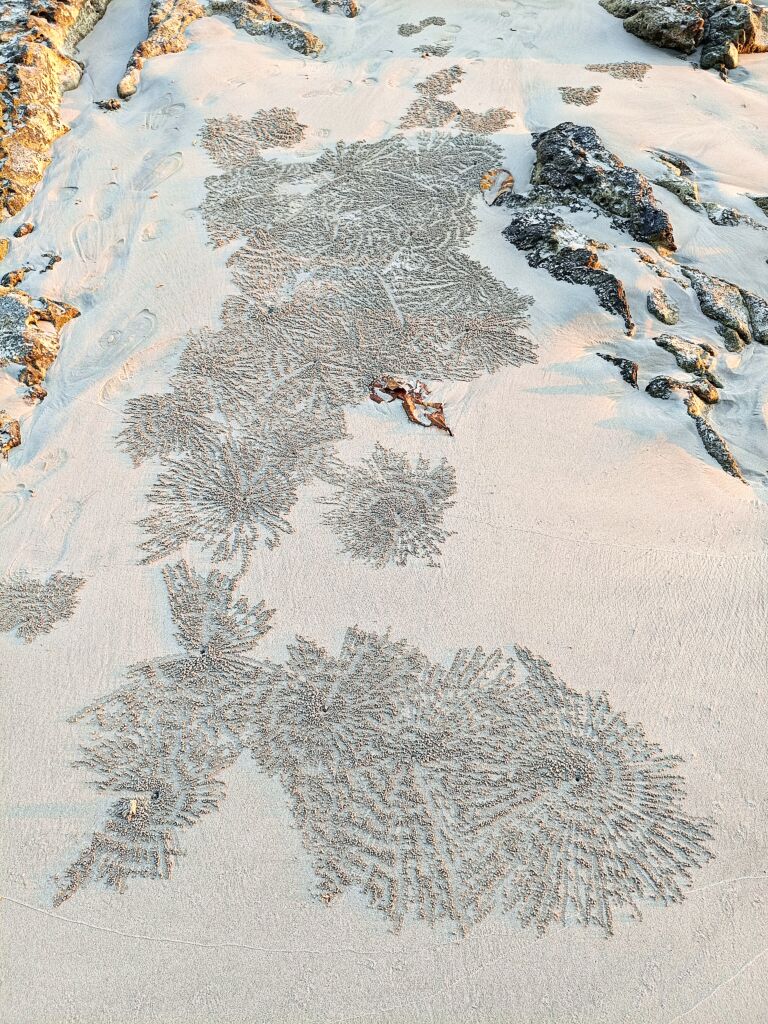 Large field of crab patterns
Nature quietly decorating the beach overnight.
The adventures I heroically avoided
The Andamans are famous for adventure activities like Scuba diving, Snorkeling, Sea walking, Jet skiing, Parasailing, Kayaking through mangroves, etc.
All wonderful experiences… And I heroically avoided every single one of them. Instead, I focused on serious research into the art of lyadh.
Long walks on empty beaches… Watching waves roll in… Studying crab artwork… Occasionally staring at clouds and pretending it was a philosophical exercise.
Why the Andamans slow you down
There are places in the world that excite you… Places that overwhelm you… And then there are places like the Andaman Islands that simply slow everything down…
The sea moves gently, the forests breathe quietly, time stretches… You begin to notice things that usually escape attention. Things like the movement of clouds, the geometry of crab patterns, the patient architecture of mangrove roots…
And before you know it, you find yourself doing something that modern life rarely allows… Absolutely nothing.
Which, as the sloth might say, may well be the most intelligent thing of all.
And just in case you want to visit the Andaman Islands, contact Beyonder Travel. Oh, and feel free to check out the other experiences across the world that are put up there…



Leave a Reply