
Porto: where the river remembers – Beyonder
Anand Parameswaran2026-01-13T08:05:42+00:00Porto is a small city in Portugal, where the river remembers, and the wine makes sure you do too… I had just finished an absolutely fantastic, terribly cold trip in the surreally beautiful and wild Greenland. After that, I needed warmth.
Not the Instagram sort. The real kind. The kind that seeps back into bones that have spent too long negotiating with ice, wind, and existential silence. So after a couple of easy days in Copenhagen (and a gentle flirtation with Lund and Malmö) I pointed myself south. Portugal. The Azores were calling, but on the way, I decided to pause. Just for a bit. A restorative interlude.
Enter Porto.
A city that doesn’t scream for attention. It just sits there, by the river, quietly confident, knowing full well that if you linger long enough, you’ll fall for it. Probably over a glass of Tawny.
Porto is beautiful. That’s the obvious bit. The postcards have done their job. What they don’t tell you is that Porto is effortful. It makes you work for its beauty. Steep climbs. Narrow stairways. Sudden drops. Streets that appear to have been designed by someone with a philosophical objection to flat surfaces.
And yet, you keep walking. Because around every corner, the city throws you a reward.
A view.
Or a bridge.
A river glinting like it knows a secret.
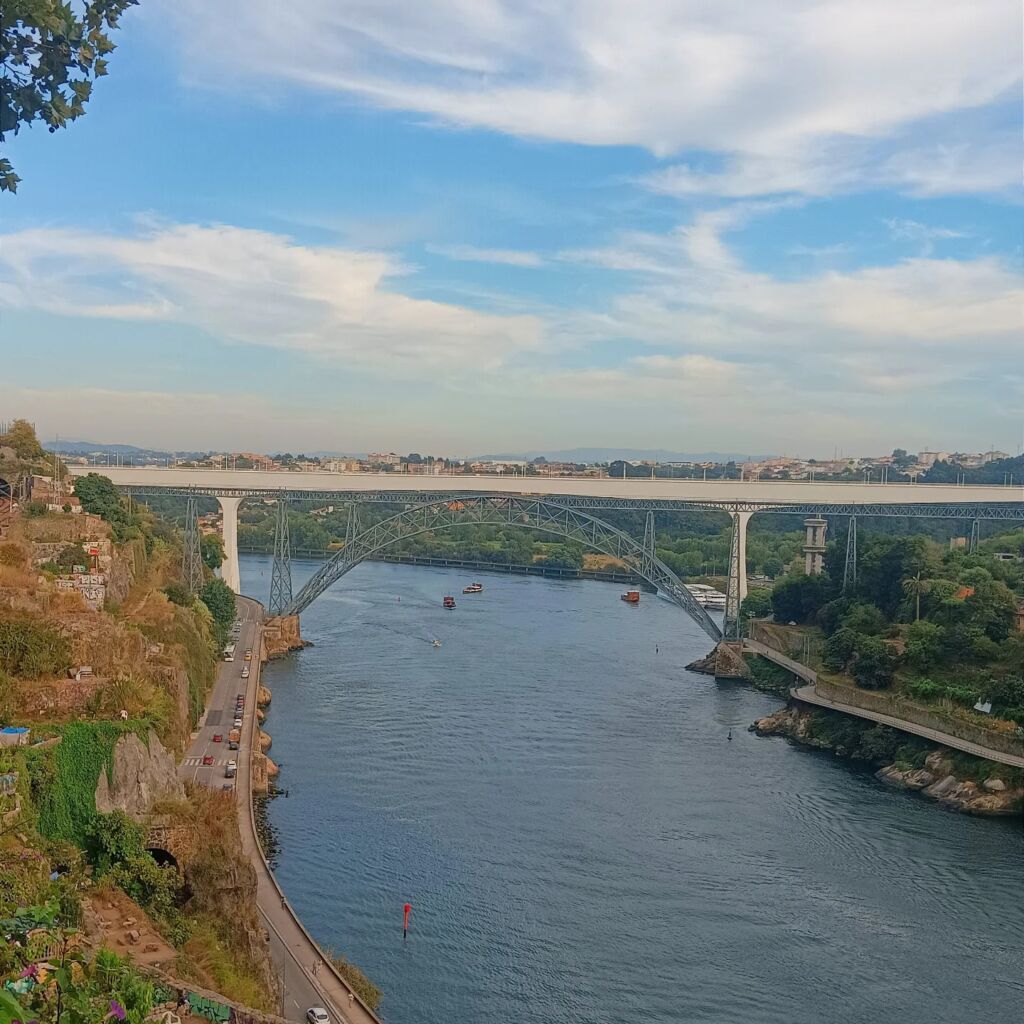
The river, the bridges, and a city stitched together – Porto
The Douro isn’t just a river. It’s the spine. Everything in Porto bends around it… architecture, commerce, history, wine, moods… The bridges don’t just cross it; they pose over it, flex over it, show off a little.
By day, they are steel and geometry and purpose.
By night, they turn poetic.
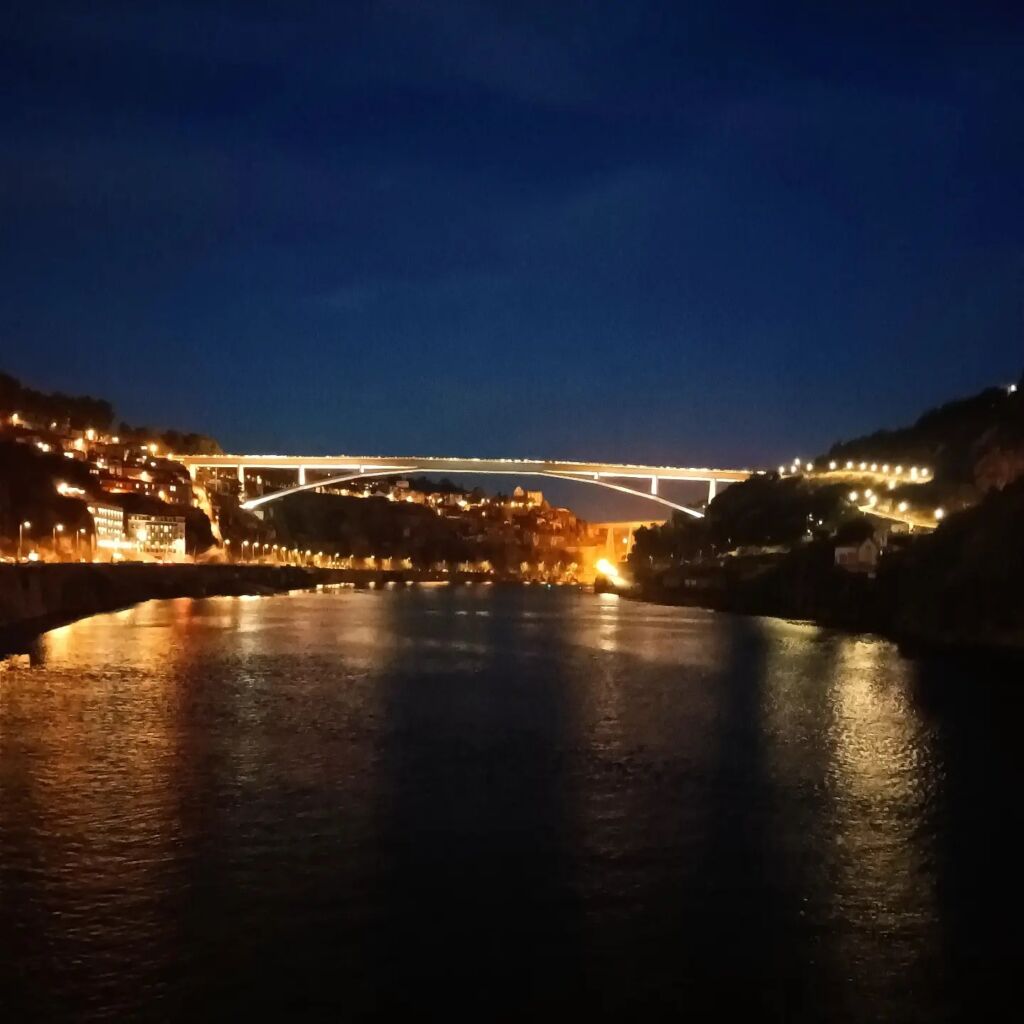
There’s something about watching Porto after dark that feels deeply reassuring. The lights soften the edges. The city exhales. The river slows down. Even the bridges seem to relax, as if saying, alright, you’ve walked enough for today — sit down, have a drink.
Which I did… Frequently… Maybe a tad too frequently… 😉
Walking Porto (and why wall art matters)
Porto is best discovered on foot. Slowly. Preferably without a tight schedule and with a mild disregard for step counts.
This is a city that believes in surprise. Sometimes architectural. Sometimes emotional.
And sometimes… mural-based.
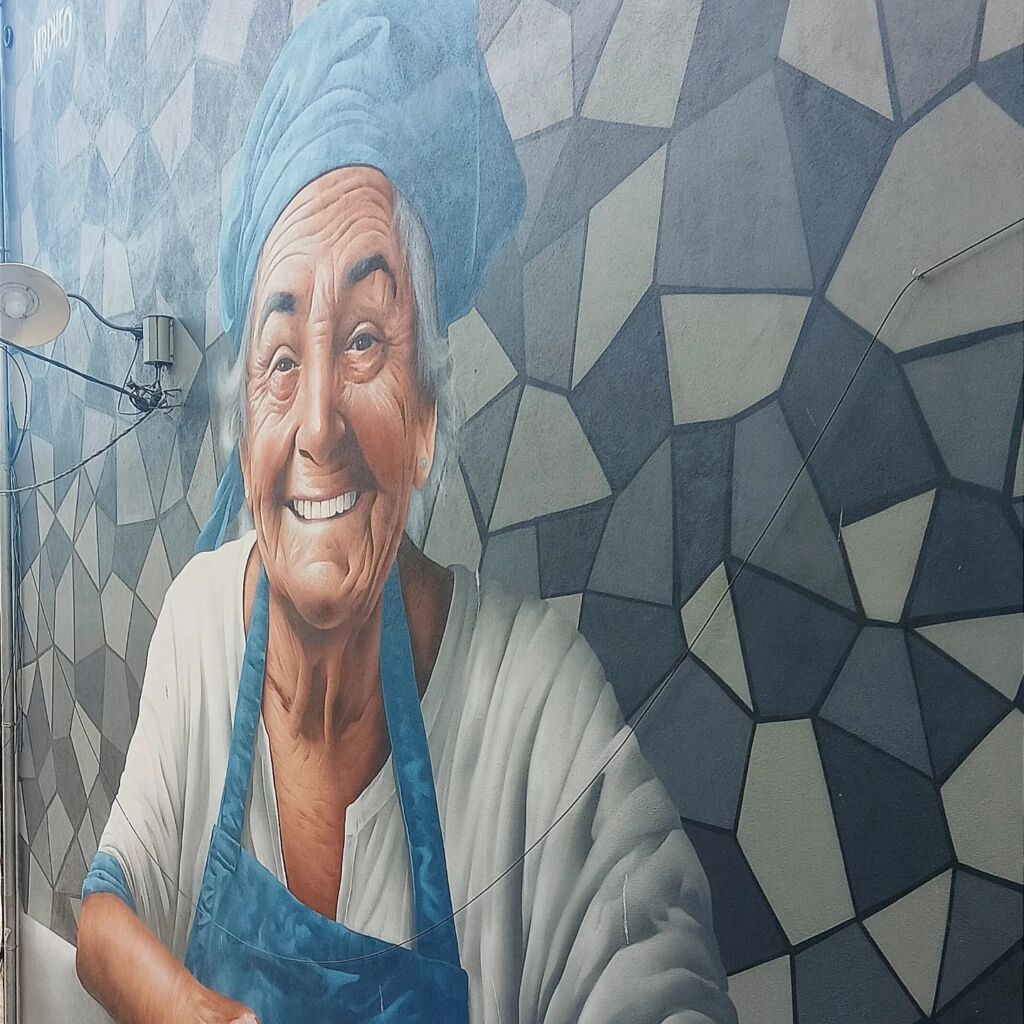
I still don’t know who decided that a laughing old lady should greet you at the top (or bottom) of a particularly cruel flight of stairs — but whoever it was deserves a medal. Or at least a drink.
Because after a steep climb, lungs negotiating new terms with gravity, you look up… and there she is. Smiling. Laughing. Almost mocking. And somehow, it works. You smile back. The exhaustion softens. Porto, it seems, has a sense of humor. It knows you’re struggling. It just chooses to laugh with you, not at you… Mostly.
By the river: boats, barrels, and slow evenings
Down by the river, Porto becomes cinematic.
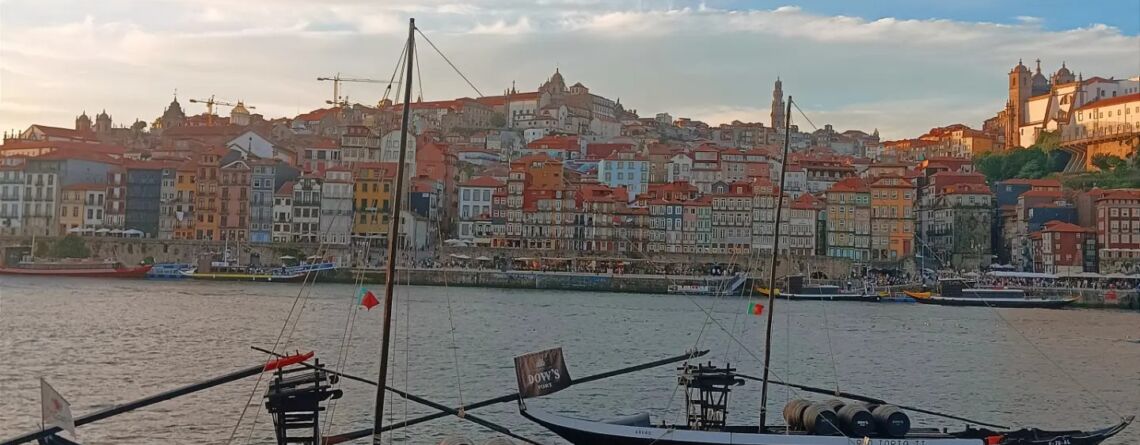
The old rabelos — boats that once carried barrels of wine downstream — now sit like proud retirees, posing obligingly for photos and memories.
Sit here long enough and time rearranges itself. Conversations stretch. Drinks last longer than planned. The city across the water looks like it’s been carefully stacked by someone with a very good eye for color.
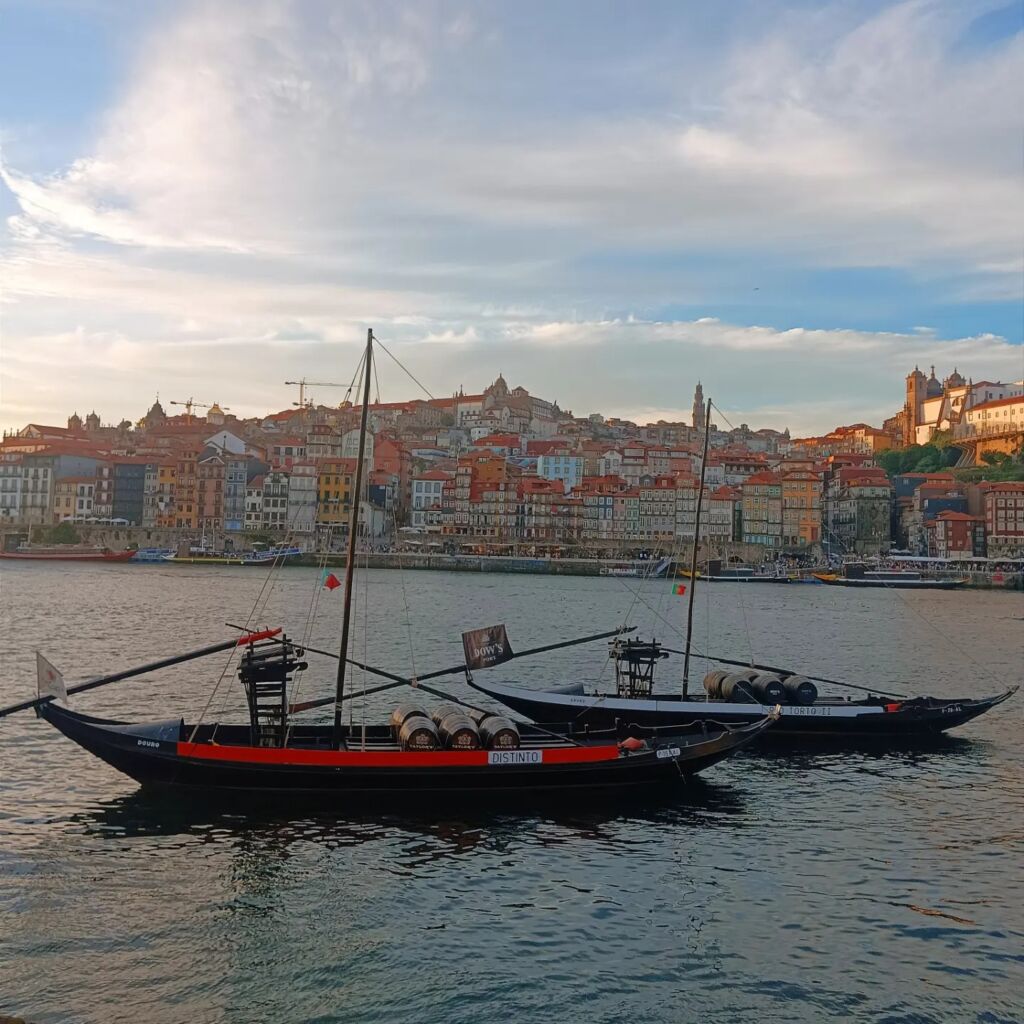
I found myself doing very little. Which is exactly what Porto does best. It doesn’t demand productivity. It rewards presence.
A necessary digression: food, shade, and long lunches
Portugal understands long meals. Porto understands them particularly well.
There was a lunch. Outdoors. Under a tree. The kind of lunch where the table is already set when you arrive, and no one seems remotely concerned about when you might leave.
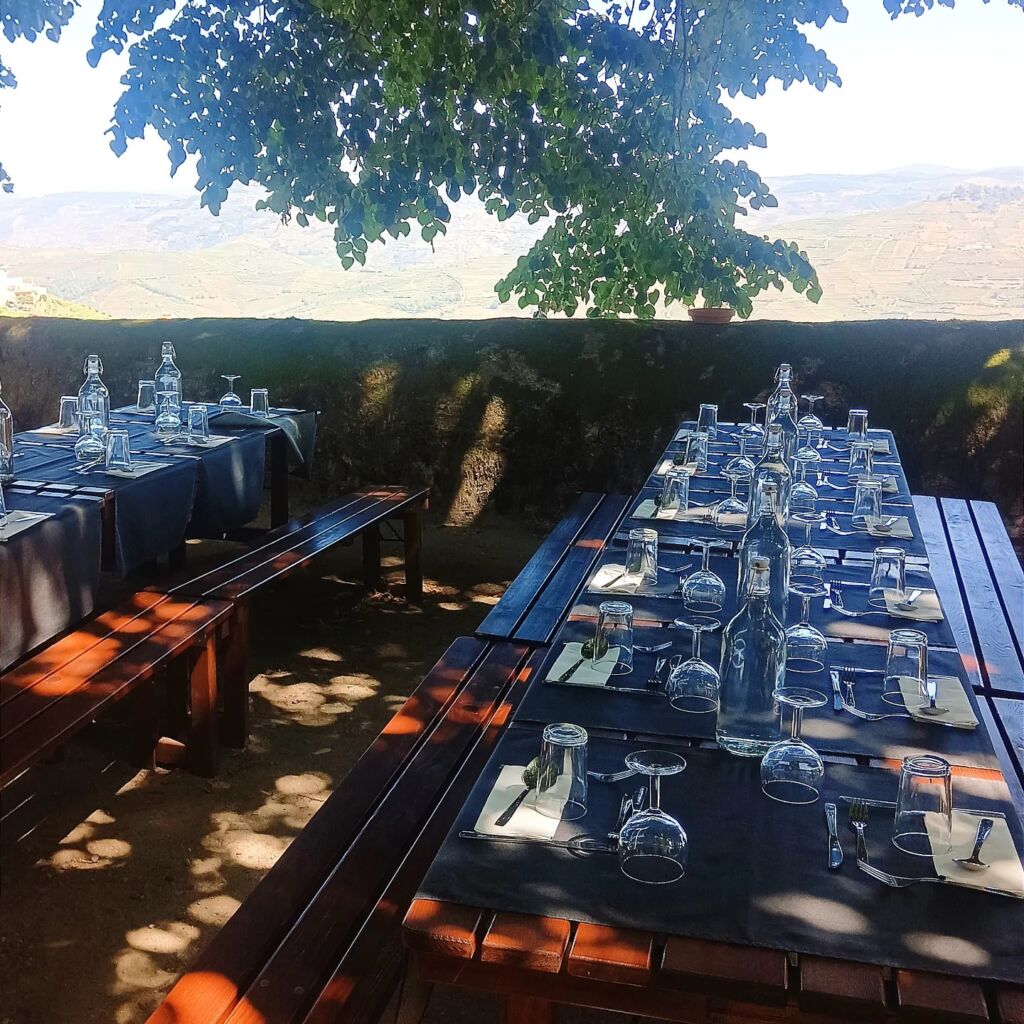
Glassware catching the light. Water bottles sweating gently. Cutlery waiting patiently. This wasn’t a meal. It was a commitment.
Food arrived. Wine followed. Conversations wandered. The river shimmered below. Somewhere between the second pour and the shade shifting across the table, the world felt… correct.
And now, let’s talk about wine (because Porto insists)
You can’t come to Porto and not talk about wine. The city would consider it rude.
Port wine — fortified, storied, occasionally misunderstood — isn’t just a drink here. It’s a narrative. Geography, trade, empire, ingenuity, survival. The Douro Valley’s steep, schist-lined terraces don’t make life easy for grapevines. Which, of course, is exactly why the wine is so good.
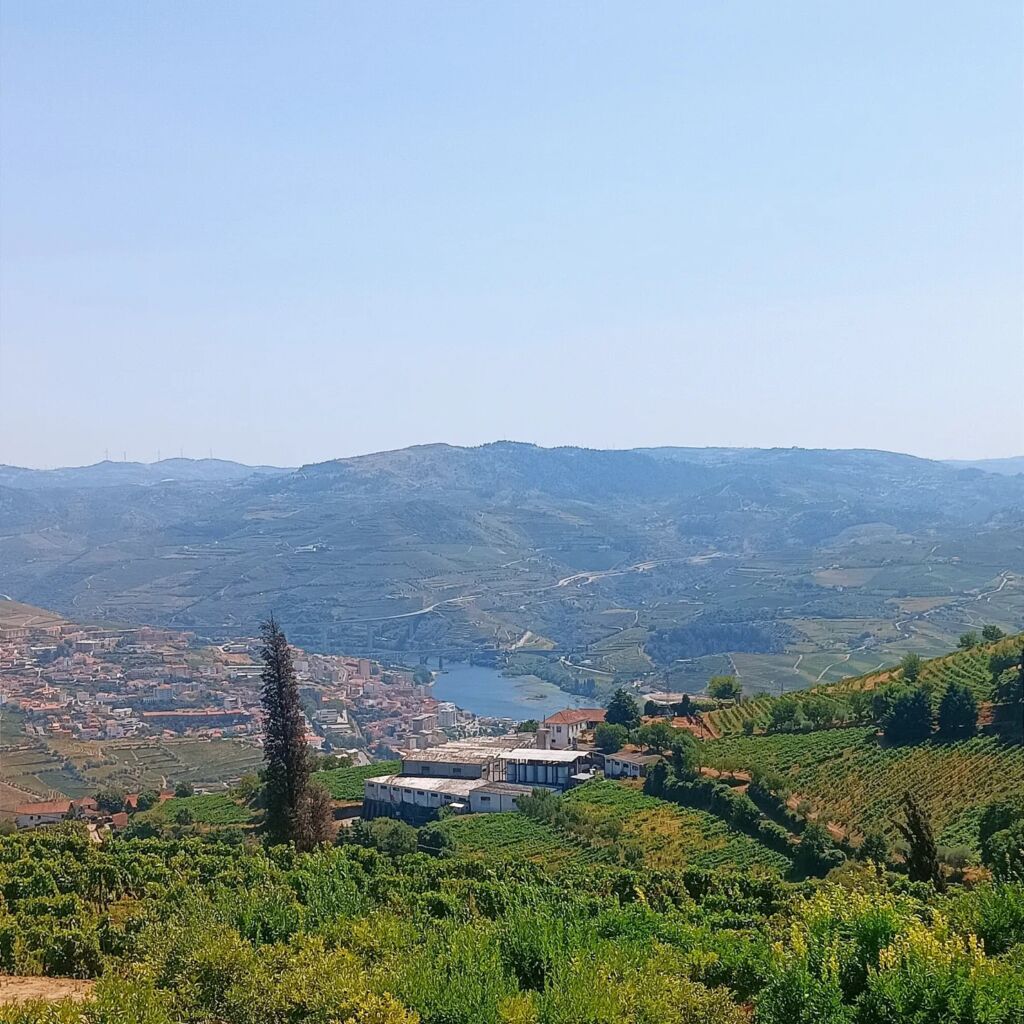
This is a region that had to invent resilience. Fortification wasn’t a stylistic choice; it was a practical one. Adding grape spirit stopped fermentation, retained sweetness, and ensured the wine survived long sea journeys. What started as necessity became identity.
And then there’s Tawny.
I have a soft spot for Tawny Port. Actually, that’s understating it. Tawny doesn’t shout. It doesn’t show off. It sits quietly, having spent years — sometimes decades — oxidizing gently in oak, developing nutty, caramelized, amber-toned wisdom.
If Ruby is youthful confidence, Tawny is earned calm.
Somewhere between tastings in the Douro Valley — a river ride here, a vineyard visit there — Tawny became my favorite. It felt… appropriate. Complex, layered, unhurried. A wine that doesn’t rush you, and doesn’t appreciate being rushed either.
I learnt things. About grapes. And about soil. Also about time. Mostly though, I learnt that wine tastes better when you’re not trying to impress anyone.
Douro Valley: where wine earns its keep
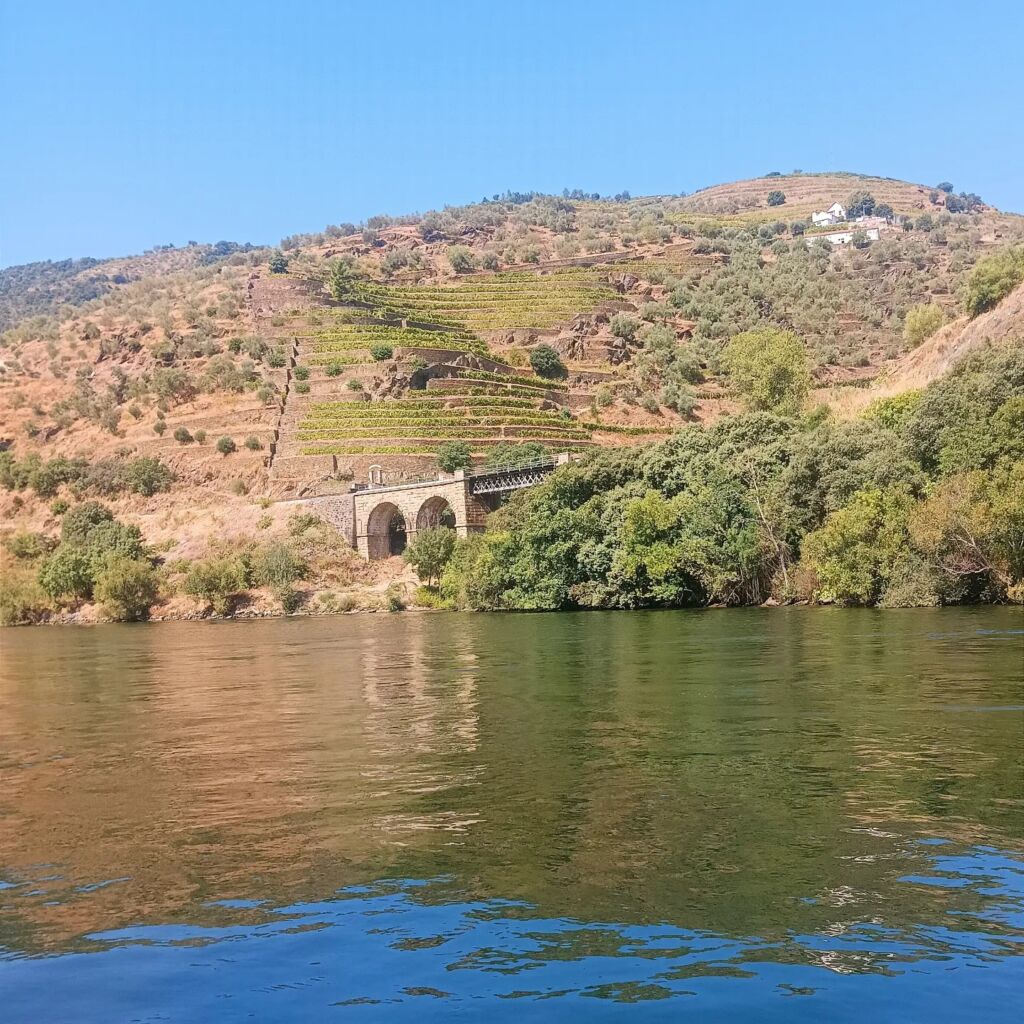
The journey into the Douro Valley is part of the experience. Roads wind. The landscape opens. Vineyards cling to slopes that look borderline unreasonable.
And yet, it works. It has worked for centuries. Humans, it turns out, are very stubborn when good wine is involved.
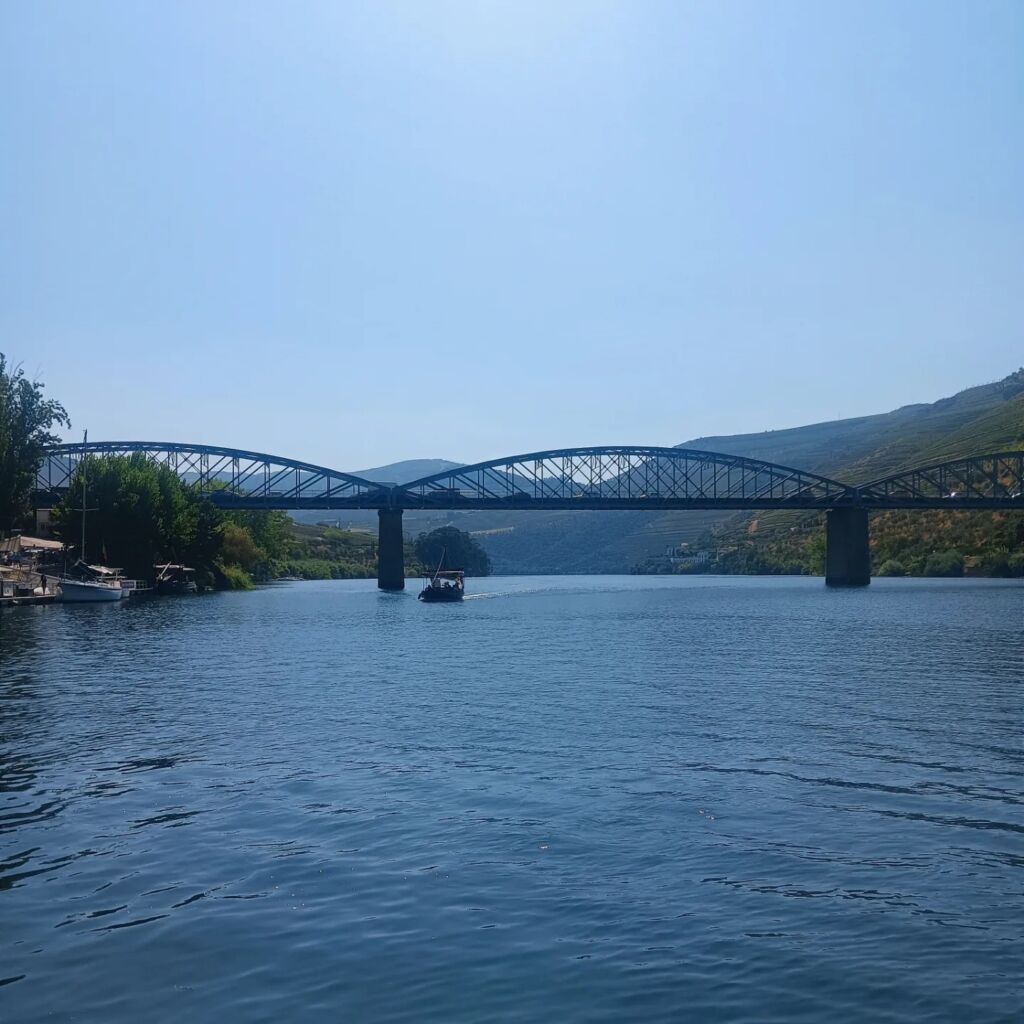
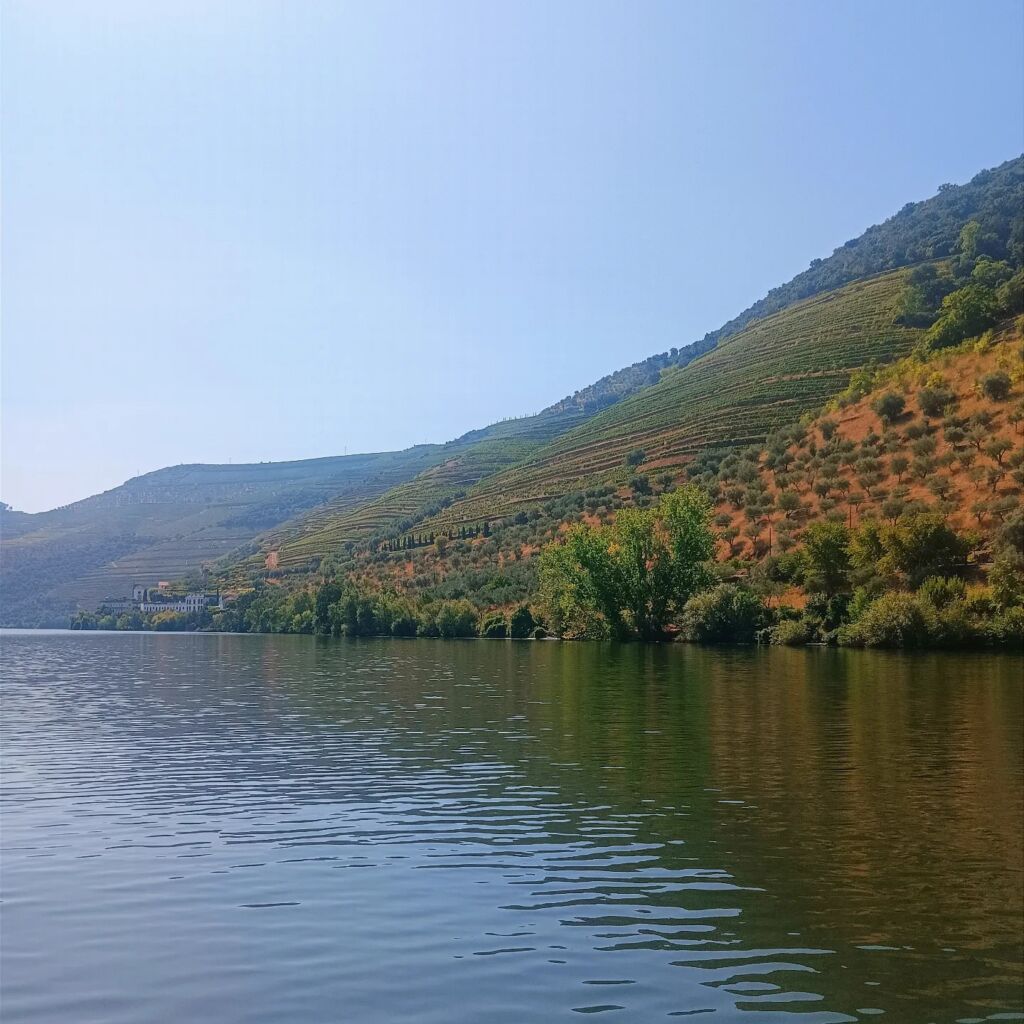
A boat ride down the river seals the deal. Vineyards on both sides. Light dancing on water. A sense that this entire valley exists because someone, long ago, decided that grapes were worth the trouble.
They were right.
Night falls, Porto glows
Back in the city, night brings Porto back into itself.
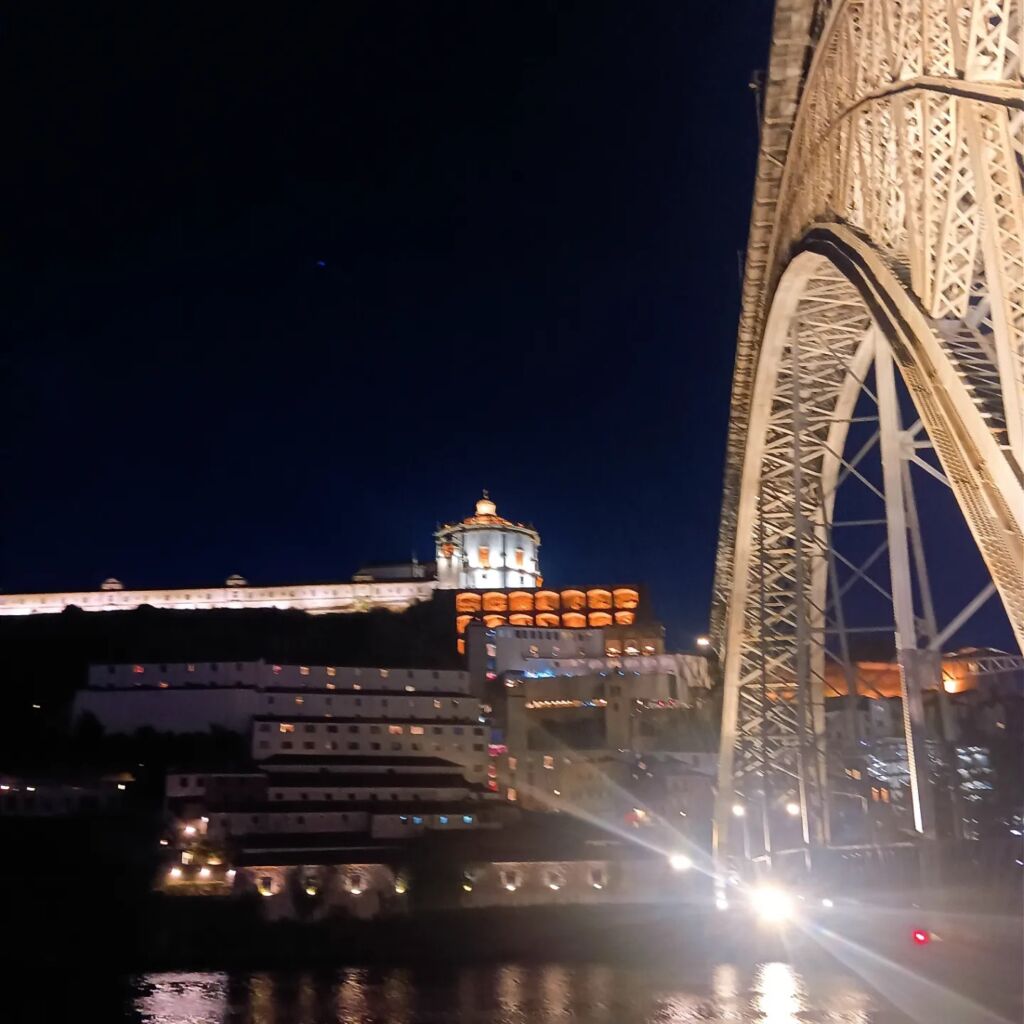 The bridges light up. The river reflects. Buildings glow softly, as if remembering things they don’t feel the need to explain.
There’s a moment — usually after dinner, possibly after dessert, almost certainly after another glass — when Porto feels less like a place you’re visiting and more like a place that’s letting you stay.
Briefly. Kindly. Without obligation.
Why Porto works (and why I’ll go back)
Porto doesn’t overwhelm. It doesn’t perform. Nor does it chase trends.
It walks slowly. And climbs steeply. It laughs at your effort. And pours you another drink.
It is a city of patience — in its streets, its wine, its river, its rhythms. A city that understands that some things can’t be rushed. Including recovery, reflection, and really good Tawny.
I came here to restore tissues after Greenland. I left with restored perspective.
And possibly a preference for slightly older wines.
A quiet afterthought
Porto doesn’t try to be anything other than what it is.
A river that remembers.
A city that makes you work a little.
Wine that takes its time and expects you to do the same.
No lists. No hacks. And no must-dos shouted in bold.
Just slow walks, steep streets, long lunches, and the gentle realization that the most memorable places are the ones that don’t try too hard to impress you.
Sometimes, the best journeys are the ones where you don’t trip on the usual.
You just wander.
And let the river — and the wine — do the rest.
Porto doesn’t ask for attention. It just rewards those who give it time.
And wine helps.
If you wish to travel to Porto and unwind in slow magic, contact Beyonder Travel.



Leave a Reply