
Borneo Food and Drink
Borneo Food and Drink is essentially what the Forest, River, and Trade Routes Put on the Plate. Food in Malaysian Borneo is not performative.
It does not announce itself with fuss or flourish. It is not plated for drama or designed to travel well on social media. Instead, it arrives quietly, often steaming, occasionally wrapped in leaves, almost always practical.
And like everything else in Borneo, it makes sense once you stop expecting it to resemble something familiar.
Borneo Food is a cuisine shaped by geography, not trends
Borneo food begins with geography.
An island ringed by sea, threaded with rivers, cloaked in rainforest, and shaped by centuries of trade — the cuisine reflects what was available, preservable, and shareable.
Seafood dominates the Borneo food in the coasts. Rivers feed inland kitchens. The forest contributes shoots, leaves, roots, and flavors that rarely appear elsewhere. And trade brought rice, noodles, soy, spices, and cooking methods that layered themselves over indigenous foodways rather than replacing them.
This is accumulative cuisine, not invented cuisine.
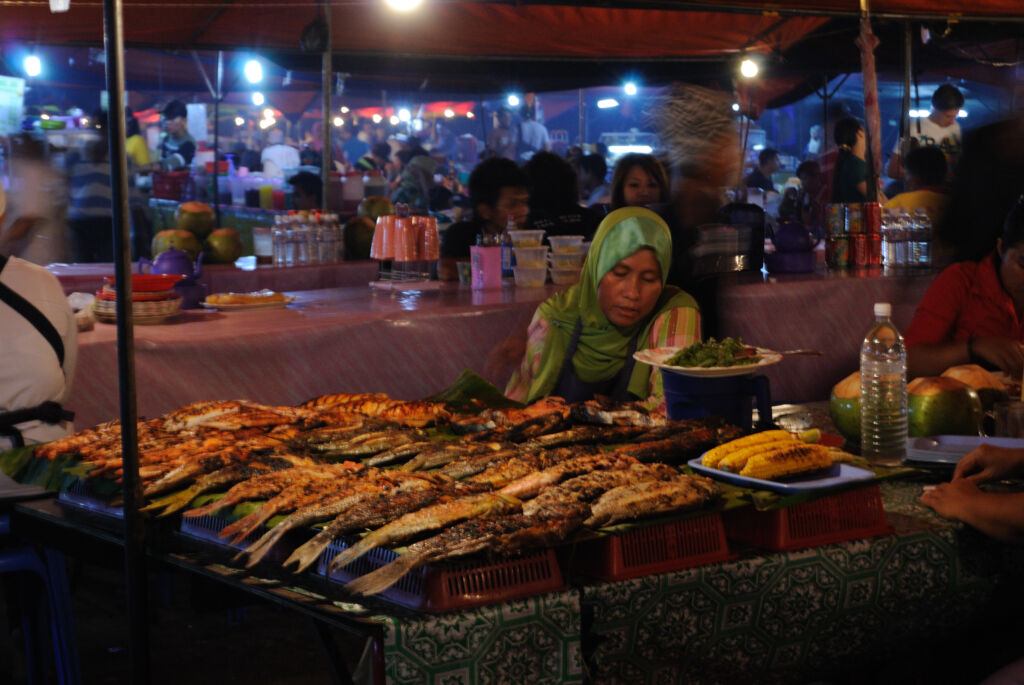
Night market in Kota Kinabalu
Borneo food – Sabah and Sarawak: subtle differences
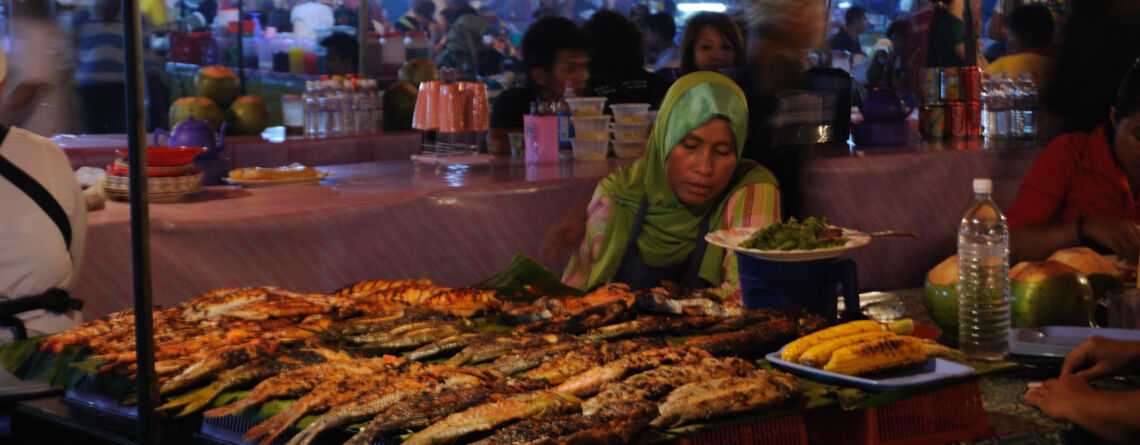
In Sabah, food tends to be lighter, cleaner, often seafood-driven. Fish is grilled simply, flavoured with lime, chillies, and just enough seasoning to step aside politely.
In Sarawak, Chinese influence runs deeper — noodles, soups, hawker culture — but even here, dishes are restrained rather than indulgent.
Across both regions, Borneo food and meals feel designed to be eaten repeatedly, not remembered once.
Staples, everyday eating, and forest logic
Rice is central to Borneo food, unsurprisingly. But what accompanies it changes constantly.
- Wild greens, often slightly bitter, harvested locally
- Bamboo shoots, cooked gently
- River fish, steamed or grilled
- Simple broths, nourishing rather than dramatic
The locals believe that food should sustain, not distract. Which feels increasingly radical.
Among indigenous communities, food is deeply seasonal. Ingredients appear, disappear, and reappear months later. There is nothing that is permanent.
The forest sets the menu.
Street Borneo food and night markets
Borneo’s night markets are not chaotic affairs. They are social rituals.
Grills smoke gently. Woks hiss. Conversations flow. The locals eat food standing, chatting, drifting.
Seafood skewers, noodles, soups, snacks you don’t immediately recognize — all priced modestly, all eaten without ceremony.
This is food without anxiety.
Drink: quiet indulgences
Alcohol in Malaysian Borneo exists, but it does not dominate.
Local beers are common. Rice wines appear in village settings — shared, not advertised. Drinking here feels communal rather than escapist.
A sundowner by the Kinabatangan River, watching the forest dim, is less about intoxication and more about marking the day’s end.
There is something refreshingly adult about that.
Borneo food as cultural memory
Borneo food tells you where people came from, what survived, and what adapted.
It does not shout identity.
Yet, it carries it.
And when you leave, what you miss most isn’t a signature dish — it’s the ease with which eating fits into daily life.
This was Part of the Mini Blogs on my travels in Borneo… Read the full travelogue here…
Check out the Borneo packages available for you to choose from. Need something different? Contact Beyonder Travel.




Leave a Reply