
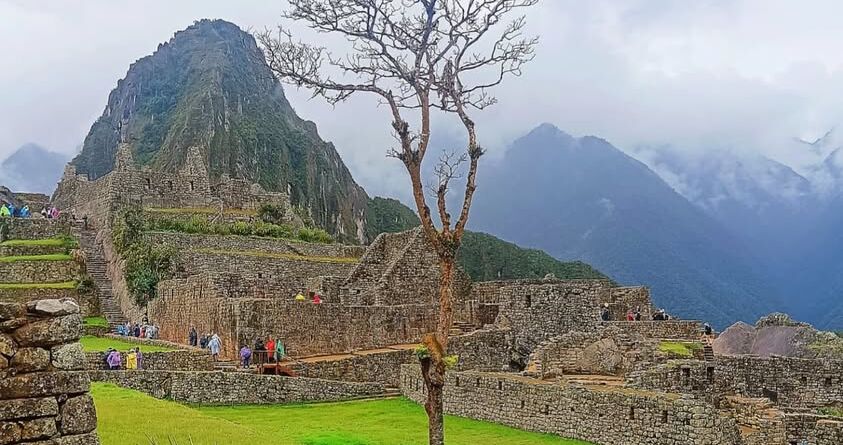
Machu Picchu – The City in the Clouds That Outsmarted Time – Beyonder
MACHU PICCHU is indeed The City in the Clouds That Outsmarted Time. There are some places in the world that feel “built.” Machu Picchu, on the other hand, feels “revealed.”
As if the mountain always knew it had a secret, and one day it simply sighed and let a portion of it slip into human sight.
Even when you’re standing in front of it — lungs burning a bit, clothes damp from the Andean mist, heart beating quicker than usual — a part of your brain says, “This can’t be real. This is a movie set built by someone who actually respects physics.”
But Machu Picchu is real.
And it’s even more magnificent when you understand its origin story — a tale of ambition, astronomy, mysticism, politics, geology, and one accidental Yale explorer who showed up looking for something else entirely.
Let’s go there.

THE BEGINNING – WHO BUILT MACHU PICCHU AND WHY?
The Incas didn’t just build things. They choreographed them.
Sacsayhuamán? A fortress that looks like it was assembled by stacking Lego bricks the size of trucks.
Ollantaytambo? Terraced farming meets grandstand architecture.
Cusco? A puma-shaped urban blueprint.
And Machu Picchu?
Their quiet masterpiece.
Most archaeologists agree it was built during the reign of Pachacuti Inca Yupanqui — the empire’s most dynamic ruler, strategist, city-planner, and general “man-who-didn’t-have-time-for-mediocrity.”
So what was Machu Picchu?
Pick your theory:
- A Royal Retreat – A Himalayan-style “mountain spa” for Inca royalty, where emperors escaped politics and performed rituals to honour the Sun God.
- A Sacred Ceremonial Centre – The Intihuatana stone, the Temple of the Sun, the Rock Quarry, and the Sacred Plaza all align with solstices and sacred peaks. This was spiritual architecture, not just housing.
- A Research Park of the 1400s – Terraces with varying temperatures? Water canals engineered down to the millimetre? Machu Picchu was also an agricultural innovation lab.
- A Fortress Hidden from Invaders – High enough, remote enough, and camouflaged enough that even the Spanish — conquerors with a special talent for finding everything — never discovered it.
All theories coexist comfortably.
Because Machu Picchu was never meant to be just one thing.
It was an Inca worldview carved in stone. (Want some more information on the Incas?)
HOW HIRAM BINGHAM “DISCOVERED” IT — AND WHAT REALLY HAPPENED
In 1911, Yale historian Hiram Bingham went searching for the “Lost City of the Incas.”
He had no GPS, no social media tips, no Google Maps reviews saying “4 stars, great view but too many tourists.”
What he did have was a local farmer telling him, “There are old ruins up there.”
Bingham climbed the mountain.
Met a child.
The child guided him through the overgrown brush.
And suddenly, like a curtain rising in slow motion, Machu Picchu appeared.
Bingham did not discover Machu Picchu.
People were living there.
Locals knew it.
But he publicised it — and the world gasped.
WHAT TO SEE INSIDE MACHU PICCHU (AND WHAT NOT TO MISS)
There are two kinds of travelers at Machu Picchu:
1) The “I will take a thousand photos” tribe
2) The “I’ll just stand here and stare because no camera can handle this” tribe
Whichever one you are, Machu Picchu humbles you. I have always been part of the 2nd kind of traveler tribe – it was no different in Machu Picchu. However I have taken some pictures that do not do any justice to the place, possibly the grandeur cannot be captured in a frame… or more likely, I am not a good photographer… or I was too slack-jawed in the place to even remember my camera… or all of the above 😉
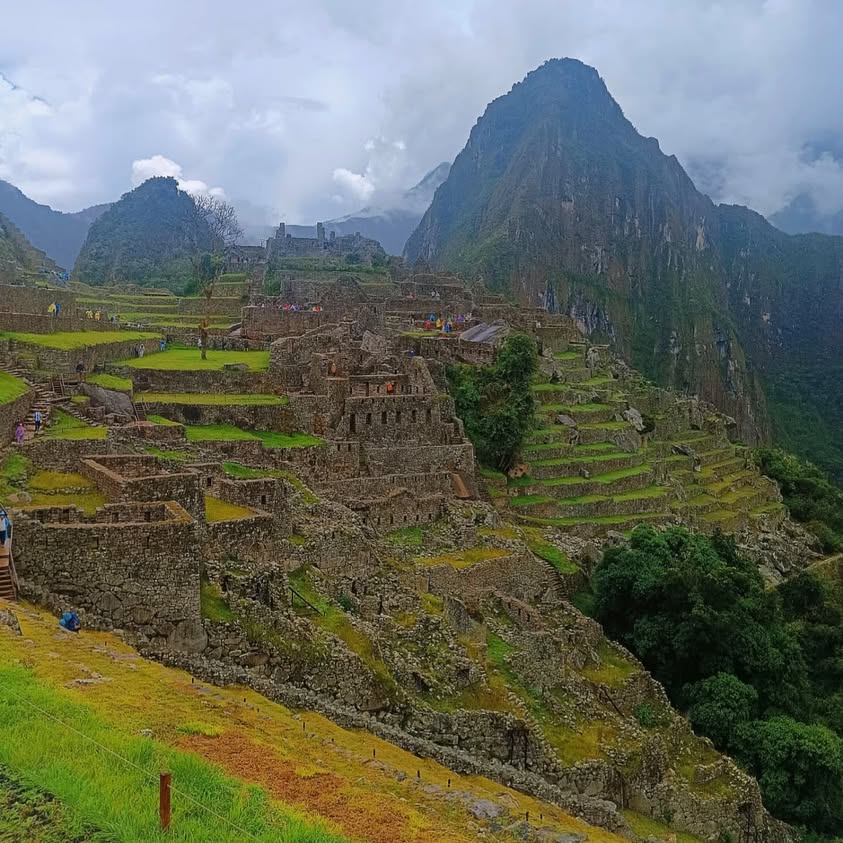
THE GUARDIAN HOUSE VIEWPOINT
The classic postcard view.
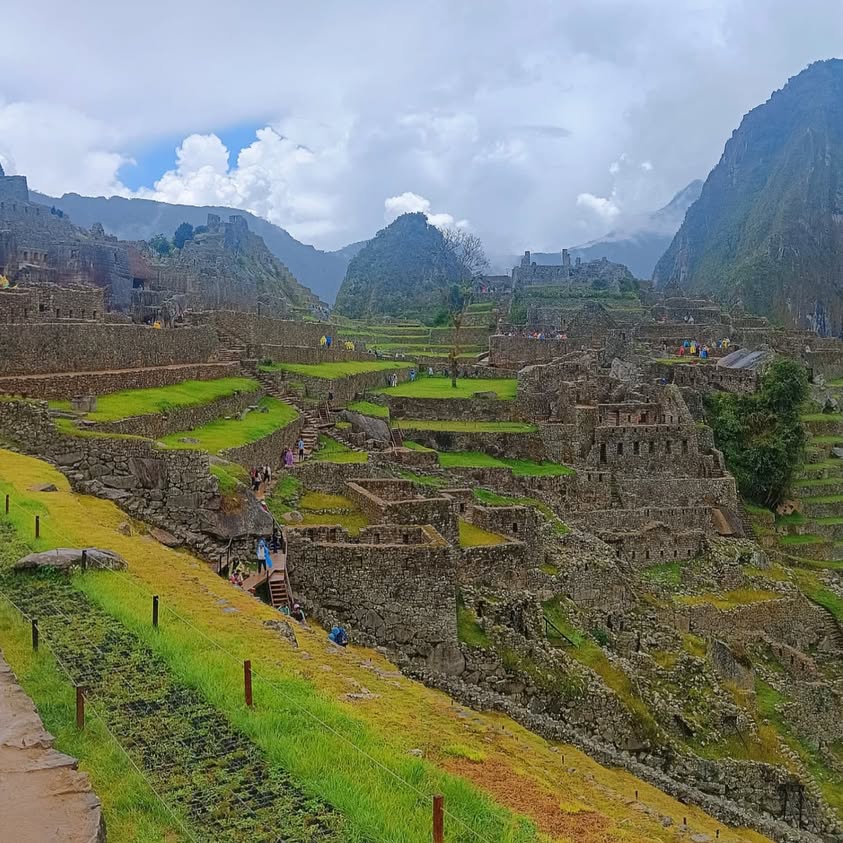
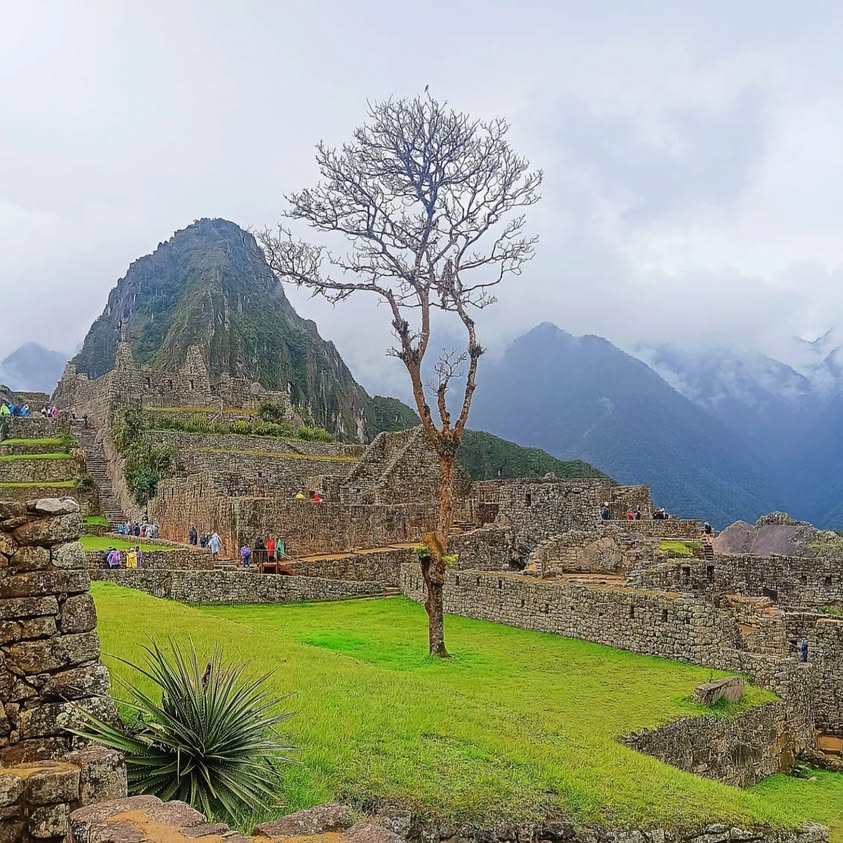
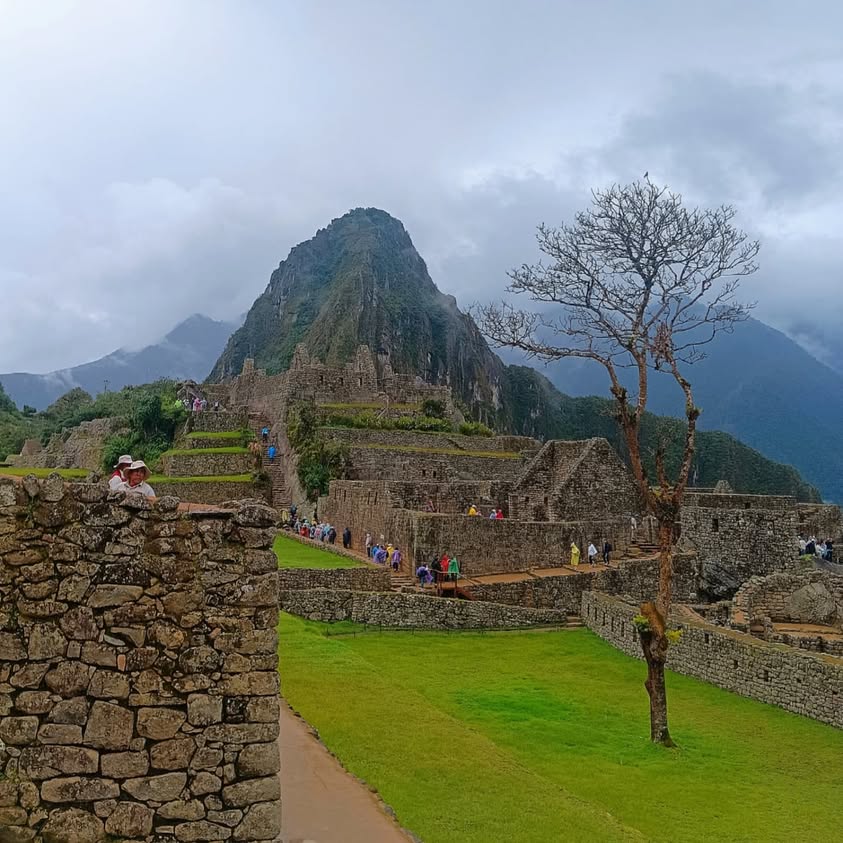
This is where most people get emotional.
And by “most people,” I include myself.
The terraces sweep down like green stairways to the sky.
Huayna Picchu looms like a watchful sentinel.
The citadel itself sprawls with a quiet confidence.
THE TEMPLE OF THE SUN
This is where the Incas did their sun-worship magic. Perfect stonework, fine curves, windows aligned with solstices — the Incas were basically the Einsteins of stone.
THE INTIHUATANA STONE
The famous “hitching post of the sun”. Not a sundial, not a random rock — a cosmic instrument designed to mark the sun’s position. Touching it is banned now, because tourists kept poking it for “spiritual Instagram upgrades.”
THE ROYAL RESIDENCES
Terraces, rooms, baths — the Inca elite knew how to holiday in style.
THE TEMPLE OF THE CONDOR
A pair of natural stone wings complete the condor silhouette.
Inca symbolism at its peak.
THE AGRICULTURAL TERRACES
These stepped greens are engineering marvels — drainage systems, microclimates, earthquake-resistant construction.
 THE LLAMAS
They are not official staff, but they behave like it.
They pose… And judge… Also photobomb.
They are part of the Machu Picchu experience.
HOW TO GET THERE — OPTIONS FOR TRAVELLERS
There are several ways to reach this wonder, depending on how masochistic or romantic you’re feeling.
- The Classic Inca Trail (4 Days)
The OG route. Stone stairways, ancient paths, Dead Woman’s Pass, cloud forests — and finally arriving at the Sun Gate at sunrise. A pilgrimage more than a trek.
- The Short Inca Trail (1 Day)
For people who want bragging rights and functioning knees.
- The Salkantay Trek (5 Days)
A scenic, tougher, snow-capped alternative to the Inca Trail.
- The Luxury Train – Vistadome or Hiram Bingham
Glass-roofed trains that glide along the Urubamba River. You sip coffee while the Andes pose outside.
- The Budget Train + Bus
Aguas Calientes → shuttle bus → Machu Picchu. Efficient, scenic, and traveler-friendly.
Most visitors now take the train to Aguas Calientes, spend the night, catch an early-morning bus up the winding mountain road, and then let the Andean Gods take care of the rest.
THE WEATHER, THE MIST, THE MOOD
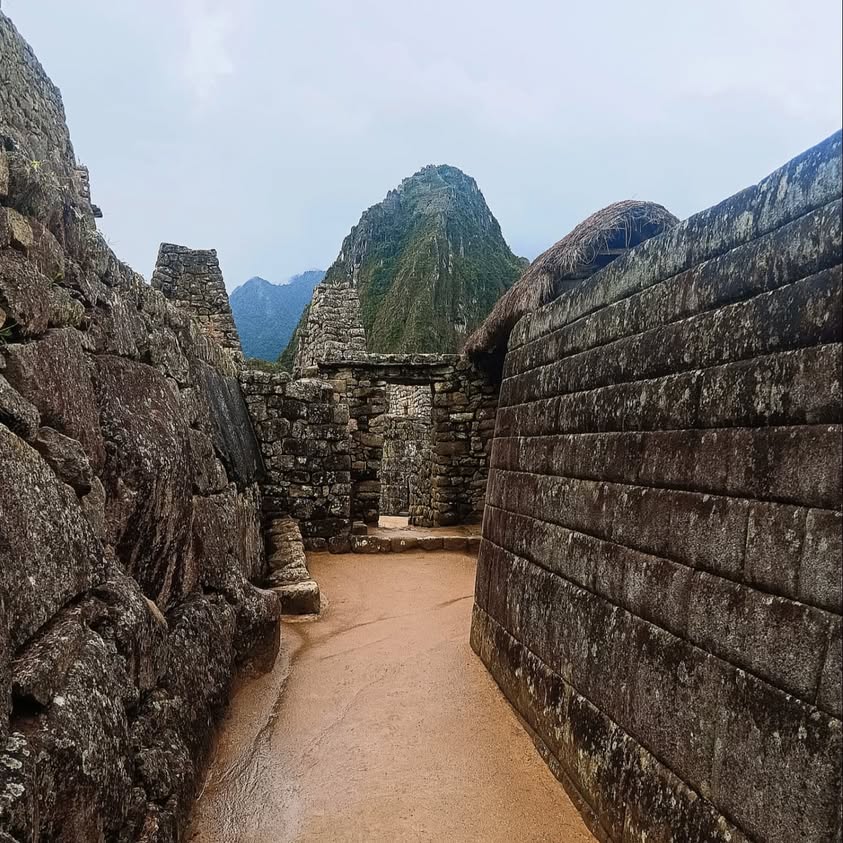
Machu Picchu wears the mist like a shawl.
Sometimes it reveals everything… At times it hides everything.
Sometimes it plays peek-a-boo like a diva with stage lighting.

THE PHILOSOPHY OF MACHU PICCHU
Here’s the part people forget: Machu Picchu wasn’t just a site.
It was a cosmic diagram. For the Incas:
- Mountains were gods.
- Rivers were veins of the earth.
- Stars were ancestors.
- Buildings had spiritual alignments.
- Agriculture was sacred.
- Architecture was prayer.
Everything here — every stone, every wall, every terrace — reflects their worldview:
Harmony. Balance. Reciprocity. Reverence.
(A worldview I suspect modern civilization could borrow occasionally.)
WHAT MAKES MACHU PICCHU SO SPECIAL?
Let’s list the reasons quickly, and then slowly.
- No mortar was used. Stones interlocked so perfectly that earthquakes politely pass around them.
- Three ecosystems merge here. Cloud forest + Andes + Amazon.
- It remains largely intact. Time blinked. Machu Picchu didn’t.
- It was never found by the Spanish. Colonial destruction never reached it.
- It still refuses to explain itself. We know a lot. But we don’t know enough. And mystery is half its appeal.
Now slowly —
Machu Picchu is special because it makes you feel 500 years fall away in a single breath.
It reminds you that human ambition, when aligned with nature, can produce miracles.
You stand there and every part of you — the traveler, the dreamer, the student, the skeptic — goes quiet for a moment.
That silence?
That’s the Incas saying: “Welcome. We built this for someone like you.”
TRAVEL TIPS (THE GOOD, THE BAD, THE IRREVERENT)
Start early. The crowds arrive like you owe them money.
Carry rain gear. Weather at Machu Picchu changes faster than political promises.
Hydrate. Altitude laughs at your fitness level.
Respect the site. Don’t climb on ruins. And don’t touch sacred stones. Oh, and don’t chase llamas even if they look like they need cardio.
Get a guide. History hits differently when explained by someone who loves it.
CLOSING THOUGHTS
Machu Picchu is not just a destination. It’s a reminder — that human beings once built wonders not to dominate nature, but to dance with it.
You go there expecting a monument. And you leave with a memory that feels older than you.
Machu Picchu is ancient stonework, yes. But more importantly, it is ancient soulwork.
And that’s why it is — and will forever be — one of the greatest places on Earth.
This was Part of the Mini Blogs on my travels in Peru… Read the full travelogue here…
And just in case you want to visit Peru, contact Beyonder Travel. Oh, and feel free to check out the other experiences across the world that are put up there…




Leave a Reply